The World's 25 Best Restaurants
Same rule as Volume 1: we don't invent these rankings, and we don't lift them uncritically either. The backbone here is The World's 50 Best Restaurants 2025, announced at a live ceremony in Turin on 19 June 2025 — the restaurant world's most consequential ranking, voted on by more than 1,000 food-industry figures, chefs, critics and well-travelled diners across 27 regional voting panels, each casting votes for restaurants outside their own region to keep the list honest. We've taken their top 25, in their exact order, with the facts, histories and signature dishes below drawn directly from 50 Best's own restaurant-by-restaurant reporting rather than guesswork. Where useful we've noted a restaurant's Michelin standing or other honours, but the ranking order itself is theirs, not ours.
A word on what this list is not: it isn't a ranking of the "best food" in some abstract sense, and it isn't trying to be comprehensive of every great table on earth — no ramen counter in Tokyo, no roadside taco stand in Oaxaca, however transcendent, is going to appear on a list built around tasting menus and multi-year waitlists. What it is: an honest account of which 25 restaurants a large, genuinely international panel of people who eat for a living currently rate above all others. That's a specific and unusually well-defended claim, which is exactly why it's worth taking seriously.
Where the 25 actually are, if you're planning around them: fourteen countries, and a surprising amount of clustering. Bangkok has four entries — Gaggan, Potong, Sorn and Sühring — more than any other city on earth this year. Spain and Italy have three each, though none of the six sit in the same town: Atxondo, Madrid and Getaria in Spain; Gardone Riviera, Castel Di Sangro and Brunico in Italy, all of them a drive rather than a metro ride from the nearest airport. Lima has two (Maido at number one and Kjølle at nine), as do Tokyo (Sézanne, Narisawa), Paris (Table by Bruno Verjus, Plénitude) and Hong Kong (Wing, The Chairman). Mexico City, Copenhagen, Buenos Aires, New York, London, Santiago and Singapore carry one apiece. Practically, that means two or three of these are reachable on a single well-planned trip — a Bangkok week, a Basque-coast drive, a Lima stopover — rather than twenty-five separate pilgrimages.
Each entry below links to the AVARA city guide for its destination, which is where the rest of the trip lives: where to stay, how to get in from the airport, what the neighbourhood around the table is like, and what else is worth the days either side of the booking.
No. 1 — Maido
Lima, Peru
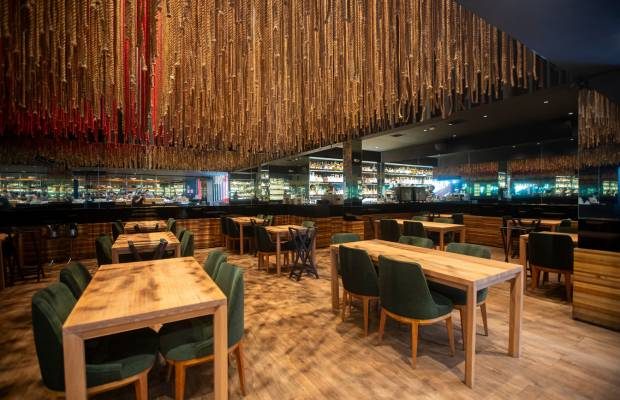
The dining room in Miraflores. Photo: The World's 50 Best Restaurants — Official editorial image — courtesy of The World's 50 Best Restaurants, Maido profile. The word maido is a Japanese greeting, and it's the first thing you hear on walking in — deliberately so. Mitsuharu "Micha" Tsumura's family arrived in Peru from Japan in 1889; he was born in Lima, trained in the US, then went to Osaka to properly learn Japanese technique before opening Maido in 2009. What he built is the clearest expression anywhere of Nikkei cuisine — Japanese method applied to Peruvian ingredient, most persuasively lately by reaching deeper into the Amazon than anyone else at this level: paiche fish "ham," yucca with Amazonian beans, a pork-and-palm-heart parcel that nods straight at rainforest cooking rather than coastal Lima. Fifteen years in, the tasting menu still opens with The Triple — avocado, egg, tomato, chashu pork belly — a dish simple enough to explain the whole philosophy in one bite. Named The World's Best Restaurant 2025, after several years as bridesmaid.
The detail: Tsumura's own family emigrated from Japan to Peru in 1889 — the restaurant's entire culinary logic is his own family history, cooked.
Best for: anyone who thinks fusion cooking is usually a compromise and wants to see what it looks like when it's actually a discipline.
No. 2 — Asador Etxebarri
Atxondo, Spain
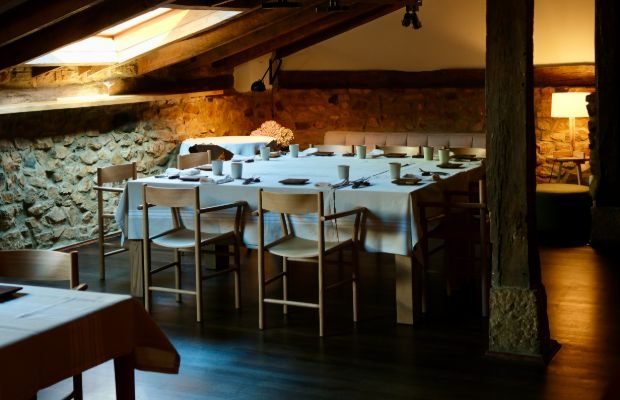
The dining room, above the grill. Photo: The World's 50 Best Restaurants — Official editorial image — courtesy of The World's 50 Best Restaurants, Asador Etxebarri profile. Bittor Arguinzoniz grew up around the corner from where his restaurant now stands, in a house with no electricity or gas, watching his mother and grandmother cook over an open hearth. Thirty-odd years later he has turned that childhood necessity into the most influential wood-fire cooking in the world — a converted Basque village building where everything, down to the milk ice cream that ends the meal, has touched one of his custom-built grills. There is no molecular trickery here, no foam, no siphon: just astonishingly precise fire management applied to astonishingly good ingredients, from grilled Palamós red prawns to a charcoal-charred beef chop so tender it borders on unreasonable. Named Best Restaurant in Europe 2025, and has fallen off the global top 50 exactly once since 2009 — a run of consistency almost nothing else on this list can match.
The detail: Arguinzoniz designs and builds his own grills, custom-engineered per ingredient — there is no off-the-shelf equipment doing the work here.
Best for: purists who think the best technology in a kitchen is often the oldest one.
No. 3 — Quintonil
Mexico City, Mexico
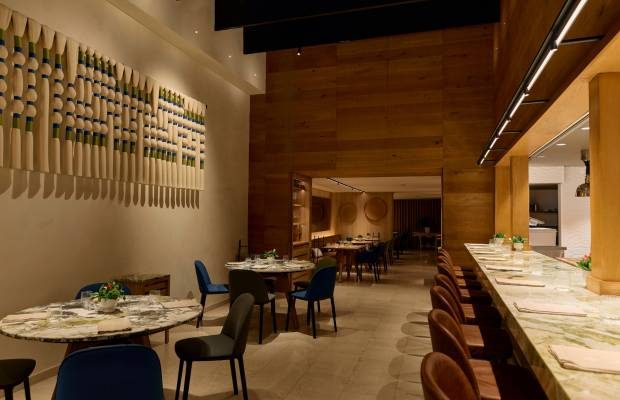
The dining room in Polanco. Photo: JPARK24 / The World's 50 Best Restaurants — Official editorial image — courtesy of The World's 50 Best Restaurants, Quintonil profile. Jorge Vallejo cooks; his wife Alejandra Flores runs the room — and the combination of his boundary-pushing modern Mexican technique with her genuinely exceptional hospitality (a master's from Switzerland's Les Roches, years running operations for the Enrique Olvera group) is why Quintonil reads less like a restaurant and more like a very well-run small company. Named for the herb that turns up across the menu and drinks list, the food draws ingredients from a garden just 30 metres from the kitchen — duck pibil tamales with elote cream, oxtail in black recado, insect tacos (grasshopper, chicatana ant) for anyone brave enough to sit at the counter. Named Best Restaurant in North America 2025.
The detail: many of the vegetables on the menu travel roughly 30 metres from urban garden to plate — about the length of the dining room itself.
Best for: diners who want serious technique served with genuine warmth rather than theatre.
No. 4 — DiverXO
Madrid, Spain
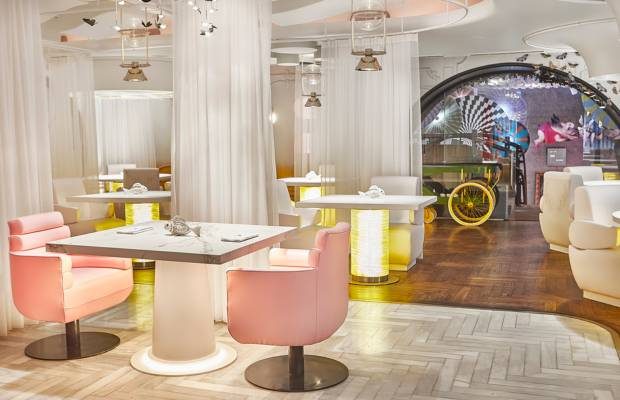
The dining room at DiverXO. Photo: The World's 50 Best Restaurants — Official editorial image — courtesy of The World's 50 Best Restaurants, DiverXO profile. Dabiz Muñoz earned three Michelin stars by 33 — the second-youngest chef in the world to do it — and has spent the years since building what can only be called a pleasure-dome: Pyrenean-matured nigiri, Japanese-inflected paella, roasted caviar with vindaloo curry and Greek yoghurt, all served inside a restaurant decorated head to toe in flying-pig motifs. The pigs are personal: as a child, Muñoz told his father he'd one day own a restaurant with queues around the block, and his father replied, essentially, "sure, and pigs might fly." He trained in London under Hakkasan, Nobu and Locanda Locatelli before returning to Madrid in 2007, and the Asian-Spanish hybrid cooking that resulted is less fusion than full-blown collision — deliberately, joyfully unpredictable.
The detail: Muñoz became the second-youngest three-Michelin-star chef in the world, at 33 — the flying pigs are a very literal answer to a childhood dare.
Best for: diners who want to be surprised course after course rather than soothed.
No. 5 — Alchemist
Copenhagen, Denmark
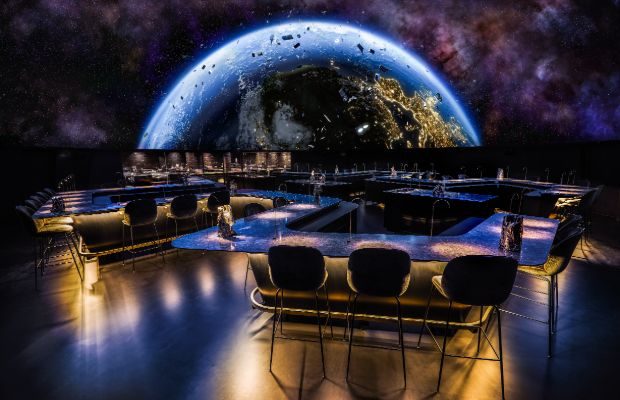
The dome dining room. Photo: The World's 50 Best Restaurants — Official editorial image — courtesy of The World's 50 Best Restaurants, Alchemist profile. There are no courses at Alchemist — only "impressions," fifty of them, split into "acts" across a seven-hour, multi-sensory dinner staged behind two-tonne bronze doors on a remote former shipyard. It sounds like spectacle for its own sake, and there's plenty of that (a freeze-dried butterfly presented as sustainable protein; a mould of a human head filled with lamb's-brain "brain" mousse to be spooned out by guests), but chef Rasmus Munk's actual foundation is classical technique and genuinely obsessive ingredient sourcing — the theatre sits on top of real cooking, not instead of it. Munk uses the restaurant's fame and five-digit waitlist to fund causes well outside gastronomy: feeding Copenhagen's homeless, building clean-water projects in Africa.
The detail: the dinner runs roughly seven hours across numerous "impressions" rather than conventional courses — this is closer to immersive theatre than a meal in the ordinary sense.
Best for: diners who want dinner to double as an art installation, and have the evening to give it.
No. 6 — Gaggan
Bangkok, Thailand
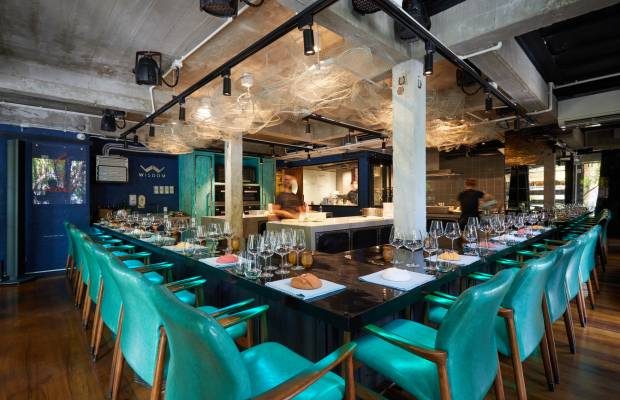
The dining room at Gaggan. Photo: The World's 50 Best Restaurants — Official editorial image — courtesy of The World's 50 Best Restaurants, Gaggan profile. Gaggan Anand was a professional drummer before he was a chef — trained at Taj Group, then apprenticed under Ferran Adrià at El Bulli, an experience that gave him a lifelong taste for molecular technique deployed with a sense of humour. His progressive Indian cooking, threaded with French, Thai and Japanese influence, comes with emoji-coded courses, encouragement to eat with your hands, and an irreverence that runs through the restaurant's entire identity, from the concrete-and-neon dining room to the chef's own social media presence. Named Best Restaurant in Asia 2025 for the fifth time — a level of regional dominance nobody else on this list can claim.
The detail: courses on the menu are represented by emojis rather than conventional descriptions — a small joke that says a lot about the kitchen's whole attitude.
Best for: diners who want fine dining that doesn't take itself too seriously while still taking the food dead seriously.
No. 7 — Sézanne
Tokyo, Japan
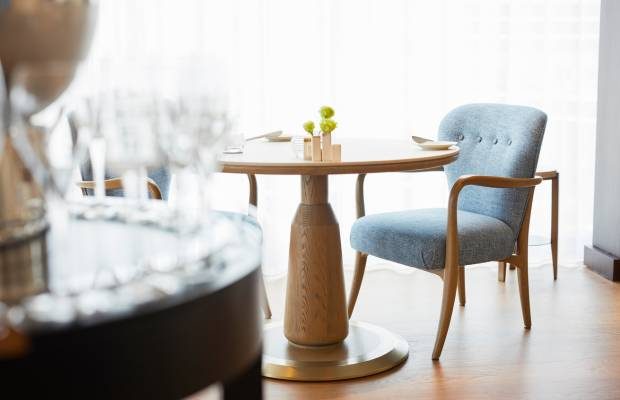
The André Fu-designed dining room. Photo: The World's 50 Best Restaurants — Official editorial image — courtesy of The World's 50 Best Restaurants, Sézanne profile. British chef Daniel Calvert — CV includes Belon in Hong Kong, Epicure in Paris, Per Se in New York — runs a neo-French kitchen on the seventh floor of the Four Seasons Tokyo at Marunouchi, in a room designed by Hong Kong architect André Fu with floor-to-ceiling windows over the Tokyo skyline. The 12-course tasting menu is unmistakably French in structure — bouillabaisse, sabayon, classical technique throughout — but built almost entirely from Japanese regional ingredients: Saga saffron, Yamaguchi fugu cooked on the bone with its own milt. Every producer's name appears on the menu, a small gesture that matters more than it sounds.
The detail: the dining room's glass wall gives every table a direct view into the open kitchen — nothing about the cooking happens out of sight.
Best for: diners who want French technique without leaving Japan, and a room with a view worth the trip alone.
No. 8 — Table by Bruno Verjus
Paris, France
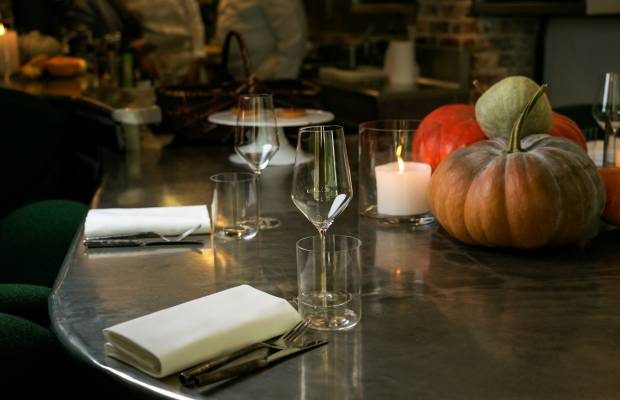
The wave-shaped counter. Photo: Stéphane Riss / The World's 50 Best Restaurants — Official editorial image — courtesy of The World's 50 Best Restaurants, Table by Bruno Verjus profile. Bruno Verjus is 65 and had an entire career — medical student, entrepreneur in China, photographer, author, radio commentator, food critic — before he opened a restaurant a decade ago. His motto, "our food choices shape our world," shows up literally in the daily-changing Colours of the Day dish of whatever's most seasonal that morning. The room is built around a wave-shaped counter with an open kitchen, so you watch line-caught monkfish get torched with bay leaves in real time. Table achieved the rare feat of landing in the world's top 10 on its very first appearance on the list in 2023, and has held there every year since.
The detail: Verjus had five distinct careers — including medicine and photography — before becoming a chef, a background almost unheard of at this level of cooking.
Best for: diners who want ingredient-first cooking explained by someone who genuinely wants to talk about where everything came from.
No. 9 — Kjølle
Lima, Peru
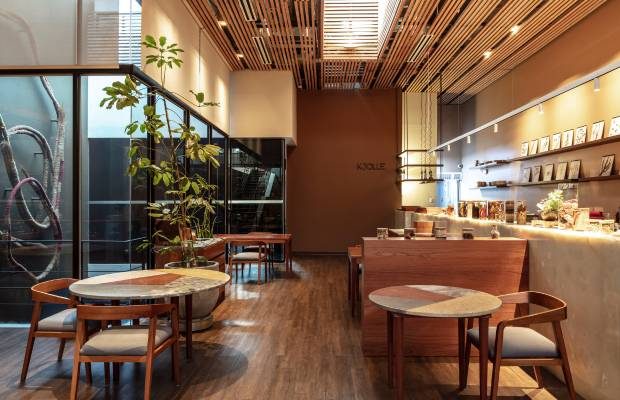
The dining room at Kjølle. Photo: Gustavo Vivanco / The World's 50 Best Restaurants — Official editorial image — courtesy of The World's 50 Best Restaurants, Kjølle profile. Pía León ran the kitchen at Central when it was named The World's Best Restaurant in 2023 — then, in 2018, opened her own solo project a few blocks away to say something more personal. Kjølle is built on restraint: months of research go into using every part of an ingredient with minimal waste and maximum flavour, and the produce is never over-manipulated to the point of losing its identity. Her signature dish, Many Tubers, layers toasted Andean olluco with a creamy oca paste on a cañihua-dough tart — a whole thesis on Peruvian root vegetables in a single plate. Every piece of ceramic and glassware on the table is curated with Peruvian artisans, so the "context" is as considered as the food.
The detail: León and her team spend months researching how to use every part of a single ingredient before it's considered ready for the menu.
Best for: diners who want Peru's extraordinary biodiversity taken seriously as the main event, not as a backdrop.
No. 10 — Don Julio
Buenos Aires, Argentina
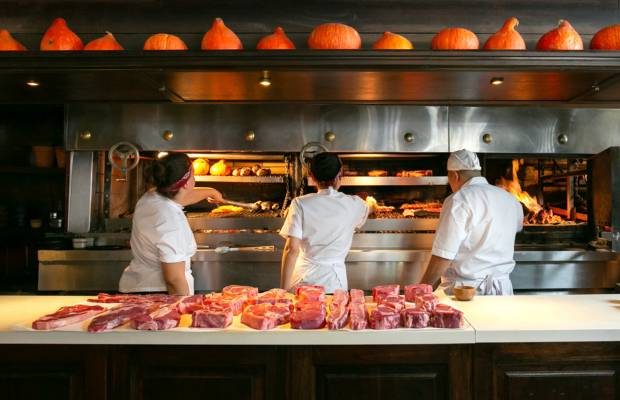
The wine-lined dining room in Palermo. Photo: The World's 50 Best Restaurants — Official editorial image — courtesy of The World's 50 Best Restaurants, Don Julio profile. A steakhouse in a top-10 global ranking is itself a statement, and Don Julio earns it on rigor as much as flavour: nearly everything on the menu, from the Aberdeen Angus and Hereford beef to the organic vegetables, comes from owner-sommelier Pablo Rivero's own farm outside Buenos Aires, raised under regenerative practices and butchered and aged entirely in-house. Twenty-five years into its life as a neighbourhood corner parrilla, it now holds a 60,000-bottle cellar spanning the length of Argentine wine country and a queue-management system generous enough to send waiting diners sparkling wine and empanadas. The wine bottles covering the walls, scrawled with messages from past diners, function as a two-decade guestbook.
The detail: the restaurant's beef is raised on Rivero's own regenerative farm and then butchered and dry-aged entirely in-house — a closed loop almost no steakhouse anywhere else can claim.
Best for: anyone who thinks the ultimate luxury is doing one thing — beef — better than literally anyone else on earth.
No. 11 — Wing
Hong Kong, China
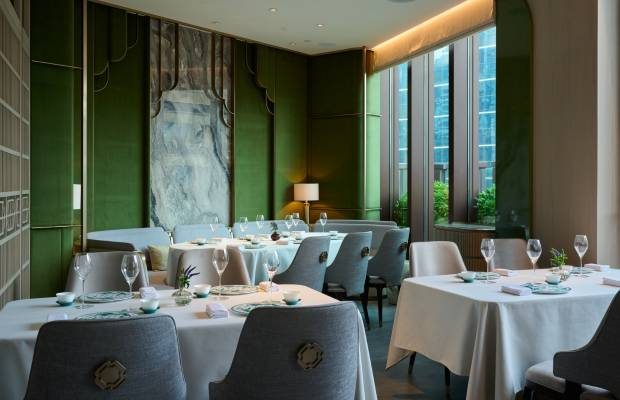
The dining room at Wing. Photo: The World's 50 Best Restaurants — Official editorial image — courtesy of The World's 50 Best Restaurants, Wing profile. Vicky Cheng spent twenty years mastering French classical technique before returning to his native Hong Kong and, almost accidentally, falling in love with Cantonese cooking instead. Wing grew out of an invite-only midnight test kitchen beneath his first restaurant, Vea, and now stands as a "boundary-less" homage to the eight great regional cuisines of China — dry-aged crispy Cantonese chicken that took more than 80 trials to perfect, smoked pigeon with sugarcane, braised sea cucumber wrapped in a puffed spring roll. The name itself, drawn from Cheng's Chinese given name, translates roughly to hope and perseverance. Winner of the Gin Mare Art of Hospitality Award 2025 — recognition specifically for a front-of-house team sharp enough to remember a returning guest's palate and deliberately avoid repeating a dish.
The detail: the signature crispy chicken recipe took more than 80 development trials before it made the menu.
Best for: diners who want to see Chinese regional cuisine treated with the same rigor Europe reserves for its own classics.
No. 12 — Atomix
New York, USA
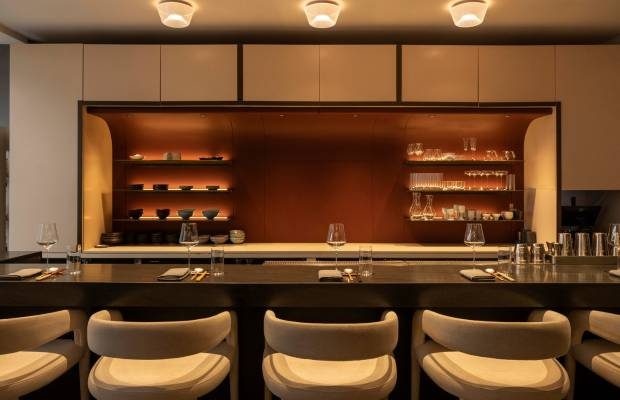
The 14-seat counter. Photo: The World's 50 Best Restaurants — Official editorial image — courtesy of The World's 50 Best Restaurants, Atomix profile. Atomix's entrance is deliberately unremarkable — a plain door in Manhattan's still-rough NoMad district — until you notice other diners gathering on the sidewalk. Inside: a 14-seat U-shaped counter in the basement, run by husband-and-wife team Junghyun "JP" Park and Ellia Park, serving a 12-course tasting menu of Korean cooking that treats the cuisine's heritage as a foundation for genuine innovation rather than a museum piece. Each dish arrives on bespoke ceramics with an explanatory card on ingredient and origin — cherry blossom trout with Korean mustard and rhubarb, grilled wagyu against cold noodles. The Parks also run Atoboy, Naro and Seoul Salon elsewhere in the city, making them arguably New York's most consequential Korean hospitality operators.
The detail: the main dining counter seats just 14 people, in a basement below an unmarked ground-floor cocktail bar.
Best for: diners who want Korean cuisine's current global moment explained course by course, with the receipts.
No. 13 — Potong
Bangkok, Thailand
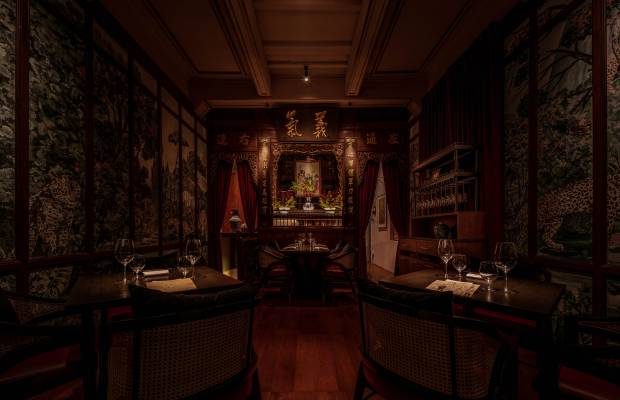
The restored shophouse interior. Photo: The World's 50 Best Restaurants — Official editorial image — courtesy of The World's 50 Best Restaurants, Potong profile. The Highest New Entry of 2025, debuting straight into the top 20 — earned by housing an extraordinary personal story inside an extraordinary building. Potong occupies a five-storey structure in Bangkok's Chinatown that operated as chef Pichaya "Pam" Soontornyanakij's family's Chinese herbal-medicine business from 1910, restored over two and a half years into a working restaurant, cocktail bar and eventually a planned second concept in the former ground-floor apothecary. Chef Pam — Thai, Australian and Chinese heritage, trained under Jean-Georges in the US — builds her tasting menu around five technical pillars: salt, acid, spice, texture, and the Maillard reaction, walking diners through her own culinary memory in the process. She was named The World's Best Female Chef 2025.
The detail: the building operated as the chef's own family's herbal-medicine business starting in 1910 — this is quite literally cooking in her family's history.
Best for: diners who want a personal story and a hundred-year-old building doing as much work as the food itself.
No. 14 — Plénitude
Paris, France
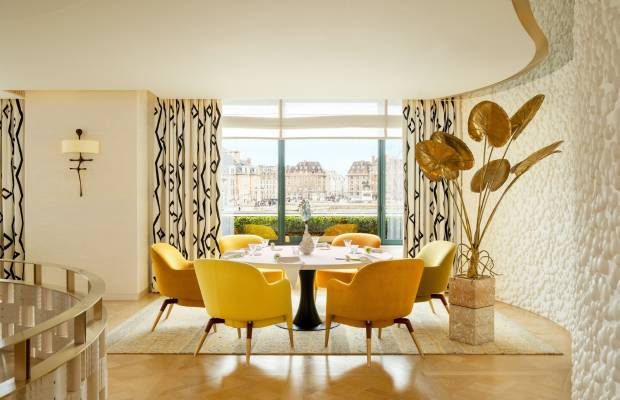
The dining room at the Cheval Blanc. Photo: Vincent Leroux / The World's 50 Best Restaurants — Official editorial image — courtesy of The World's 50 Best Restaurants, Plénitude profile. Arnaud Donckele's entire cooking philosophy is built around the sauce, not the protein — a langoustine at Plénitude is really a vehicle for an airy sabayon, not the other way around. The room sits on the first floor of the LVMH-owned Cheval Blanc Paris, inside the historic La Samaritaine building overlooking the Pont Neuf, and the seven-course menu is delivered with a level of choreography rare even at this level: a cellar visit on arrival, a course served in the kitchen itself, an invitation into a secret cheese cave to choose your own plateware and fromage. Donckele writes out the recipes for his bouillons and consommés for guests to take home — an unusually generous gesture at three-Michelin-star altitude. Pastry chef Maxime Frédéric, who also handles the exceptional bread programme, won The World's Best Pastry Chef Award 2025.
The detail: guests are invited into a private cheese cave mid-meal to select their own vintage plateware and cheese — not a standard trolley service.
Best for: diners who think a sauce, done properly, is the most sophisticated thing a kitchen can produce.
No. 15 — Ikoyi
London, United Kingdom
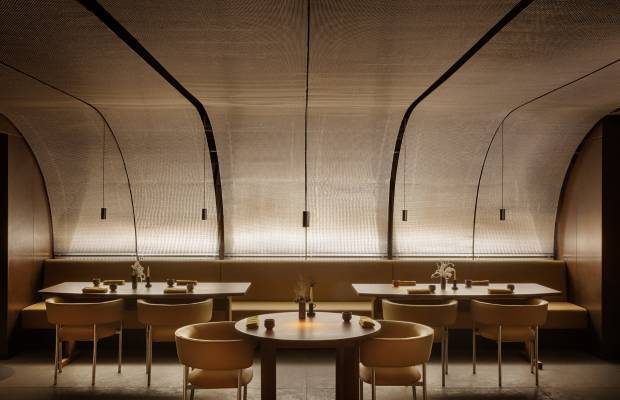
The David Thulstrup-designed room. Photo: The World's 50 Best Restaurants — Official editorial image — courtesy of The World's 50 Best Restaurants, Ikoyi profile. Jeremy Chan and Iré Hassan-Odukale opened Ikoyi in 2017 with almost no formal training between them and built something genuinely uncategorisable: British produce and waters combined with spices and techniques foraged from across Africa and Asia, in a room clad in copper and curved metal designed by David Thulstrup. The signature smoked jollof rice changes form seasonally but has anchored the tasting menu since the beginning; other courses have included drunken squid with fermented rice and turbot with tonnato. Service is deliberately unobtrusive — Hassan-Odukale's theory is that food should be allowed to speak for itself, like art in a gallery, with detail supplied only if asked for. Winner of the Highest Climber Award 2025.
The detail: neither founder had formal culinary training when they opened — the restaurant's category-defying style partly comes from not knowing the rules it was supposed to follow.
Best for: diners who want heat and spice treated as a serious culinary language rather than a gimmick.
No. 16 — Lido 84
Gardone Riviera, Italy
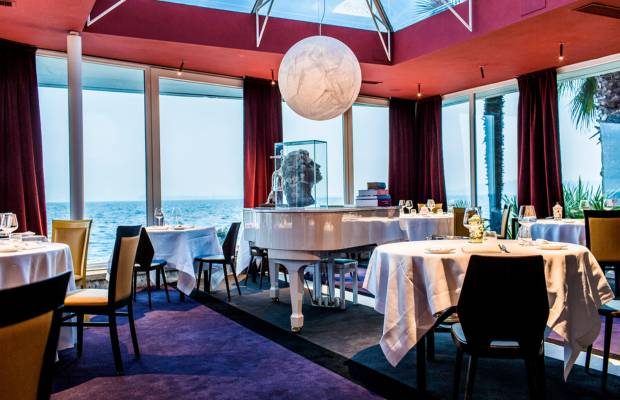
The dining room, on Lake Garda. Photo: The World's 50 Best Restaurants — Official editorial image — courtesy of The World's 50 Best Restaurants, Lido 84 profile. Brothers Riccardo and Giancarlo Camanini bought a defunct 1970s lakeside beach club on Lake Garda in 2013 and turned it into one of Italy's most quietly radical kitchens — Italian food that respects tradition by relentlessly interrogating it rather than repeating it. The signature dish, Rigatoni Cacio e Pepe en Vessie, cooks the pasta inside a pig's bladder, judged for doneness entirely by touch, the bladder's juices forming an emulsion with the cheese that no other method replicates. Giancarlo runs the room with the warmth of a beach-club host, even as the cooking behind it draws on years of research into archival Italian recipe books. Lido 84 debuted on the global list in 2021 at No.15 with the Highest New Entry Award — a near-mirror of Potong's trajectory this year.
The detail: the signature pasta dish is cooked inside a pig's bladder and judged ready purely by touch — there's no thermometer for this one.
Best for: diners who think they already know Italian food and want to be proven wrong, gently.
No. 17 — Sorn
Bangkok, Thailand
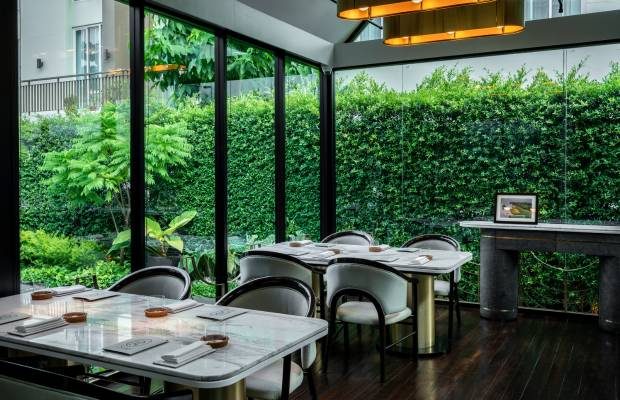
The dining room at Sorn. Photo: The World's 50 Best Restaurants — Official editorial image — courtesy of The World's 50 Best Restaurants, Sorn profile. Reputed to be the hardest restaurant to book in all of Thailand, Sorn takes its cue entirely from chef Supaksorn "Ice" Jongsiri's grandmother's southern Thai cooking — a regional cuisine defined by uncompromising chilli heat and bold spicing, rarely seen at this level of fine dining precisely because it refuses to soften itself for a wider palate. Every dish is temperature-engineered to be eaten the instant it lands — the kitchen brigade moves at a genuinely fast tempo, and diners are gently discouraged from lingering over photographs before the plate loses its intended heat. The signature Kan Chu Piang combines blue swimmer crab roe and leg meat in a small granite mortar with fiery yellow chilli sauce — traditionally the part of the crab reserved in Thai households for the most beloved family member.
The detail: dishes are engineered around exact serving temperature, and the kitchen deliberately paces service fast enough that diners are discouraged from delaying to photograph the food.
Best for: diners who want the real intensity of southern Thai regional cooking, heat included, with zero dilution.
No. 18 — Reale
Castel Di Sangro, Italy
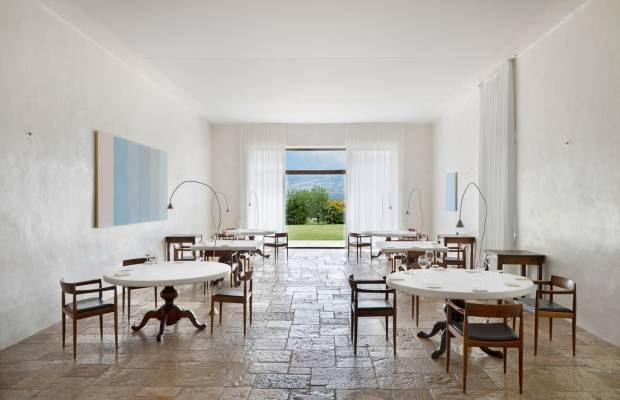
The monastery dining room. Photo: Helenio Barbetta / The World's 50 Best Restaurants — Official editorial image — courtesy of The World's 50 Best Restaurants, Reale profile. Niko Romito's food looks deceptively minimal — dishes are literally named "Swiss Chard," "Courgette," "Cauliflower" — but each one represents exhaustive technical research into every nuance a single ingredient can offer. Even the bread gets this treatment: years of study into fermentation and ancient Saragolla wheat flour have made Reale's bread course a genuine benchmark rather than an afterthought. The restaurant occupies a 16th-century monastery, functioning as the operational heart of what Romito calls his "system" — a daily research laboratory that also trains restaurant staff continuously rather than once. A single broccoli leaf served with anise sauce is, by Romito's own design, meant to demonstrate as much culinary ambition as a far more elaborate plate.
The detail: the restaurant is housed in a 16th-century monastery that doubles as Romito's full-time ingredient research laboratory.
Best for: diners drawn to minimalism that hides serious intellectual rigor rather than an absence of ideas.
No. 19 — The Chairman
Hong Kong, China
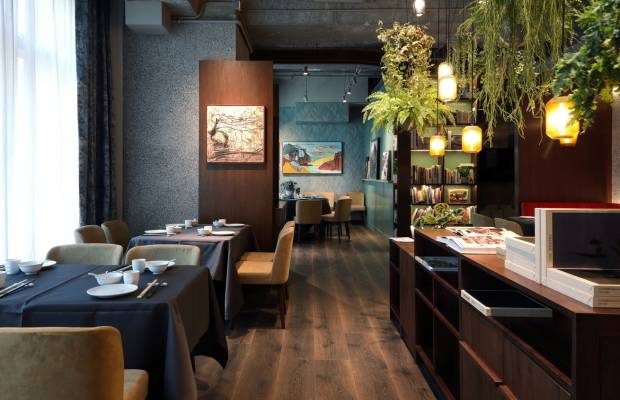
The dining room at The Chairman. Photo: The World's 50 Best Restaurants — Official editorial image — courtesy of The World's 50 Best Restaurants, The Chairman profile. The Chairman has built its reputation by deliberately refusing every modern restaurant convention — no theatrics, no Instagram-engineered plating, no PR campaign, just quietly innovative Cantonese cooking built on genuine culinary history. Owner Danny Yip, a chef turned tech entrepreneur turned restaurateur, and long-time head chef Kwok Keung Tung spend months at a time researching ingredients and testing new methods together, a partnership responsible for dishes like Sichuan peppercorn stewed oxtail and a steamed flowery crab dish that has become close to legendary among Hong Kong regulars. The restaurant relocated post-pandemic to a larger space nearby, decorated with Yip's own taste for art and literature, but the unshowy, locally beloved character has carried over intact.
The detail: owner Danny Yip is a former tech entrepreneur, not a career restaurateur — an unusual path into running one of Asia's most respected kitchens.
Best for: diners who are suspicious of hype and want a restaurant that earned its reputation the slow way, from locals first.
No. 20 — Atelier Moessmer Norbert Niederkofler
Brunico, Italy
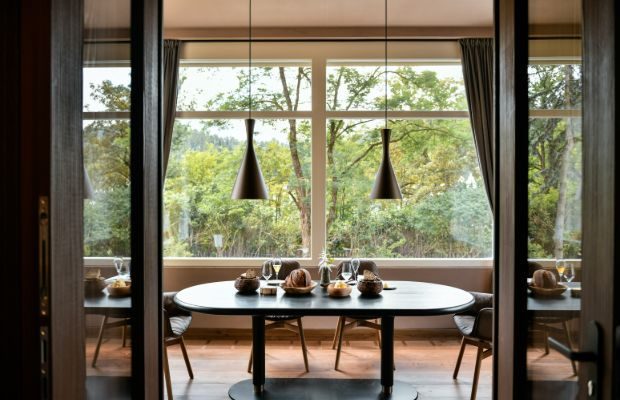
The glass-walled villa dining room. Photo: The World's 50 Best Restaurants — Official editorial image — courtesy of The World's 50 Best Restaurants, Atelier Moessmer Norbert Niederkofler profile. Norbert Niederkofler's "cook the mountain" philosophy is close to a manifesto: only hyper-local Tyrolean terroir ingredients are permitted on the menu, full stop. In 2023 he relocated his operation into a redesigned 19th-century villa that once formed part of the Moessmer textile complex, adding a glass-walled modern extension for the open kitchen while keeping the sense of a private family home — guests ring a doorbell to be let in. Day-to-day cooking is led by executive chef Mauro Siega under Niederkofler's guiding philosophy, with dishes as simply named as Reale's — Spring Salad, Tyrolean Beef, Mountain Cheesecake — masking real technical complexity. Beyond the restaurant, Niederkofler runs an ethical-cooking event series, teaches gastronomy at the University of Bolzano, and campaigns for Italian school-meal reform.
The detail: the "cook the mountain" rule is absolute — only ingredients genuinely native to the surrounding Tyrolean terroir make it onto the menu.
Best for: diners who want fine dining with a genuine environmental and regional ethic, not a marketing one.
No. 21 — Narisawa
Tokyo, Japan
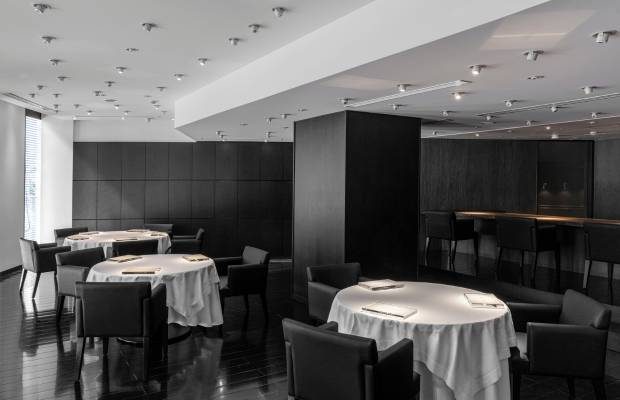
The dining room at Narisawa. Photo: The World's 50 Best Restaurants — Official editorial image — courtesy of The World's 50 Best Restaurants, Narisawa profile. Yoshihiro Narisawa trained for eight years in Europe's most storied kitchens — including under Paul Bocuse and Joël Robuchon — before returning to Japan in 1996 and eventually settling into Tokyo's Minami Aoyama district. His food channels satoyama, the pre-modern Japanese farming philosophy of flatland cultivation combined with forest husbandry and mountain foraging, most famously in the Temari dish: root-vegetable strips wrapped around a crab-and-scallop dumpling shaped like a traditional toy ball. The full menu changes daily based on ingredient availability, drawing simultaneously on Japanese, Chinese and French technique. Narisawa topped the very first Asia's 50 Best Restaurants list in 2013 and re-entered the global top 50 in 2025 after time away.
The detail: the menu shifts daily based purely on ingredient availability — there is no fixed seasonal menu printed in advance.
Best for: diners who want Japanese cooking rooted in agricultural philosophy rather than just technique.
No. 22 — Sühring
Bangkok, Thailand
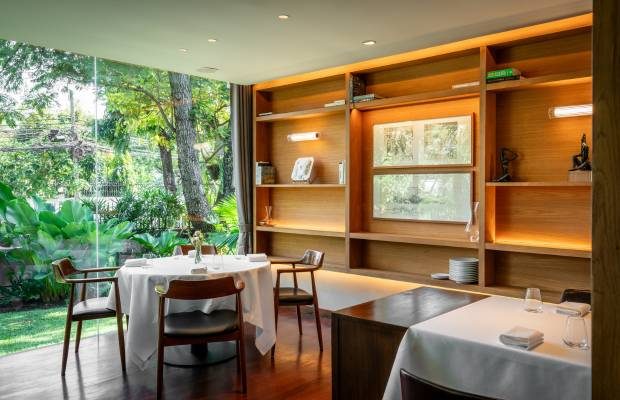
The 1970s villa interior. Photo: The World's 50 Best Restaurants — Official editorial image — courtesy of The World's 50 Best Restaurants, Sühring profile. Identical twins Thomas and Mathias Sühring left Germany to build a serious contemporary-German fine-dining restaurant in, of all places, Bangkok — a renovated 1970s villa with a lush front garden that functions as a genuine escape from the city's energy. The menu leans into European technique in a city famous for chilli heat: scallop with pumpkin and kelp, Kagoshima A5 wagyu with kintoki carrot, and — in a deliberately indulgent flourish — spaetzle egg noodles topped with Périgord truffle. The restaurant is a member of Relais & Châteaux and has held two Michelin stars since 2018, with a wine list built specifically around the Rheingau and Kremstal regions the brothers know from home.
The detail: the two head chefs are identical twins, both trained across Germany, the Netherlands, Italy and Thailand before building the restaurant together.
Best for: diners who want proper German culinary nostalgia rendered with genuine fine-dining polish, several thousand miles from Germany.
No. 23 — Boragó
Santiago, Chile
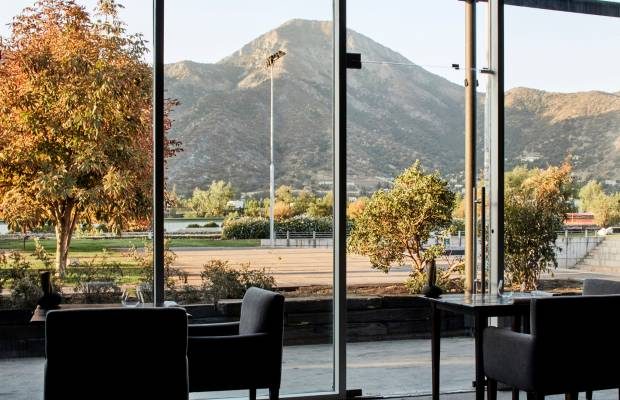
The dining room, facing Cerro Manquehue. Photo: The World's 50 Best Restaurants — Official editorial image — courtesy of The World's 50 Best Restaurants, Boragó profile. Rodolfo Guzmán has spent nearly two decades building what amounts to a full research institute around Chilean produce — the restaurant's own CIB research centre investigates native ingredients most chefs, Chilean or otherwise, have never worked with. His tasting menu, named Endémica, moves diners through the country's regions via dishes like Patagonian lamb with fig leaf and Maule pink tomato, drawing on relationships with more than 200 foragers, small producers and coastal and mountain suppliers nationwide. The philosophy is deeply rooted in Mapuche culture and Indigenous hunter-gatherer traditions of southern Chile and Argentina. Boragó won the inaugural Sustainable Restaurant Award at Latin America's 50 Best in 2018, then the global equivalent at The World's 50 Best in 2021 — sustainability as a matter of record, not branding.
The detail: the restaurant works directly with more than 200 foragers and small producers across Chile to source ingredients most professional kitchens have never encountered.
Best for: diners who want to taste an entire country's biodiversity condensed into a tasting menu, backed by actual research.
No. 24 — Elkano
Getaria, Spain
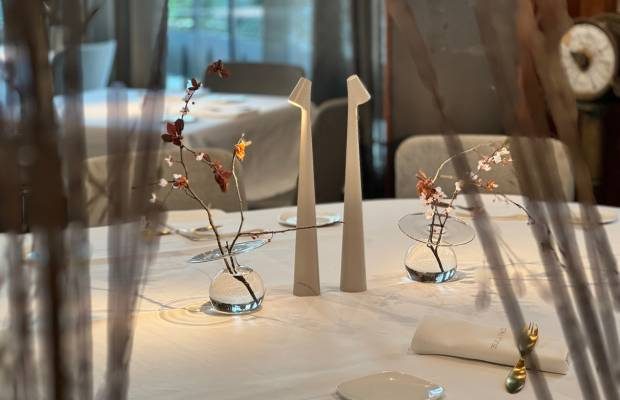
The dining room in Getaria. Photo: Elkano / The World's 50 Best Restaurants — Official editorial image — courtesy of The World's 50 Best Restaurants, Elkano profile. Pedro Arregui used to say you had to look a fish in the eye to know it was truly fresh — a small piece of wisdom that grew into one of the most respected seafood grills in the world. Arregui transformed his mother's grocery store into a bar with a street-side grill, and when a fisherman once brought him a turbot too large for one grill, he simply used two — an improvisation that became a signature. His innovation of roasting a whole hake head, previously used only for soup stock, similarly rewrote what was possible on a Basque grill. His son Aitor now runs the restaurant, still built around the same Cantabrian Sea philosophy, with the whole-grilled turbot remaining the dish pilgrims travel for.
The detail: the restaurant's most famous technique — grilling a turbot too large for a single grill across two placed side by side — began as an improvised fix for an oversized fish, not a planned innovation.
Best for: diners who believe the best seafood cooking is the kind that gets out of the fish's way entirely.
No. 25 — Odette
Singapore
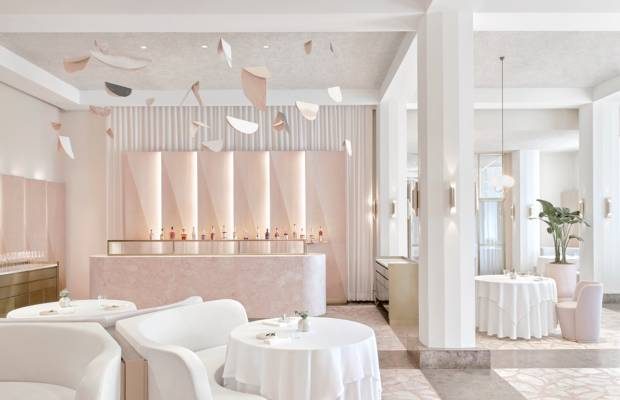
The dining room in the National Gallery. Photo: The World's 50 Best Restaurants — Official editorial image — courtesy of The World's 50 Best Restaurants, Odette profile. Julien Royer named his restaurant after his grandmother, the woman who taught him that highlighting an ingredient's purest flavour mattered more than any technique layered on top of it — a lesson that still defines every plate at Odette. Royer, from a family of French farmers, sources artisanal ingredients from across both Europe and Asia, building a seven-course tasting menu with clear French bones but genuine Asian inflection throughout. The restaurant sits inside Singapore's National Gallery, beneath a suspended installation of raw kitchen ingredients by artist Dawn Ng titled Theory of Everything — a literal artwork built from the restaurant's own produce. Pastry chef Louisa Lim, Asia's Best Pastry Chef 2023, closes the meal with dishes like a citrus tart layered with Buddha's hand and genmaicha.
The detail: the restaurant sits inside Singapore's National Gallery, beneath a permanent art installation built from raw ingredients sourced from Royer's own kitchen.
Best for: diners who want French technique with real emotional weight behind it, in one of Asia's most striking dining rooms.
Volume 2 of the AVARA Best Of series, following Volume 1's World's 20 Best Hotels. Next up, as planned: The World's 20 Best National Parks, Europe's 20 Best, and further regional cuts — same discipline every time. Real rankings, credibly sourced, cross-checked where a second credible source exists, written straight. If a restaurant, hotel or park makes one of these lists, it's because the people who actually rank these things for a living said so.
Source: The World's 50 Best Restaurants 2025 (William Reed / 50 Best, announced 19 June 2025, Turin).
See the full AVARA Best Of collection · Browse all AVARA city guides