The World's 20 Best Hotels
We didn't invent this list from taste alone, and we didn't lift it wholesale from a press release either. The backbone here is The World's 50 Best Hotels 2025, announced at a live ceremony in London on 30 October 2025 — the hotel-world equivalent of The World's 50 Best Restaurants, voted on by an international academy of several hundred travel-industry insiders, journalists and well-travelled obsessives across seven regions. We've taken their top 20, in their order, and cross-checked every property against the Forbes Travel Guide 2026 Five-Star Awards and Condé Nast Traveler's 2026 Gold List. Where a hotel shows up decorated by all three, you can trust the reputation is earned rather than manufactured by a marketing department. Every hotel below cleared that bar.
What you won't find here: hotels chosen because they're pretty on Instagram, or because a brand bought its way onto a list. What you will find: a short, honest read on why each of these twenty rooms is worth crossing a continent for, written the way we'd tell a well-travelled friend over a drink — not the way a brochure would.
A rule of taste, stated plainly: size isn't the point. Some of these hotels have fewer than 25 rooms. One has close to 800. Both extremes can be right, if the idea behind the place is sound.
No. 1 — Rosewood Hong Kong
Hong Kong, China
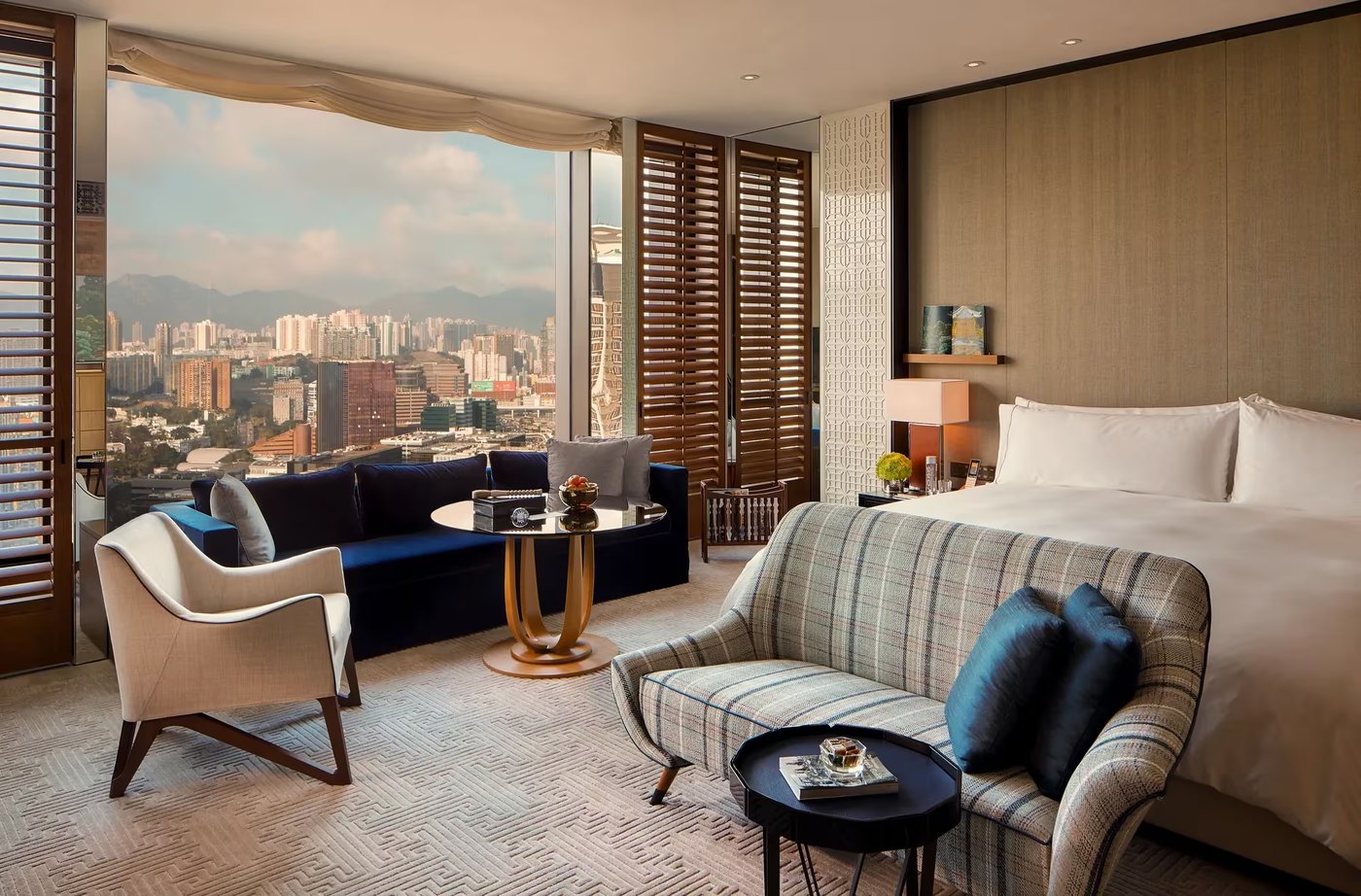
A Kowloon Peak View King Room, above Victoria Harbour. Photo: Rosewood Hong Kong — Official press image — courtesy of Rosewood Hong Kong. Scale, done with taste, is harder than it looks. Rosewood Hong Kong has more than 400 rooms, each starting at a generous 53 square metres, and somehow still manages to feel like a private address rather than a machine for processing guests. That's the trick that took it to the top of the 2025 ranking after two years as a runner-up. Opened in 2019 as the flagship of an expanding Asian group, it reads as a study in modern Asian minimalism — but the real achievement is consistency: whether you're one of four hundred guests or the only one in the lobby, the level of attention doesn't drop. In a city that has no shortage of five-star towers, that's the differentiator.
The detail: rooms start at 53 sqm — enormous by Hong Kong standards, where square footage is the ultimate luxury.
Best for: travellers who want big-hotel infrastructure with small-hotel manners.
No. 2 — Four Seasons Bangkok at Chao Phraya River
Bangkok, Thailand
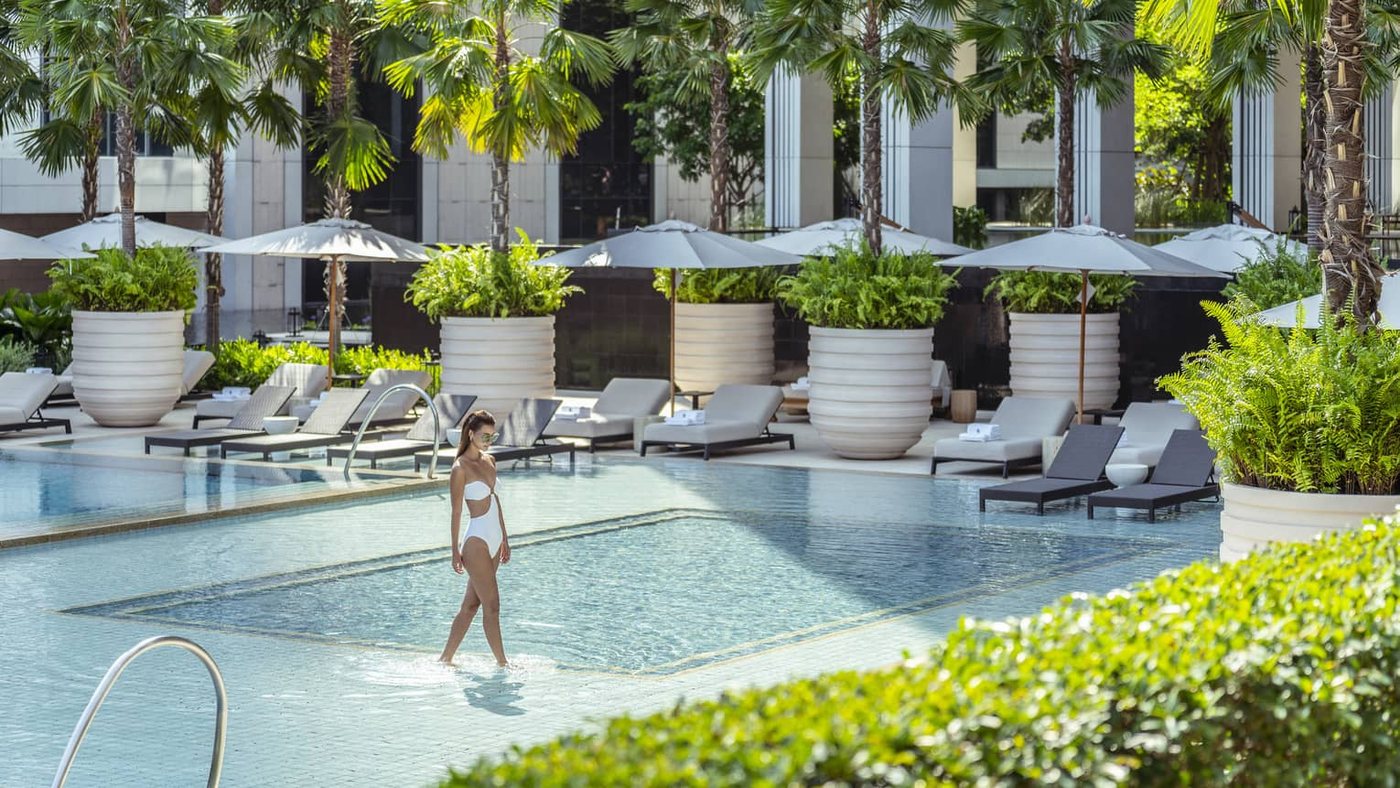
The riverfront pool terrace, on the Chao Phraya. Photo: Four Seasons Hotels and Resorts — Official press image — courtesy of Four Seasons Bangkok at Chao Phraya River. Four Seasons was named the industry's most admired hotel group in 2025, and this riverside property is the argument for why. Set on the banks of the Chao Phraya, it manages the neat trick of feeling like a resort despite sitting inside one of the world's most frenetic capitals — proof that river frontage and good architecture can out-argue a skyline. All 299 rooms are contemporary and unfussy, designed to lower your heart rate the moment you walk in, which is precisely what you want after a day fighting Bangkok traffic.
The detail: every one of the 299 rooms faces the river — no consolation-prize city views here.
Best for: first-time Bangkok visitors who want the city's energy without sacrificing calm.
No. 3 — Capella Bangkok
Bangkok, Thailand
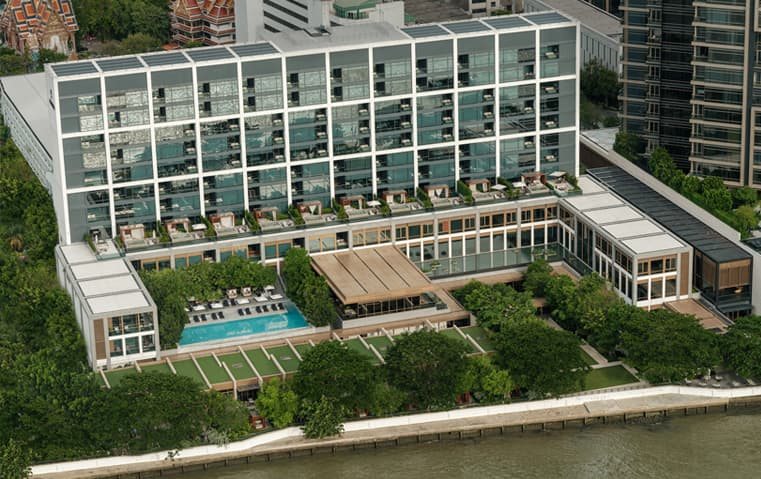
Capella Bangkok, along the Chao Phraya. Photo: Capella Hotels and Resorts — Official press image — courtesy of Capella Bangkok. Two Bangkok hotels in the top three tells you something about the city's current form. Capella's move is space and light in a place famous for neither — 101 rooms and suites, all oriented toward the River of Kings, run by a team the hotel calls "Capella Culturists," whose actual job is building you a bespoke itinerary rather than handing you a laminated map. It's a smaller, quieter proposition than its neighbour at No. 2, and that's exactly its appeal.
The detail: the on-property "Culturists" concierge team designs itineraries around your interests rather than a fixed excursion menu.
Best for: guests who'd rather have one exceptional local guide than a stack of tourist brochures.
No. 4 — Passalacqua
Lake Como, Italy
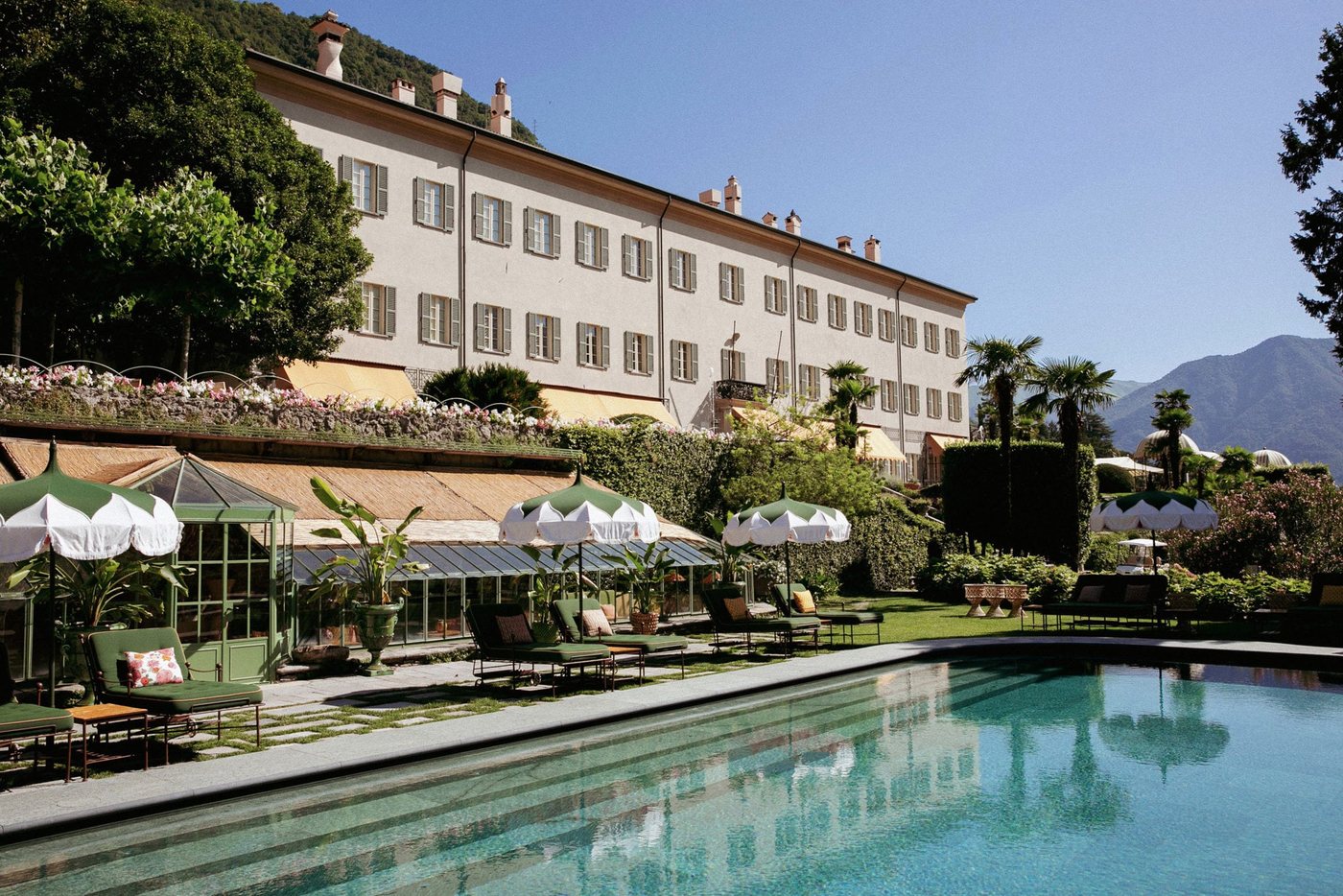
The pool and villa facade, above Lake Como. Photo: Giada Mariani / Passalacqua — Official press image — courtesy of Passalacqua. The reigning Best Hotel in Europe, and the winner of the Best Boutique Hotel award for good reason: this is an 18th-century villa — former residence of Pope Innocent XI — with only 24 rooms, each individually decorated, each a small essay in Lombard grandeur done without a hint of pastiche. Lake Como has no shortage of storied properties, but Passalacqua's trick is restraint: it lets four centuries of architecture do the talking instead of piling on modern flourish. Book well ahead; two dozen rooms disappear fast.
The detail: the building once housed Pope Innocent XI — history you can feel in the proportions of the rooms, not just read about on a plaque.
Best for: couples and small groups who want Italy at its most theatrically beautiful, minus the crowds of Lake Como's bigger names.
No. 5 — Raffles Singapore
Singapore
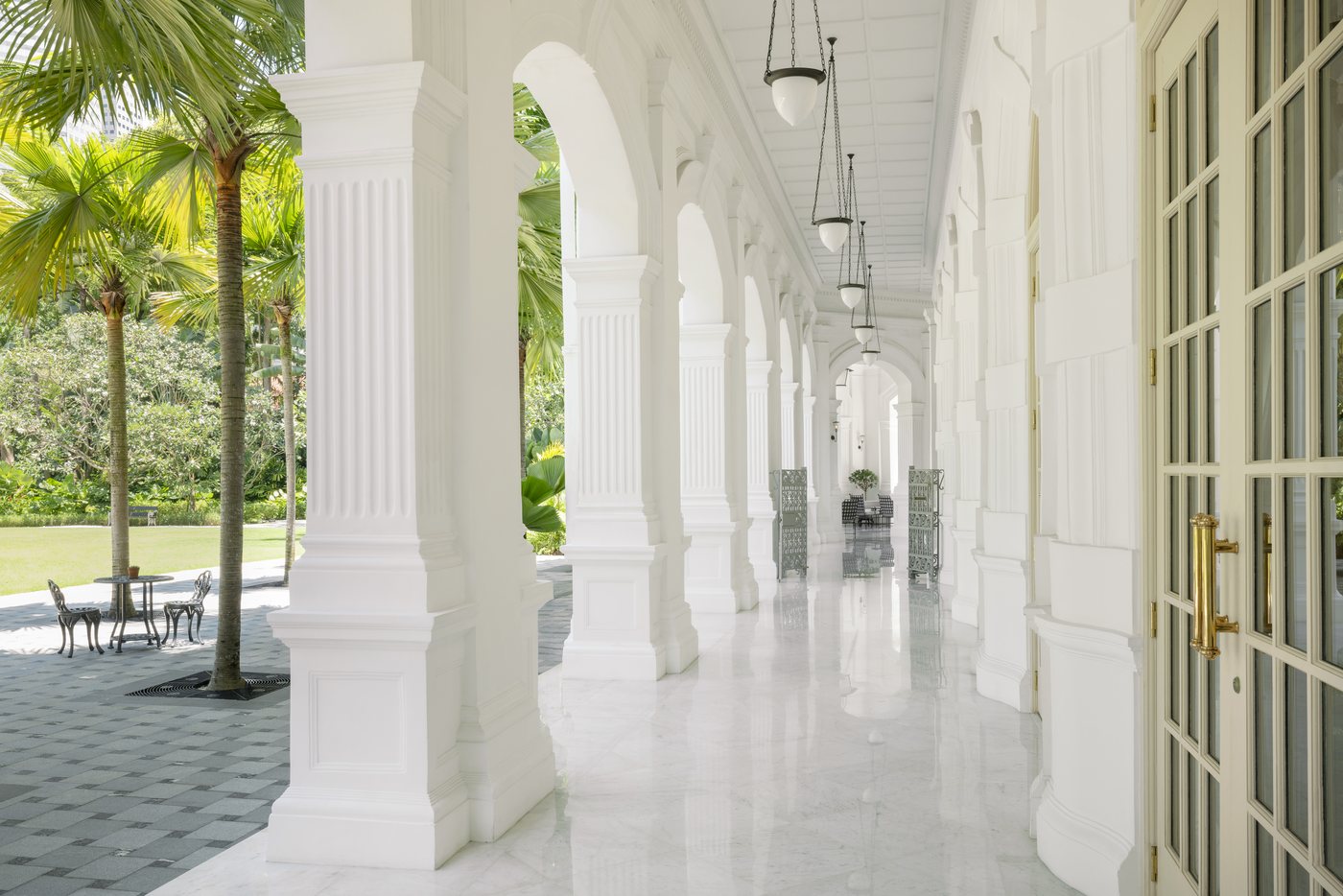
The colonnade walkway, Beach Road. Photo: Raffles Singapore — Official press image — courtesy of Raffles Singapore. Opened in 1899 and still the definitive word on colonial-era Southeast Asian hospitality — the white-columned architecture, the Sikh doormen, the Singapore Sling served where it was invented. It would be easy for a hotel this famous to coast on reputation. Raffles doesn't: the butler service is still the exemplar every other Asian luxury hotel is quietly measured against. This is less a hotel than a piece of living infrastructure for the region's idea of hospitality.
The detail: every suite comes with its own butler — a Raffles tradition maintained since long before "personalised service" became a marketing phrase.
Best for: travellers who want the original version of an experience everyone else is copying.
No. 6 — Atlantis The Royal
Dubai, UAE
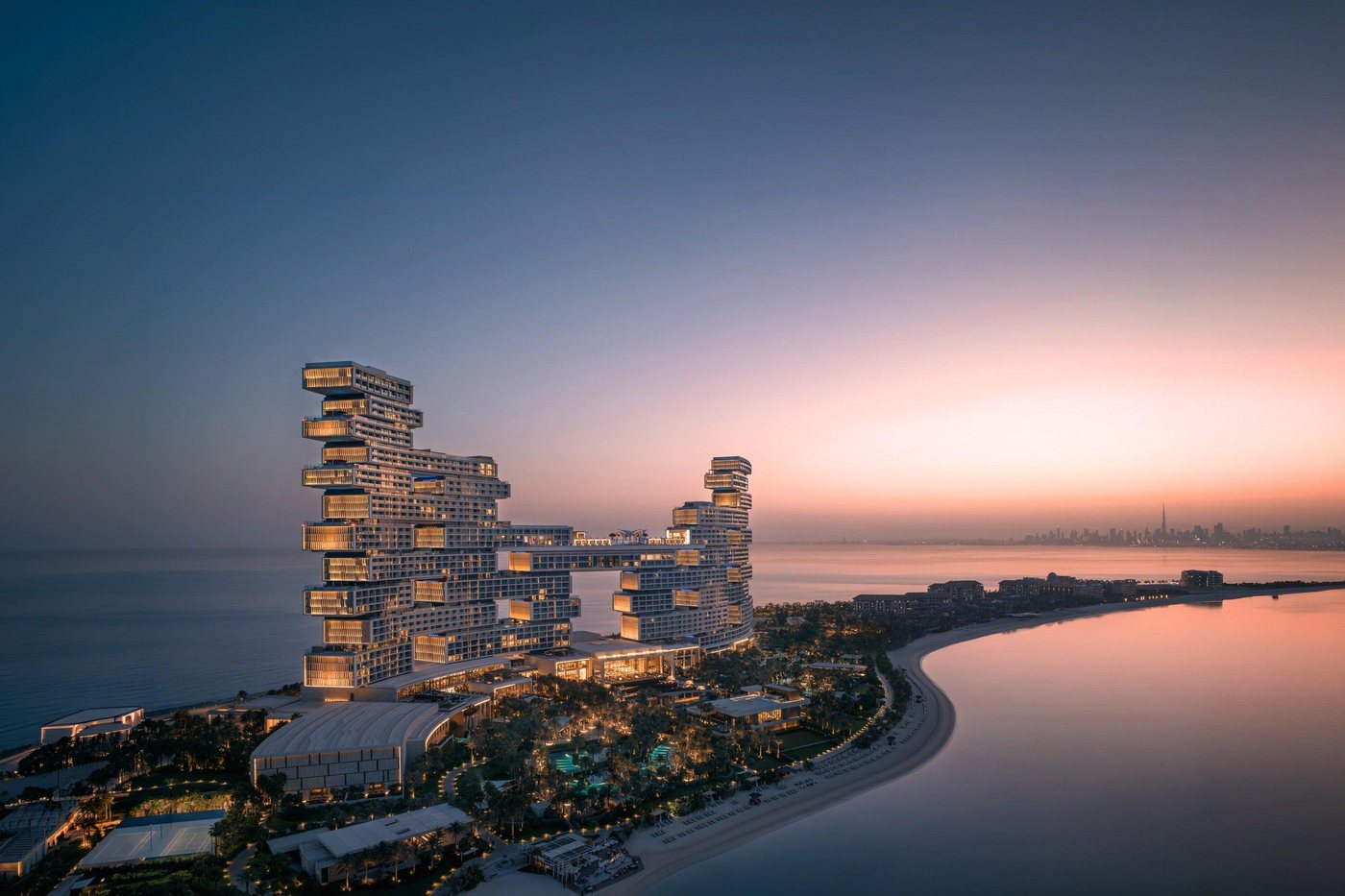
Atlantis The Royal, Palm Jumeirah. Photo: Atlantis The Royal — Official press image — courtesy of Atlantis The Royal. Named Best Hotel in the Middle East 2025, and it earns the title through sheer, unapologetic scale: 795 rooms, 16 restaurants, 17 boutiques, and roughly 90 swimming pools. This is maximalism as a design philosophy rather than an accident, and it works because every element — from the beach club to the residency-style suites — is executed at the same uncompromising level. If Passalacqua is a whisper, Atlantis The Royal is a full orchestra, and both are legitimate ways to be excellent.
The detail: approximately 90 pools across the property — yes, that number is correct.
Best for: families and groups who want the "it has everything" experience done at the highest possible level, not the theme-park version.
No. 7 — Mandarin Oriental Bangkok
Bangkok, Thailand
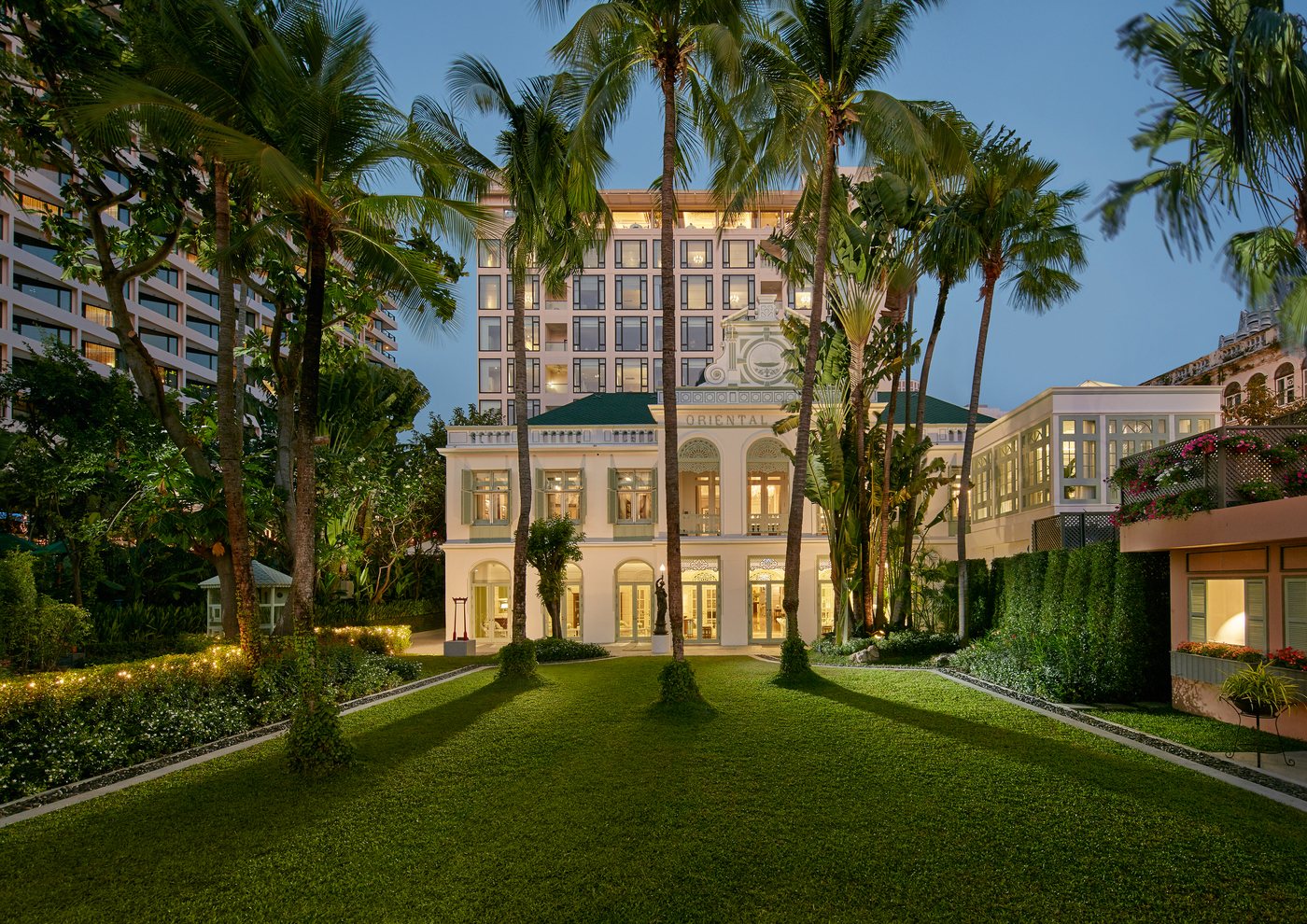
The Authors Wing and garden, on the Chao Phraya. Photo: Mandarin Oriental Hotel Group — Official press image — courtesy of Mandarin Oriental Bangkok. The third Bangkok hotel in this top ten, and the one with the longest memory: more than 150 years on the same stretch of the Chao Phraya, grown from a 12-room outpost into a nearly 400-room institution without losing the plot. Michelle Yeoh and Stanley Tucci are named regulars, but the real credential is generational — this is the hotel Bangkok's own elite have used to receive guests for a century and a half, which is a harder thing to fake than a design award.
The detail: founded with just 12 rooms; the current property is one of the oldest continuously operating hotels in Southeast Asia.
Best for: anyone who wants Bangkok's grand old dame rather than its newest architectural statement.
No. 8 — Chablé Yucatán
Chocholá, Mexico
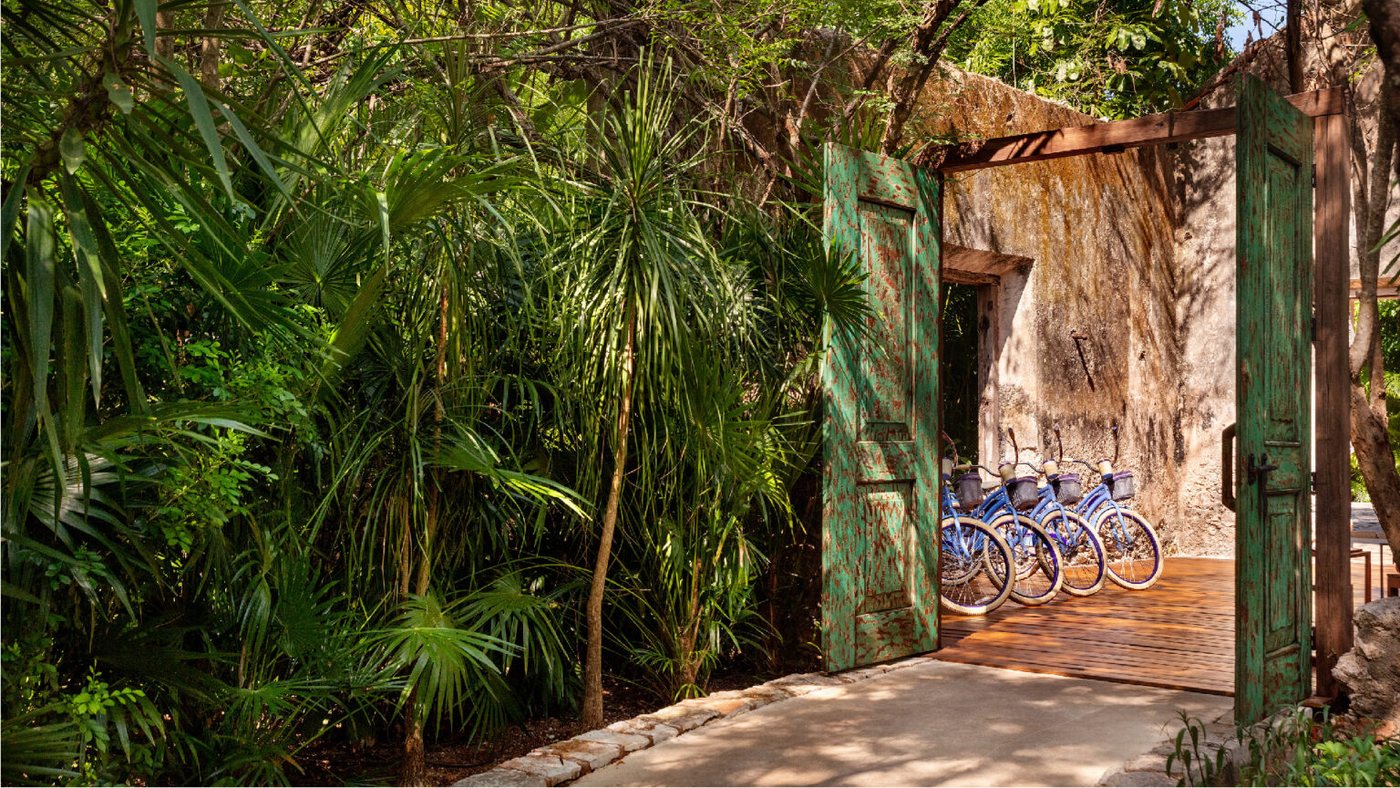
The grounds at Chablé Yucatán, Chocholá. Photo: Chablé Hotels — Official press image — courtesy of Chablé Yucatán. Named Best Hotel in North America for a second consecutive year, and the only jungle property in this top ten — reason enough to pay attention. Set deep in the Yucatán since 2016, the entire proposition is wellness rather than spectacle: Mayan treatment programmes, palm-lined grounds, and a working theory that genuine relaxation requires distance from a city rather than proximity to one. It's the rare hotel where the spa isn't an amenity bolted onto the room count — it's the actual point.
The detail: treatment programmes are built around traditional Mayan healing practices, sourced from the surrounding Yucatán jungle rather than an imported spa menu.
Best for: travellers whose idea of luxury is silence, not stimulation.
No. 9 — Four Seasons Firenze
Florence, Italy
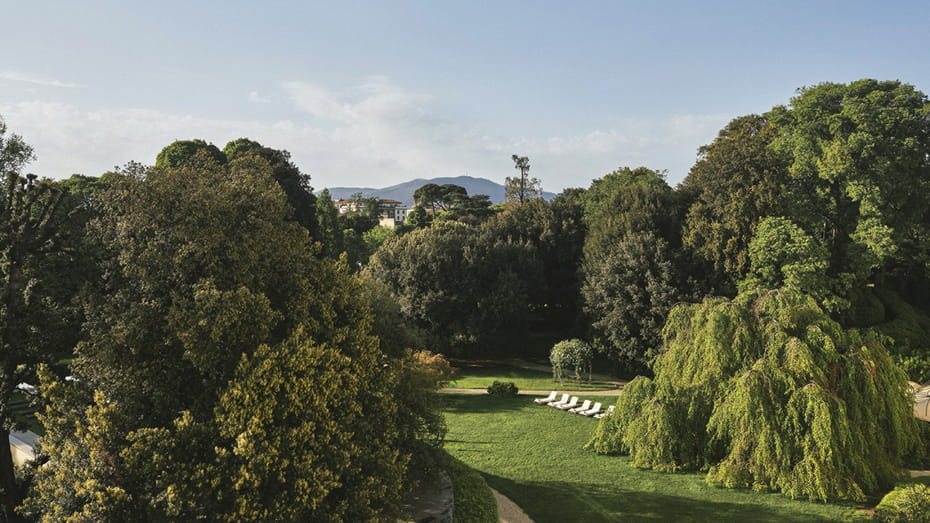
The Giardino della Gherardesca, the hotel private park. Photo: Four Seasons Hotels and Resorts — Official press image — courtesy of Four Seasons Firenze. Housed inside a converted 15th-century Medici palace, set within Florence's largest private garden — a fact that matters more than it sounds, because privacy is the one thing a busy Renaissance city can't otherwise offer. Frescoed ceilings are almost table stakes at this level of Florentine hotel, but the ability to host a private dinner in an actual centuries-old chapel is not, and that's the detail that separates this property from its competitors in the same postcode.
The detail: the hotel can arrange private dinners inside its own historic, secluded chapel — not a marketing gimmick, an actual consecrated space on the grounds.
Best for: history-minded travellers who want a garden to retreat to after a day of Uffizi crowds.
No. 10 — Upper House Hong Kong
Hong Kong, China
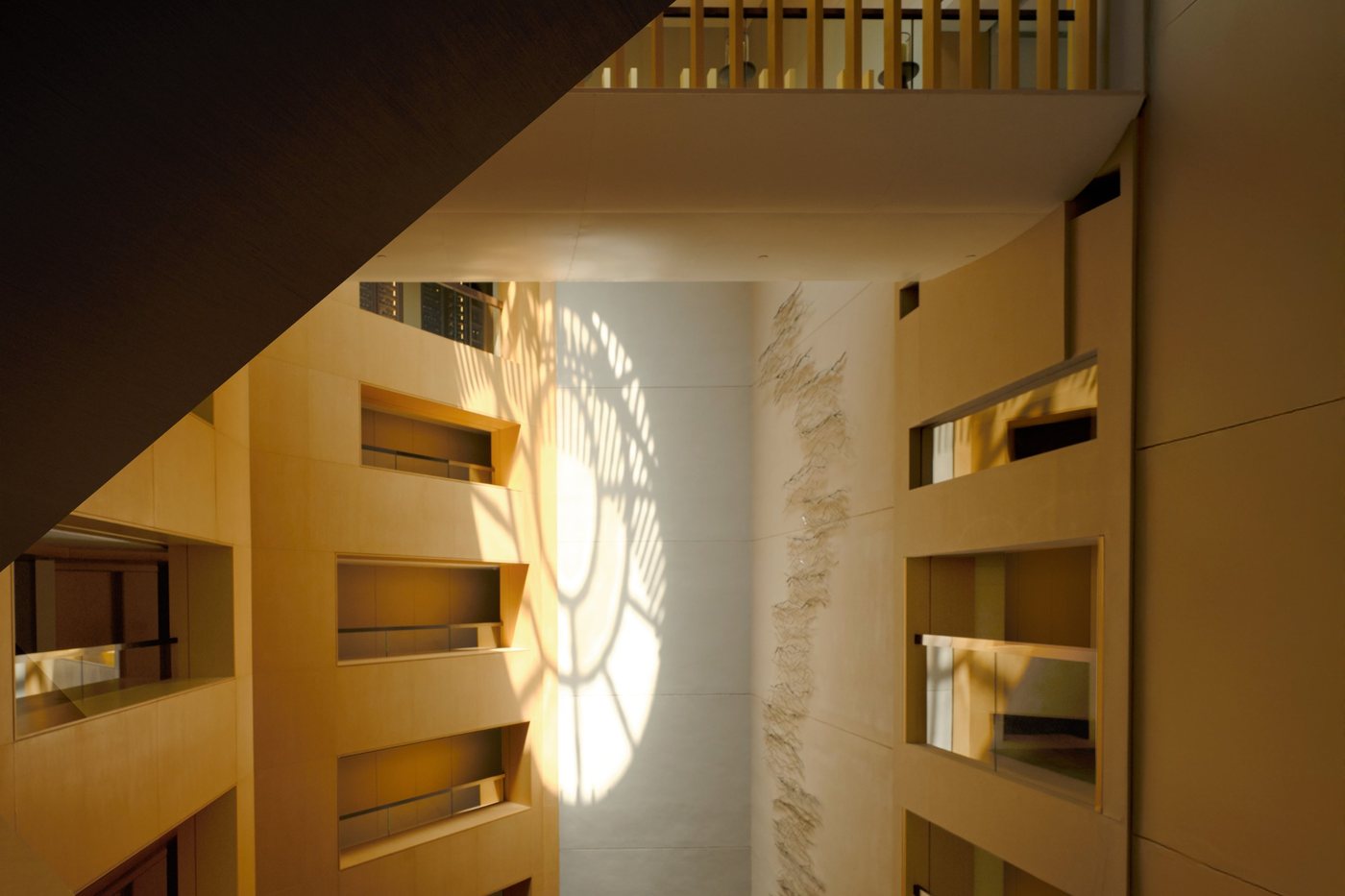
Inside The Upper House, Admiralty. Photo: Swire Hotels — Official press image — courtesy of Upper House Hong Kong. The hotel that made André Fu's name, and arguably still his finest work despite the many projects since. Opened in 2009, it trades Hong Kong's usual maximalism for something closer to a held breath — quiet, art-filled, sky-high over Victoria Harbour, with a design language so restrained it makes most "minimalist" hotels look overdressed by comparison. Rosewood may have taken the city's top spot this year, but Upper House remains the connoisseur's Hong Kong address.
The detail: designed by André Fu's own studio in what was his first major hotel commission — the project that launched one of Asia's most influential hospitality designers.
Best for: design-literate travellers who'd rather have one perfect gesture than ten good ones.
No. 11 — Copacabana Palace
Rio de Janeiro, Brazil
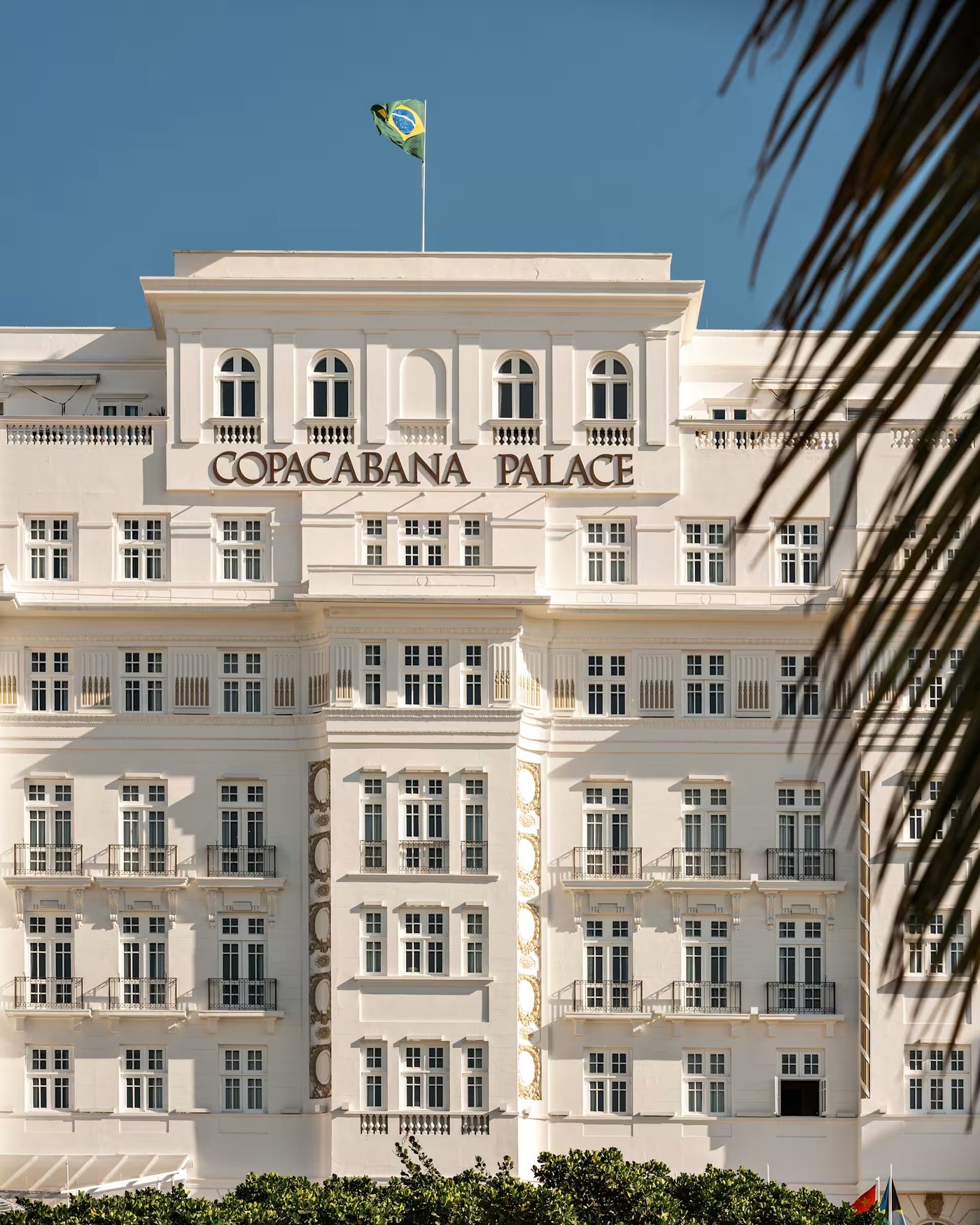
Copacabana Palace, Avenida Atlântica. Photo: Belmond — Official press image — courtesy of Copacabana Palace. The Lavazza Highest New Entry of 2025 and, simultaneously, the least "new" hotel on this list — built in 1923 specifically to bring European glamour to the Brazilian beachfront, and never really relinquishing that job since. This year's ranking debut is really a century-late formal acknowledgment of what Rio already knew: Copacabana Palace is not just a hotel, it's the address South American luxury travel has measured itself against for a hundred years.
The detail: opened in 1923 with the explicit brief of importing European-hotel glamour to Rio's beachfront — a mission statement it never really abandoned.
Best for: travellers who want beachfront grandeur with a century of history behind it.
No. 12 — Capella Sydney
Sydney, Australia
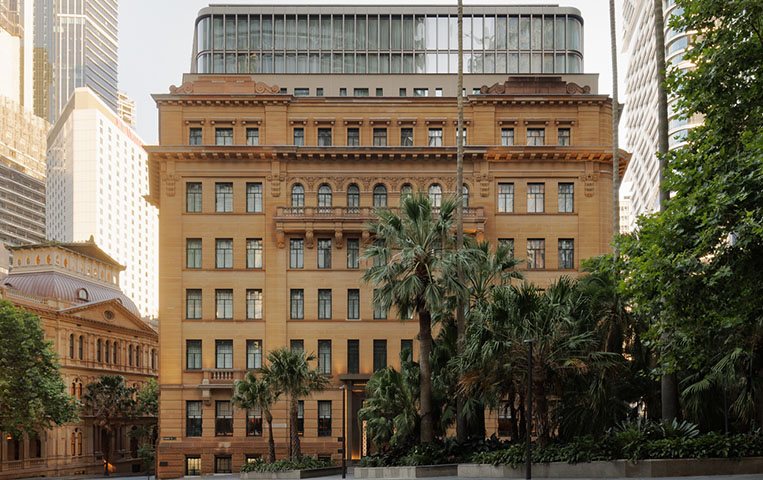
Capella Sydney, in the former Department of Education building. Photo: Capella Hotels and Resorts — Official press image — courtesy of Capella Sydney. Capella's first and only Australian property, named the Best Hotel in Oceania 2025 — and the rare hotel that manages to represent a country's art scene rather than just decorate with it. Sculptures from Waayni artist Judy Watson anchor the communal spaces; timber floors and locally sourced art run through all 192 rooms. This is a hotel that made a specific bet on Australian identity over generic international luxury, and the bet paid off.
The detail: communal spaces feature sculptural work by Indigenous Australian artist Judy Watson — a deliberate curatorial choice, not incidental decor.
Best for: travellers who want a hotel that reflects where it is, not an imported template.
No. 13 — Royal Mansour
Marrakech, Morocco
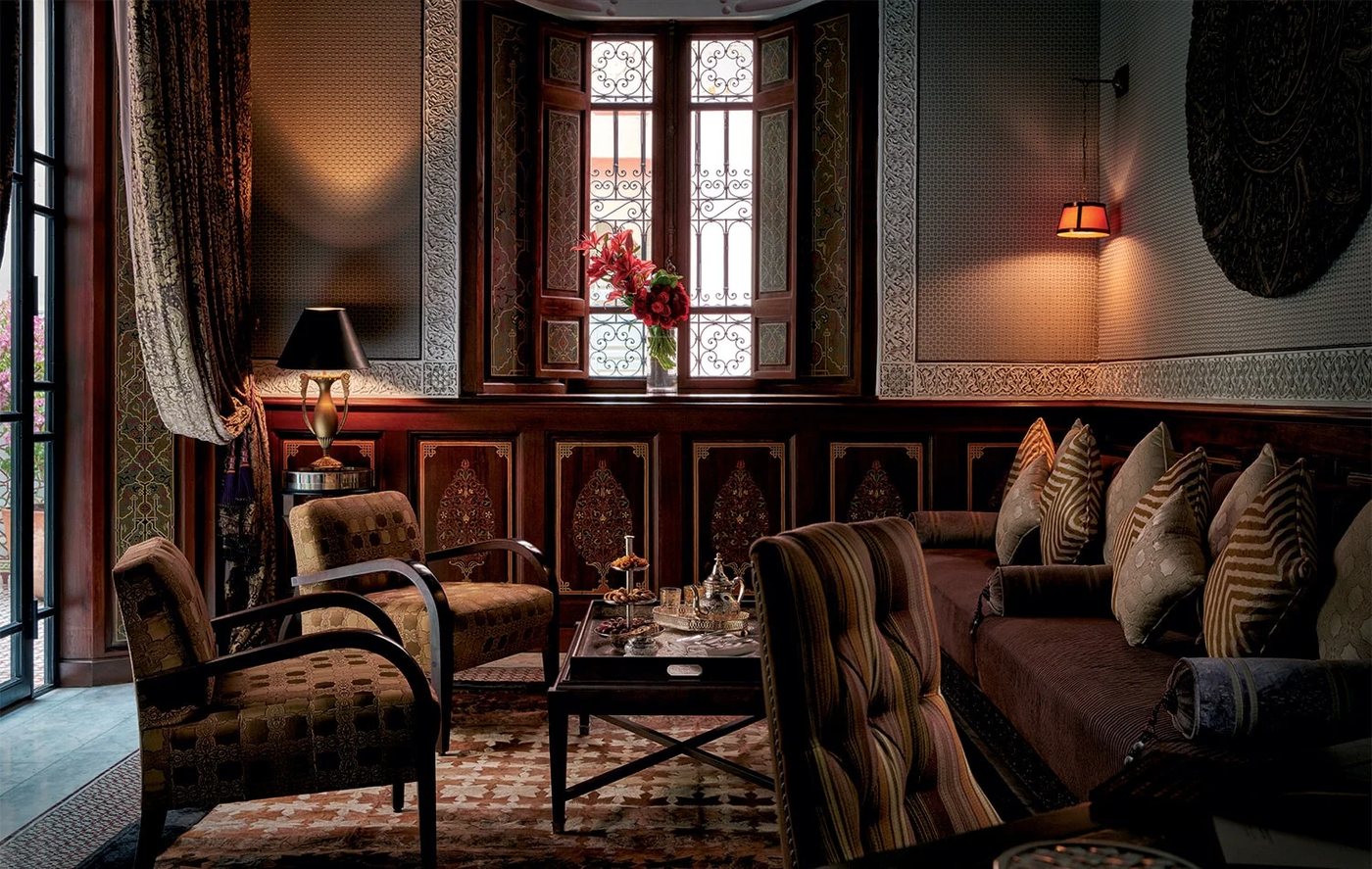
Inside a Superior Riad at Royal Mansour. Photo: Royal Mansour Marrakech — Official press image — courtesy of Royal Mansour. Opened in 2010 under the direct instruction of King Mohammed VI, with a brief that went beyond "build a nice hotel" to "build a physical manifestation of Morocco itself." This year it takes home both the Highest Climber award and the title of Best Hotel in Africa 2025, and neither is a surprise to anyone who has eaten here, slept here, or simply walked the riads — every fabric, every dish, every tiled surface is doing cultural work, not just aesthetic work.
The detail: commissioned directly by Morocco's reigning monarch as a national showcase project — the hospitality equivalent of a state building.
Best for: travellers who want Morocco distilled into its most refined possible form, royal budget included.
No. 14 — Mandarin Oriental Qianmen
Beijing, China
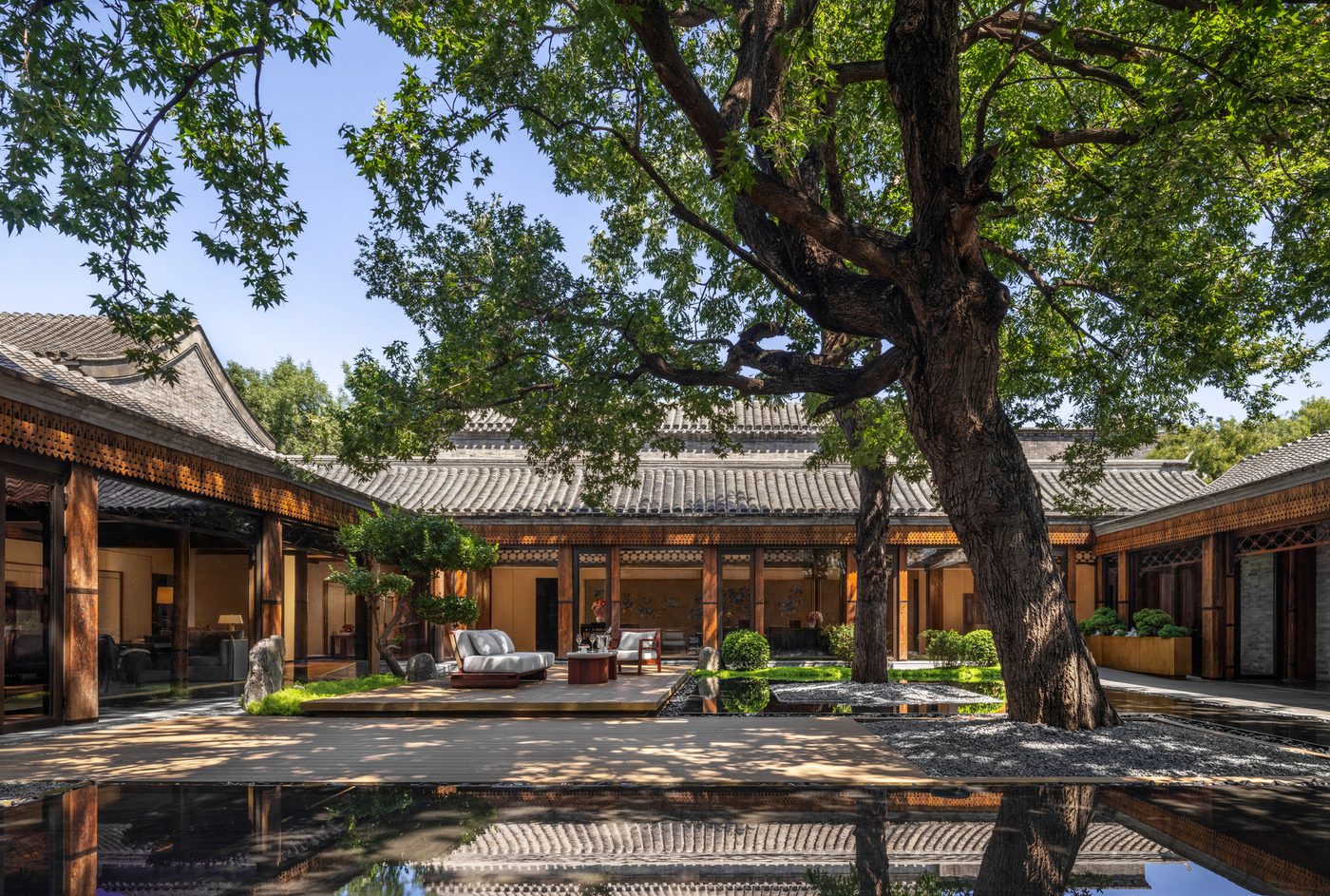
The restored hutong courtyard at Mandarin Oriental Qianmen, Beijing. Photo: Mandarin Oriental Qianmen, Beijing — Official press image — courtesy of Mandarin Oriental Qianmen, Beijing. Just over a year old and already the recipient of the Nikka Best New Hotel Award — the boldest architectural bet in this top 20. Instead of conventional hotel rooms, Mandarin Oriental's second Beijing property offers 42 individual siheyuan, traditional courtyard houses strung along a series of historic hutong laneways. It's a hotel that essentially disguises itself as a neighbourhood, and the disguise is the entire point: you sleep inside actual Beijing history rather than a building built to resemble it.
The detail: all 42 "rooms" are individual traditional courtyard houses connected by historic laneways, not a conventional single tower.
Best for: repeat Beijing visitors who've done the five-star towers and want the real texture of the old city instead.
No. 15 — Bulgari Tokyo
Tokyo, Japan
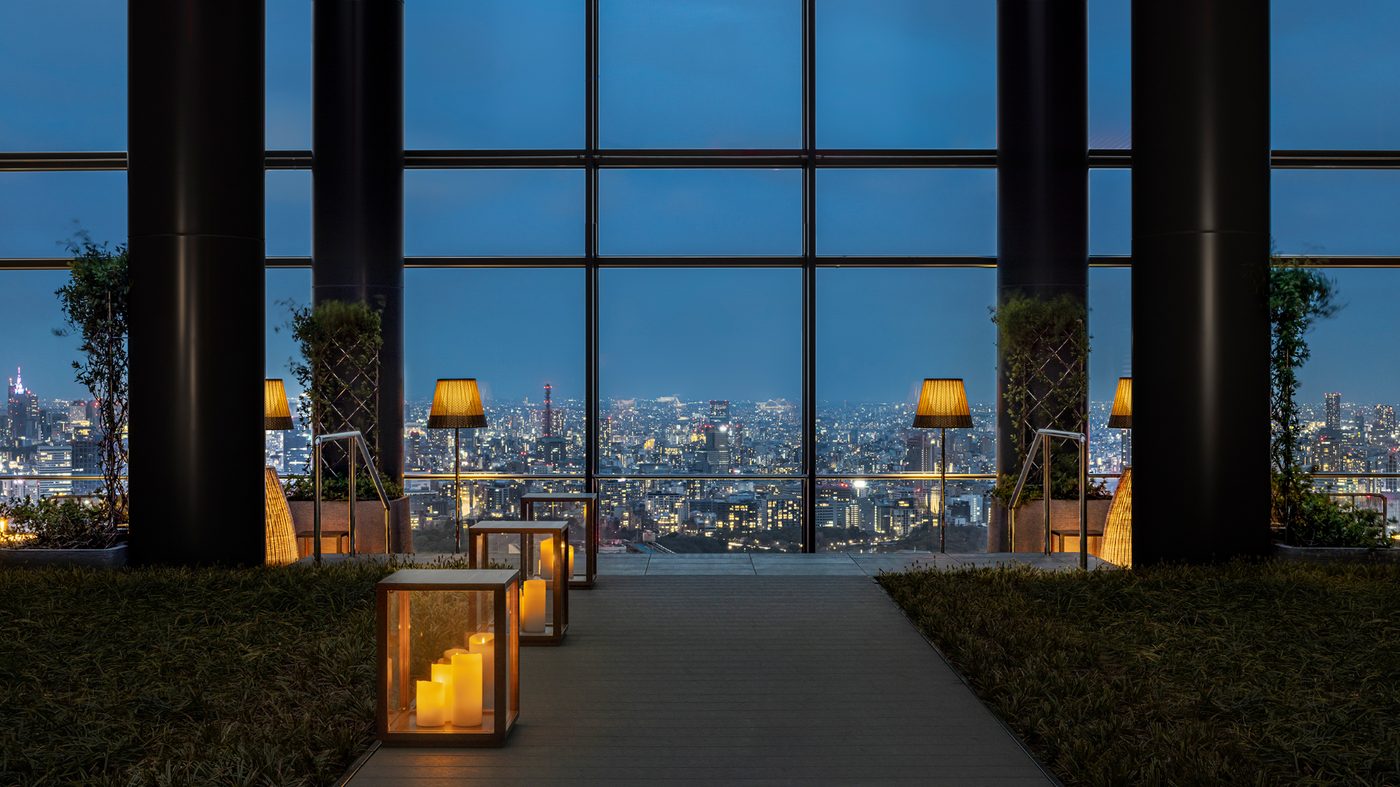
The 40th-floor terrace at Bvlgari Hotel Tokyo, above the night skyline. Photo: Bvlgari Hotel Tokyo — Official press image — courtesy of Bvlgari Hotel Tokyo. The jewellery house's eighth hotel, and its most confident marriage yet of Italian fashion sensibility and Japanese architectural restraint — black granite against white marble, gold ceiling details, floral flourishes that read as fashion-house rather than hotel-brand. Tokyo has an unusually deep bench of design-forward luxury hotels; Bulgari's contribution is proving that maximalist Italian glamour and Japanese minimalism aren't actually opposites if you get the ratio right.
The detail: the eighth Bulgari hotel worldwide, and one of only a handful outside Italy where the brand's own design team leads the interiors directly.
Best for: fashion-literate travellers who want Tokyo's precision with a shot of Roman glamour.
No. 16 — Claridge's
London, United Kingdom
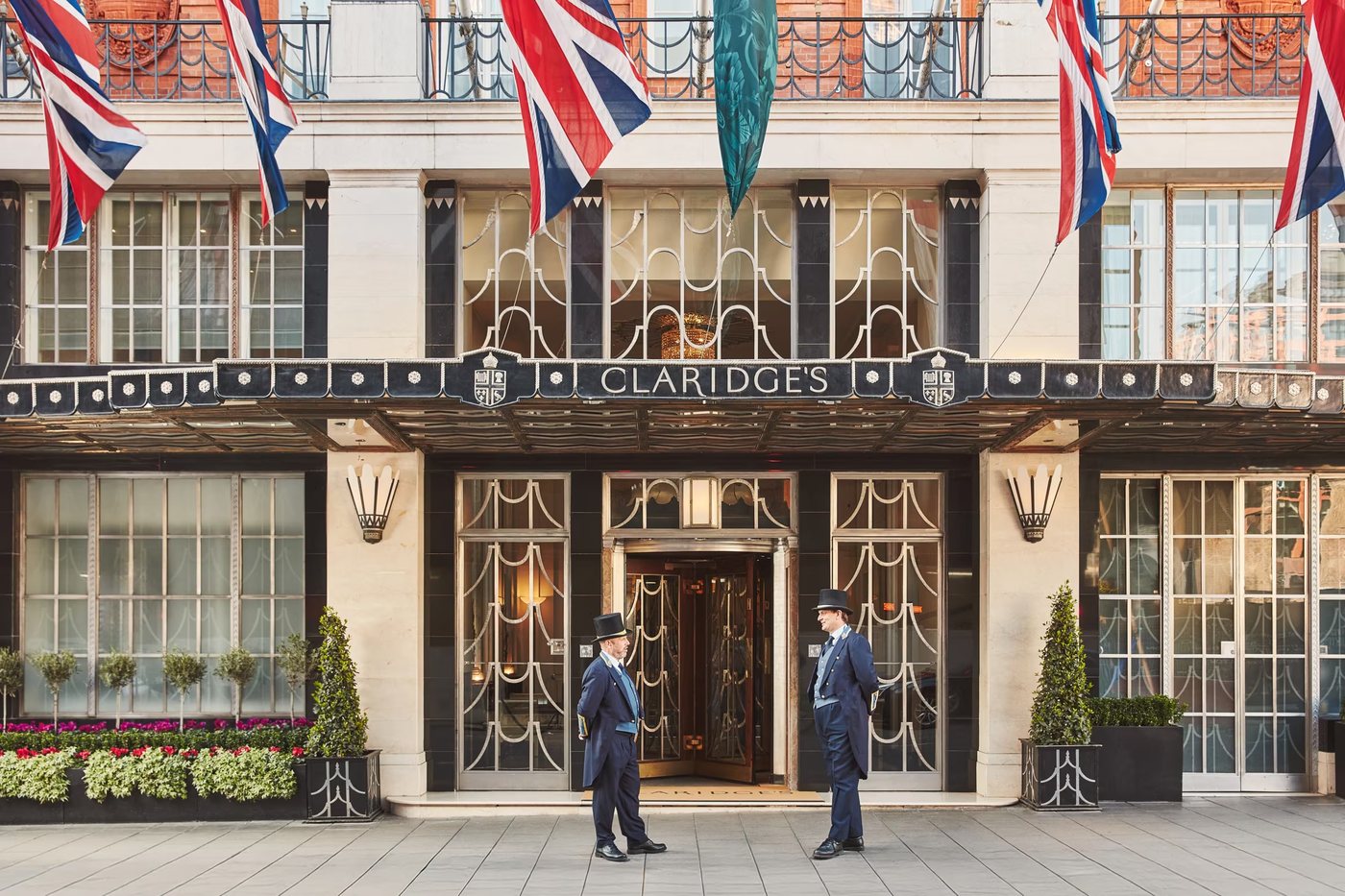
The entrance on Brook Street, Mayfair. Photo: Maybourne — Official press image — courtesy of Claridge`s. Open since 1856 and still the reference point for English high-society hospitality, discreet enough that its most famous guests — Mick Jagger, Queen Elizabeth II among them — could actually be discreet while staying there. The Regency-leaning rooms and muted earth-tone palette aren't chasing trends, because Claridge's doesn't need to; it set several of the trends other London hotels are still following a century and a half later.
The detail: has hosted a documented run of British and European royalty since the Victorian era, with a level of institutional discretion few modern hotels can replicate.
Best for: travellers who want London's establishment version of luxury, not its newest hype hotel.
No. 17 — Four Seasons Astir Palace
Athens, Greece
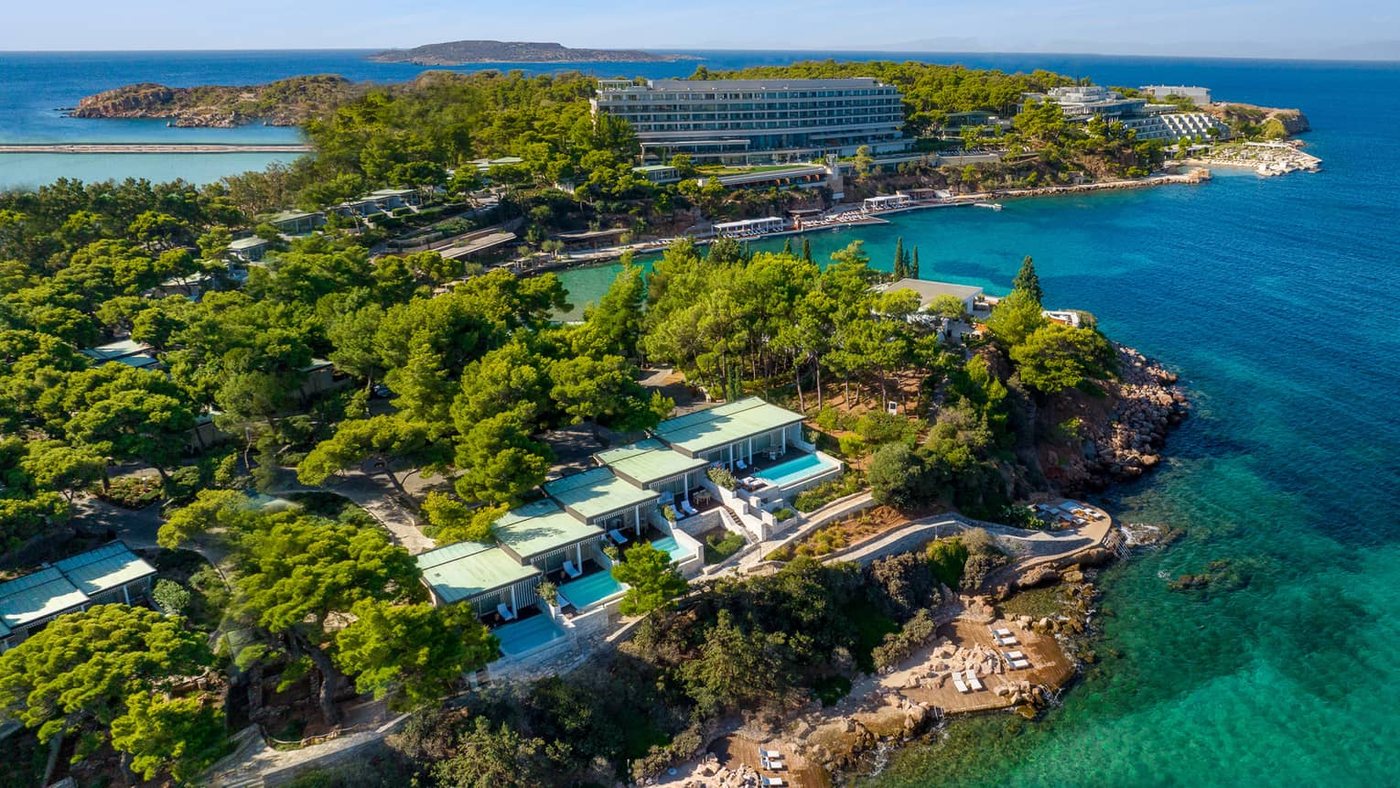
The Astir Peninsula, on the Athens Riviera. Photo: Four Seasons Hotels and Resorts — Official press image — courtesy of Four Seasons Astir Palace. The resort Athens has relied on since the 1960s, freshly relaunched after a reported $700 million Four Seasons investment that pulled a beloved but aging property firmly into the present. Set on the Athenian Riviera among fragrant pine trees overlooking the Aegean, its comeback this year (a re-entry to the ranking) says as much about smart capital deployment as it does about design — sometimes the best luxury story is a great old idea, properly refinanced.
The detail: the $700m renovation is one of the largest single-property investments Four Seasons has made anywhere in the world.
Best for: Athens visitors who want a genuine seaside resort, not just a city hotel with a rooftop pool.
No. 18 — Desa Potato Head
Bali, Indonesia
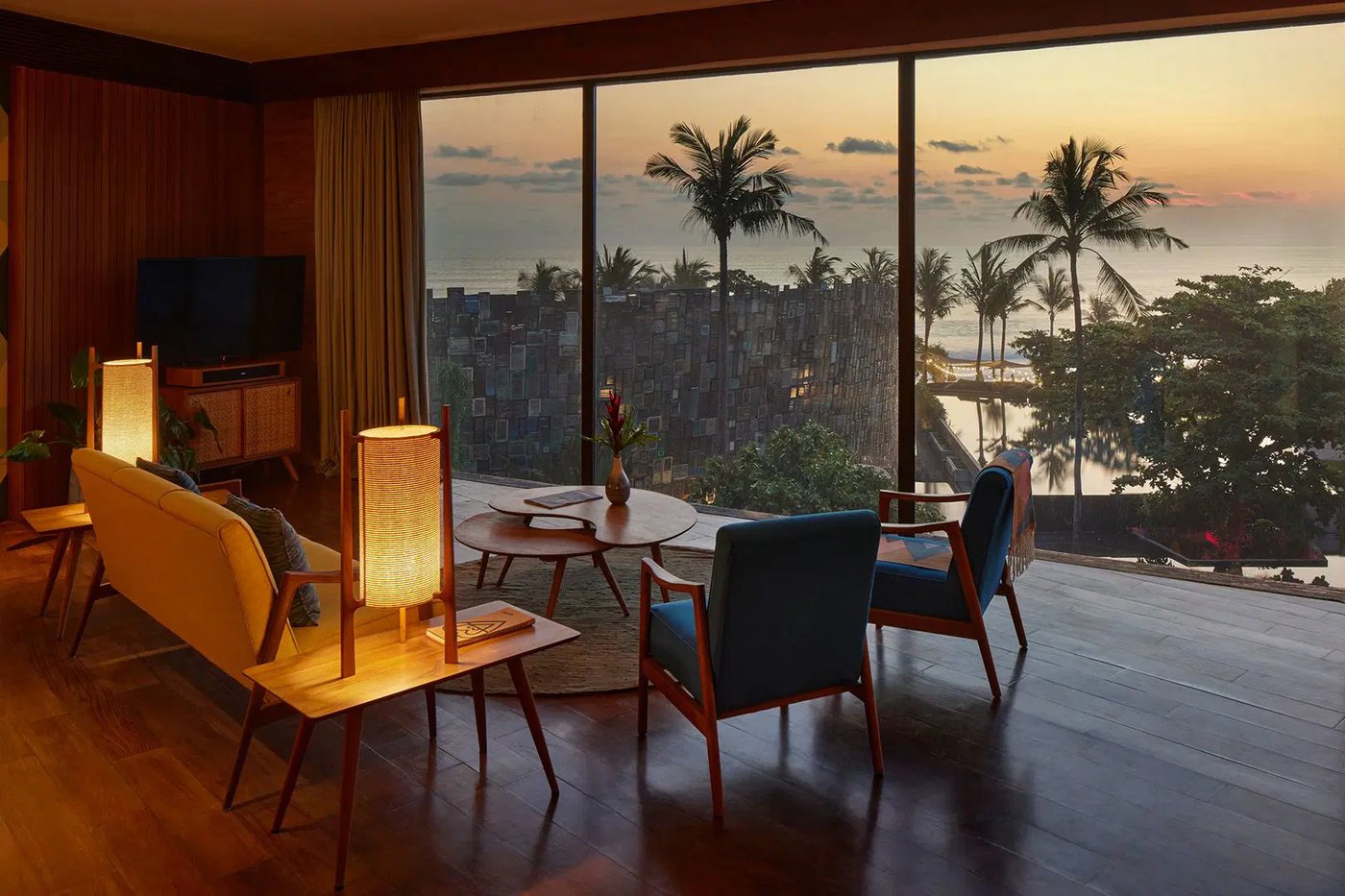
Inside AM House at Desa Potato Head, Seminyak. Photo: Desa Potato Head — Official press image — courtesy of Desa Potato Head. The list's conscience pick, and deservedly so: what started as a Seminyak beach club has grown into a "creative village" of suites, studios and community spaces built around a genuinely uncompromising sustainability mandate — zero single-use plastic, aggressive waste reduction, and design that treats eco-conscious building as a creative constraint rather than a marketing bullet point. It won the 2025 Eco Hotel Award, but the more interesting fact is that it also earned a place on this list purely on guest experience, sustainability aside.
The detail: operates on a zero single-use-plastic policy across the entire property, not just guest rooms.
Best for: design-conscious travellers who want Bali's creative energy with an environmental conscience built in, not bolted on.
No. 19 — Le Bristol
Paris, France
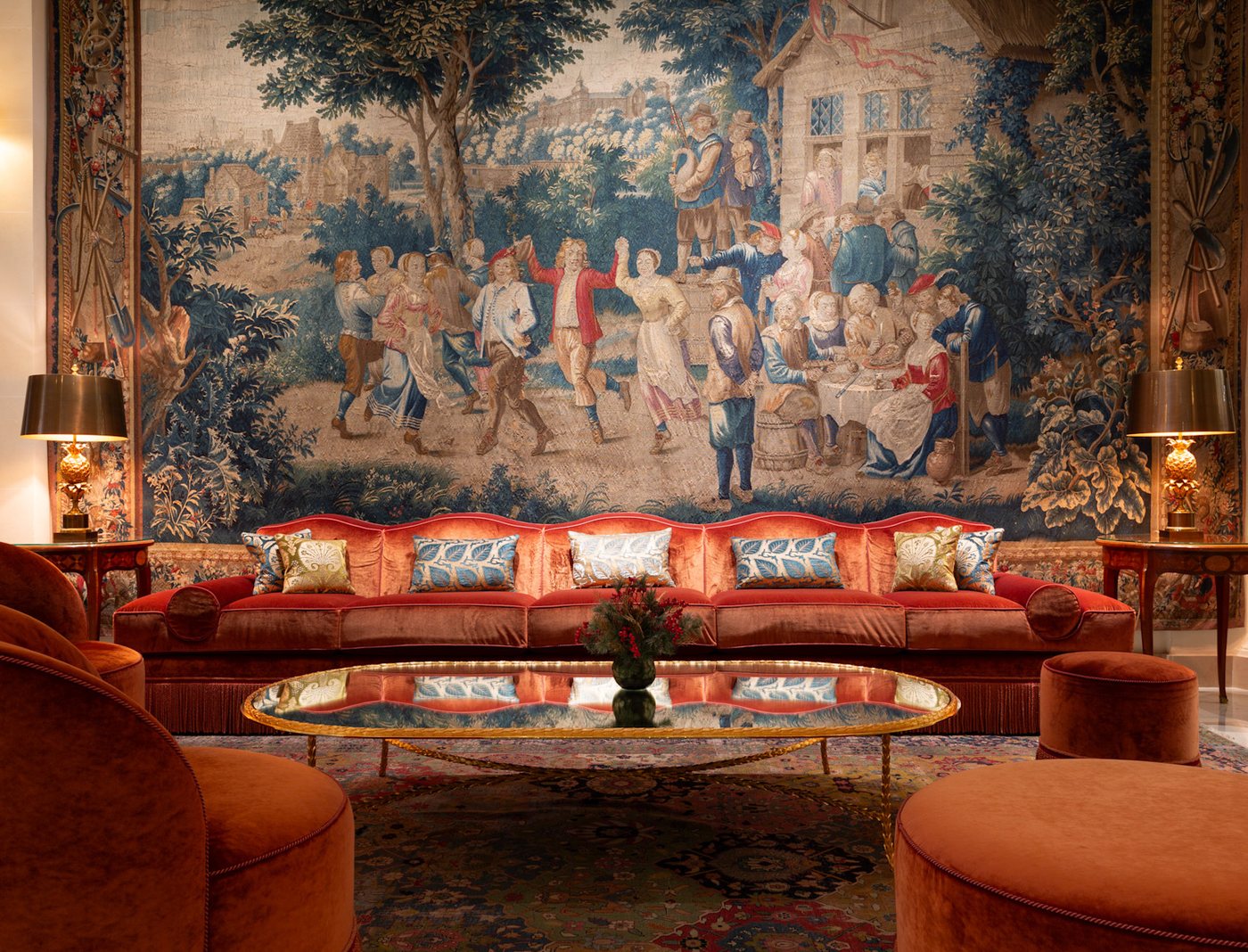
The lobby salon, rue du Faubourg Saint-Honoré. Photo: Claire Cocano / Le Bristol Paris — Official press image — courtesy of Le Bristol. A century old in 2025, and still the Rue du Faubourg Saint-Honoré landmark that Coco Chanel, Pablo Picasso, Piet Mondrian and Salvador Dalí all called home at one point or another. Named for an 18th-century earl famous for prioritising comfort above all else, Le Bristol has spent a hundred years proving that founding philosophy correct — this is a hotel built around the specific, old-fashioned idea that guests should simply be extremely comfortable, fashion cycles be damned.
The detail: its guest history reads like a mid-century art-world roll call — Chanel, Picasso, Mondrian and Dalí among its documented regulars.
Best for: Paris traditionalists who want the hotel the city's own cultural figures actually chose to live in.
No. 20 — Jumeirah Marsa Al Arab
Dubai, UAE
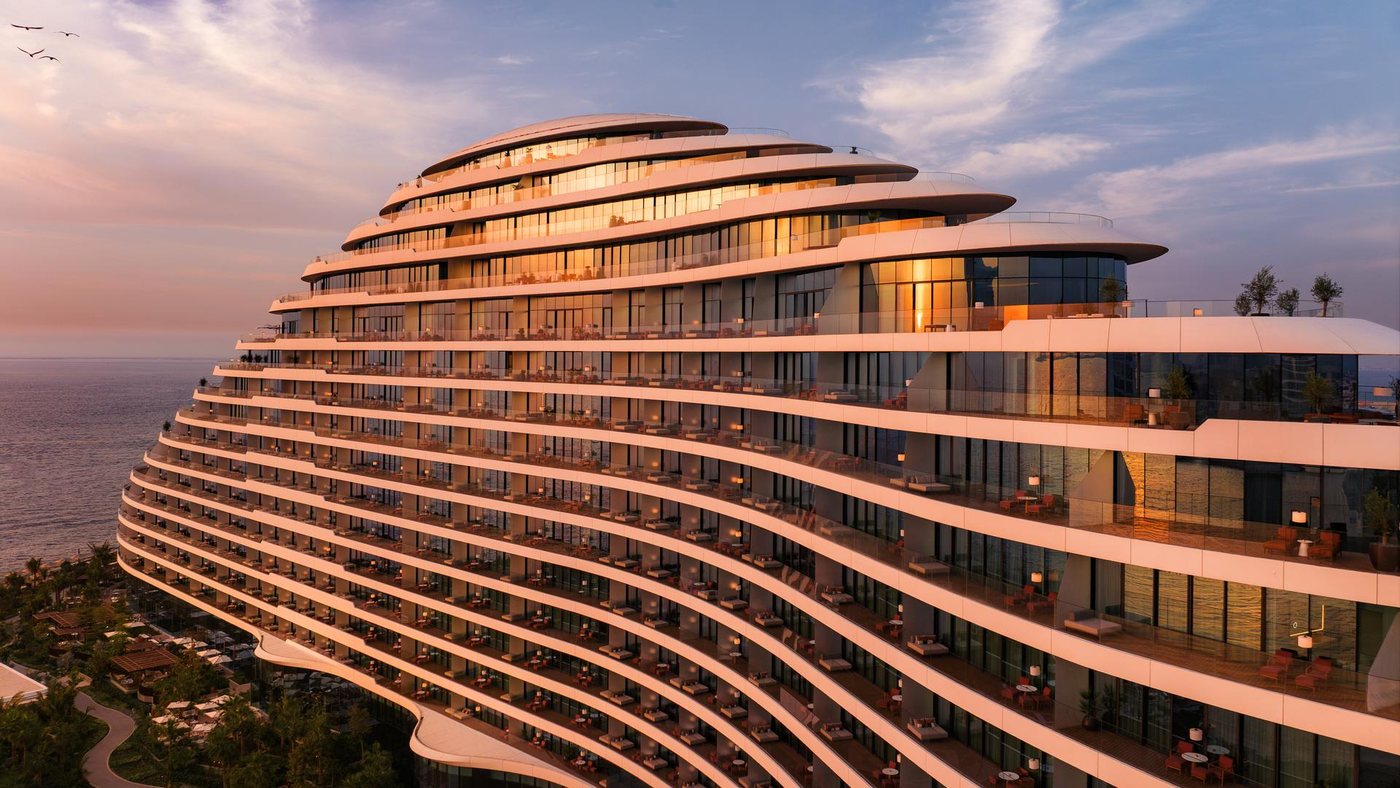
Jumeirah Marsa Al Arab, Umm Suqeim. Photo: Jumeirah — Official press image — courtesy of Jumeirah Marsa Al Arab. The newest entry in this top 20, and the most architecturally daring: a yacht-shaped hotel that deliberately avoids the oversized, impersonal trap so many Dubai mega-projects fall into. Corridors curve like a ship's; public spaces are broken into intimate alcoves rather than vast atriums; rooms are sized and framed to feel like spacious cabins with sea views rather than generic suites. It's proof that even in a city famous for scale-for-scale's-sake, a well-considered idea can still stand out.
The detail: the entire building's interior circulation is designed around a yacht's curved corridors — an architectural conceit followed all the way through, not just at the entrance.
Best for: Dubai first-timers who want architectural spectacle without losing the sense of an actual room to come home to.
This is Volume 1 of what we intend to make a running series — the AVARA Best Of collection. Up next: The World's 20 Best National Parks, The World's 20 Best Restaurants, and a regional cut we're calling Europe's 20 Best, applying the same rule every time — real rankings, cross-checked against more than one credible source, written straight, no brochure language. If a hotel, park or restaurant makes one of these lists, it's because the people who actually rank these things for a living said so, not because we liked the photos.
Sources: The World's 50 Best Hotels 2025 (William Reed / 50 Best, announced 30 October 2025, London); cross-referenced against Forbes Travel Guide 2026 Star Awards and Condé Nast Traveler Gold List 2026.
See the full AVARA Best Of collection · Browse all AVARA city guides