The 25 Best Waves in the World
Surfing has no equivalent to The World's 50 Best — but it has something almost as useful: the World Surf League Championship Tour, whose schedule is effectively a professional judgment about which waves are good enough to decide a world title. The 2026 CT runs twelve stops across nine countries — Bells Beach, Margaret River, Snapper Rocks, Raglan, Punta Roca, Saquarema, Teahupo'o, Cloudbreak, Lower Trestles, Abu Dhabi, Peniche and Pipeline — and eight of those waves appear below. That's a real anchor, not an opinion.
The rest of the list covers waves the tour doesn't visit but every surfer knows: Nazaré, Skeleton Bay, Mavericks, Uluwatu, Chicama, Mundaka. And it deliberately includes waves you can actually learn on, because a list of twenty-five waves that would kill most readers is a poster, not a guide.
A serious note before the list. Several waves below have killed experienced professional surfers. Pipeline breaks over shallow, jagged reef and has a fatality history; Teahupo'o breaks below sea level onto coral; Mavericks and Nazaré are big-wave arenas where people have died; Shipstern Bluff is remote enough that a serious injury is a genuine emergency. Every entry therefore carries an explicit skill floor and danger rating, and those are not decorative. Surfing a wave beyond your level is not ambitious, it is dangerous to you and to everyone else in the water. Where a wave demands local knowledge, a guide or a boat, the entry says so.
Ratings used throughout:
BEGINNER — Safe to learn on, with a school or instructor
INTERMEDIATE — You can paddle out, catch unbroken waves and control your board
ADVANCED — Confident in overhead surf, reef-aware, can duck-dive properly
EXPERT ONLY — Professional or near-professional. Serious injury or death is a real outcome
LOW — Sand bottom, forgiving, lifeguarded or shallow-exit
MODERATE — Reef or rocks, current, or crowd pressure
HIGH — Shallow reef, heavy hold-downs, remote, or sharks
EXTREME — Life-threatening. Rescue support and experience mandatory
1. Banzai Pipeline — Hawaii, USA · Reef, left · EXPERT ONLY · EXTREME
2. Teahupo'o — Tahiti · Reef slab, left · EXPERT ONLY · EXTREME
3. Nazaré — Portugal · Canyon beach break · EXPERT ONLY · EXTREME
4. Shipstern Bluff — Tasmania, Australia · Slab, right · EXPERT ONLY · EXTREME
5. Mavericks — California, USA · Big-wave reef, right · EXPERT ONLY · EXTREME
6. Puerto Escondido — Mexico · Beach break, both · EXPERT ONLY · EXTREME
7. Cloudbreak — Fiji · Reef, left · ADVANCED+ · HIGH
8. Jeffreys Bay — South Africa · Point, right · ADVANCED · HIGH
9. Skeleton Bay — Namibia · Sand point, left · ADVANCED · HIGH
10. Uluwatu — Bali, Indonesia · Reef, left · ADVANCED · HIGH
11. Padang Padang — Bali, Indonesia · Reef, left · EXPERT ONLY · HIGH
12. Mundaka — Spain · Rivermouth, left · ADVANCED · MODERATE
13. Supertubos, Peniche — Portugal · Beach break, both · ADVANCED · HIGH
14. Superbank / Snapper — Australia · Sand point, right · ADVANCED · MODERATE
15. Desert Point — Lombok, Indonesia · Reef, left · EXPERT ONLY · HIGH
16. La Gravière, Hossegor — France · Beach break, both · ADVANCED · HIGH
17. Bells Beach — Australia · Reef/point, right · INTERMEDIATE+ · MODERATE
18. Lower Trestles — California, USA · Cobble point, both · INTERMEDIATE · LOW
19. Raglan / Manu Bay — New Zealand · Point, left · INTERMEDIATE · MODERATE
20. Chicama — Peru · Sand point, left · INTERMEDIATE · LOW
21. Pavones — Costa Rica · Point, left · INTERMEDIATE · LOW
22. Punta Roca — El Salvador · Point, right · INTERMEDIATE+ · MODERATE
23. Waikiki — Hawaii, USA · Reef, both · BEGINNER · LOW
24. Batu Bolong, Canggu — Bali, Indonesia · Reef, both · BEGINNER · LOW
25. Taghazout — Morocco · Points & beaches · BEGINNER+ · LOW
No. 1 — Banzai Pipeline
North Shore, Oahu, Hawaii
- Skill floor: EXPERT ONLY
- Danger: EXTREME
- Wave: Reef break, left (with Backdoor right)
- Best season: November–February
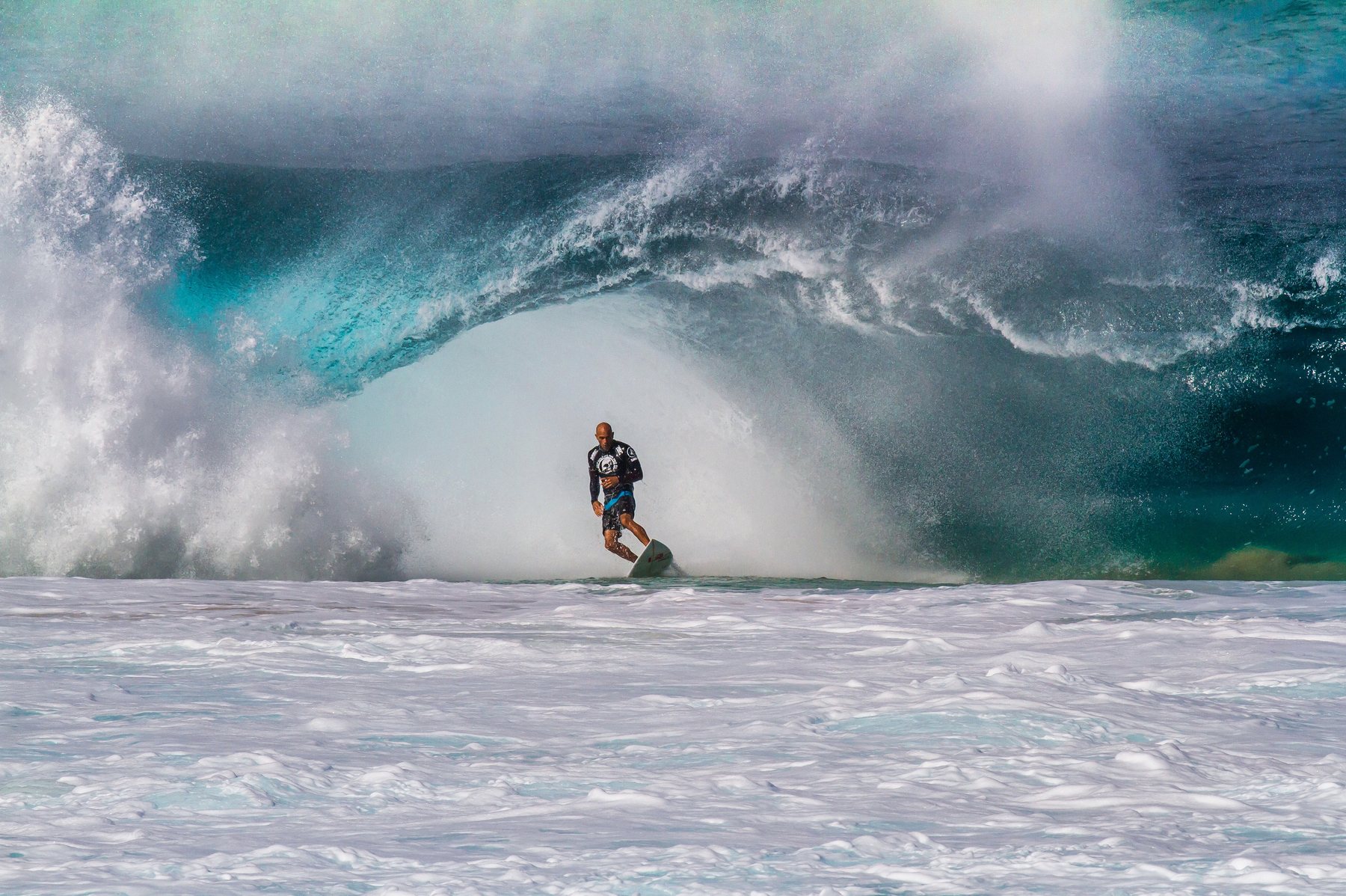
A surfer escapes the barrel at Banzai Pipeline, Oahu. Photo: Foster and sons — CC BY-SA 4.0. The most famous and most dangerous wave in surfing. Pipeline breaks in roughly 1–2 metres of water over a flat, cave-pocked lava reef a short paddle from the beach, producing an almost perfectly round barrel — and a fatality record that no other regularly surfed wave matches. It closes the 2026 Championship Tour in December, having traditionally opened the season.
The reality: the reef has caverns that hold surfers under. The crowd includes the best barrel riders alive and a strong local hierarchy. Watching from Ehukai Beach Park is genuinely one of the great sporting spectacles on earth, and is what almost everyone reading this should do instead.
No. 2 — Teahupo'o
Tahiti, French Polynesia
- Skill floor: EXPERT ONLY
- Danger: EXTREME
- Wave: Reef slab, left
- Best season: April–October
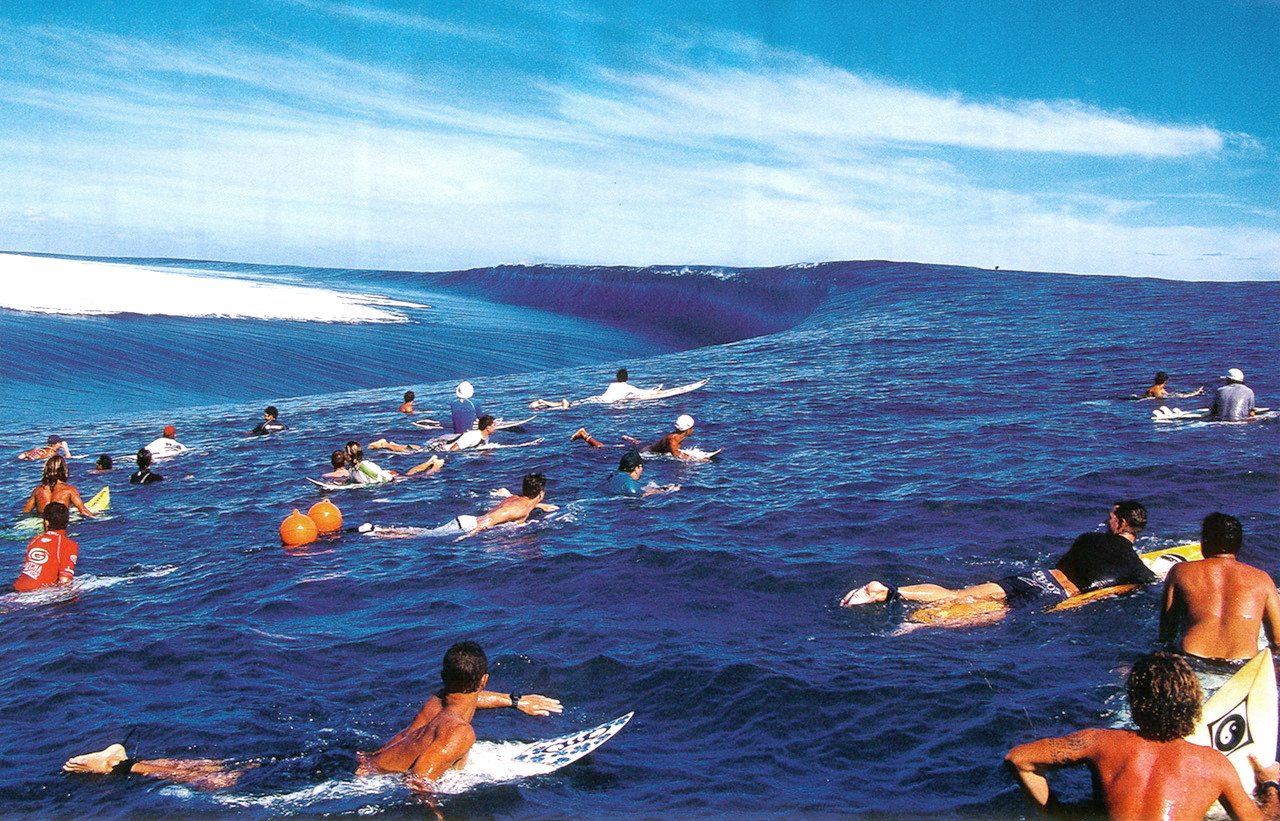
The reef break at Teahupo'o, Tahiti. Photo: Lookitt — CC BY-SA 4.0. The heaviest wave in the world. Teahupo'o breaks over a shallow coral shelf where deep ocean hits reef abruptly, so the wave draws water off the reef and throws a lip thicker than the wave is tall — it breaks below sea level. Hosted the 2024 Olympic surfing competition and returns as CT stop 7 in August 2026.
The reality: the reef is coral, not sand, and is exposed at low tide. Access is by boat from the village of Teahupo'o. Spectating from a boat in the channel is a legitimate and astonishing experience.
No. 3 — Nazaré
Portugal
- Skill floor: EXPERT ONLY
- Danger: EXTREME
- Wave: Canyon-fed beach break
- Best season: October–March
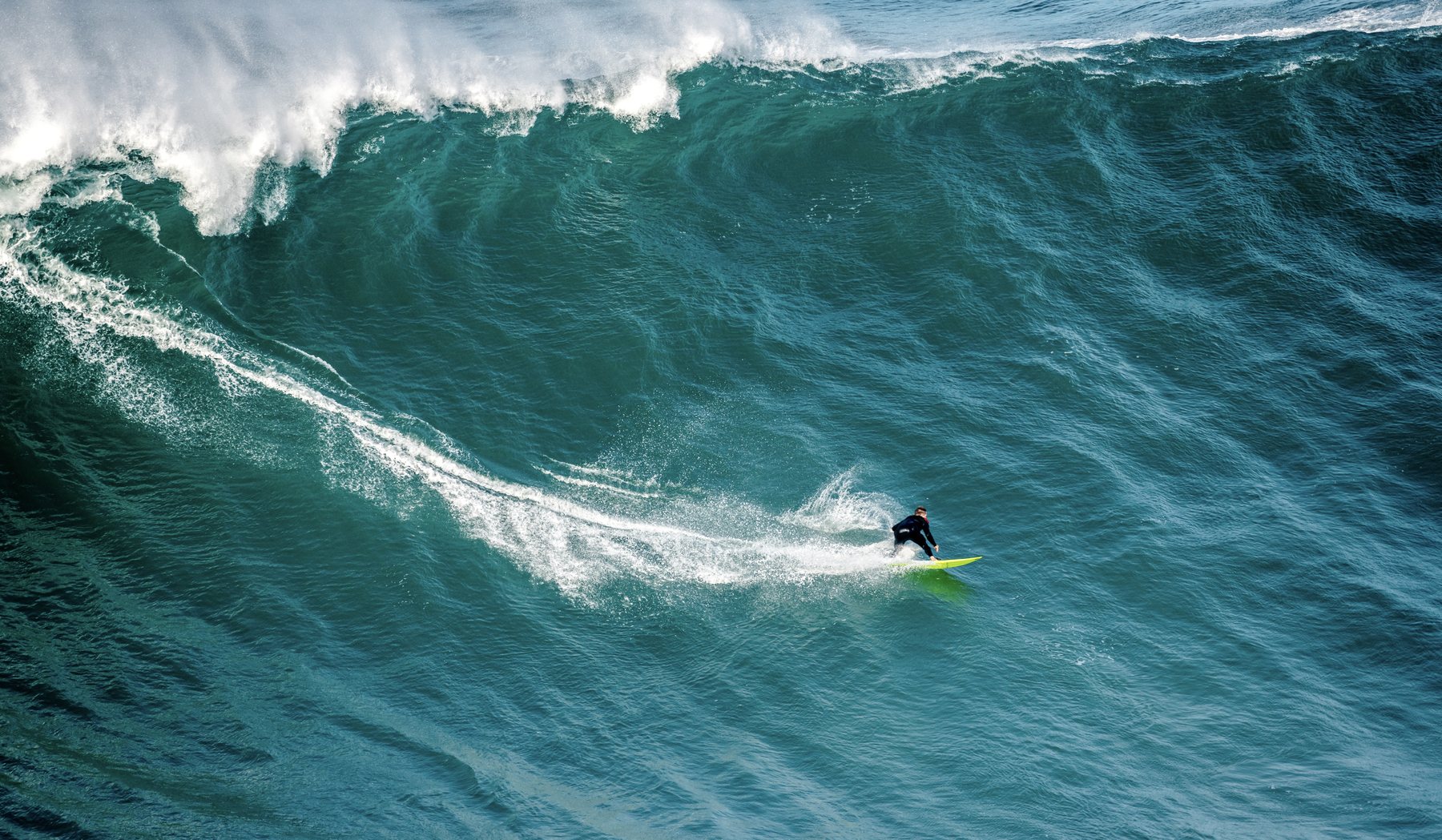
A giant wave breaks at Praia do Norte, Nazaré. Photo: Carlos Eduardo Joos — CC BY 2.0. The biggest surfable waves ever ridden. The Nazaré Canyon — an undersea trench running to over 5,000m deep — funnels and amplifies Atlantic swell directly into Praia do Norte, producing faces that have exceeded 20m. Multiple world-record rides have been set here.
The reality: this is a tow-in arena requiring jet-ski support, and it is genuinely lethal. But it is also the single best big-wave spectating spot on earth: the lighthouse fort at Forte de São Miguel Arcanjo puts you directly above the break. Go in winter, watch, and do not go in the water.
No. 4 — Shipstern Bluff
Tasmania, Australia
- Skill floor: EXPERT ONLY
- Danger: EXTREME
- Wave: Slab, right
- Best season: April–September
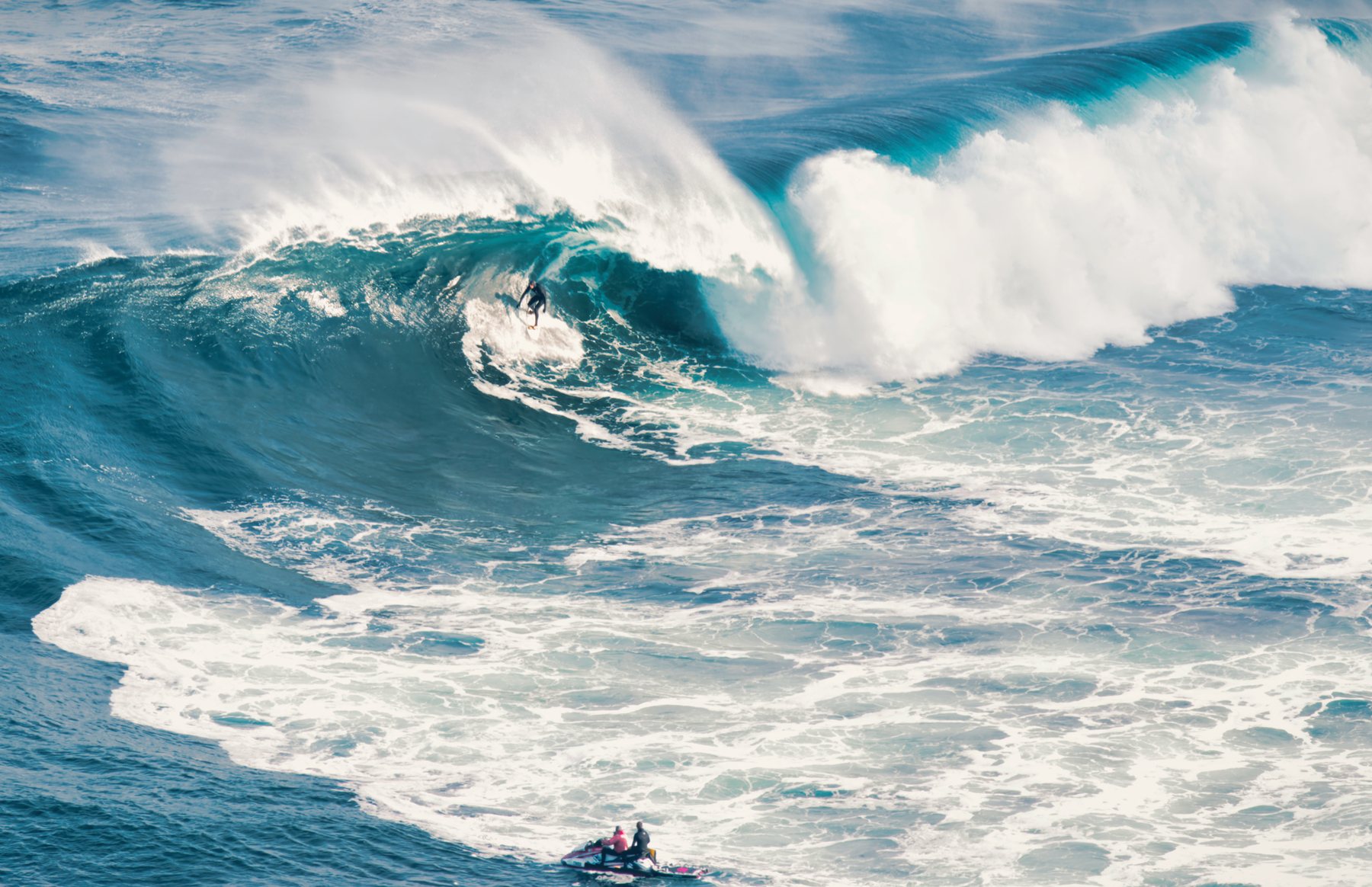
A surfer at Shipstern Bluff, Tasmania. Photo: Thomas & Liv Williams — CC BY 2.0. The most mutant wave in the world — a thick, cold-water slab breaking over rock beneath a 300m cliff, notorious for the "steps" that form in its face as the wave lurches over an uneven ledge. Reached by a two-hour hike or a boat trip through open Southern Ocean.
The reality: remote, cold, shark-populated, and hours from medical help. Surfed by a very small number of people worldwide.
No. 5 — Mavericks
Half Moon Bay, California, USA
- Skill floor: EXPERT ONLY
- Danger: EXTREME
- Wave: Big-wave reef, right
- Best season: November–March
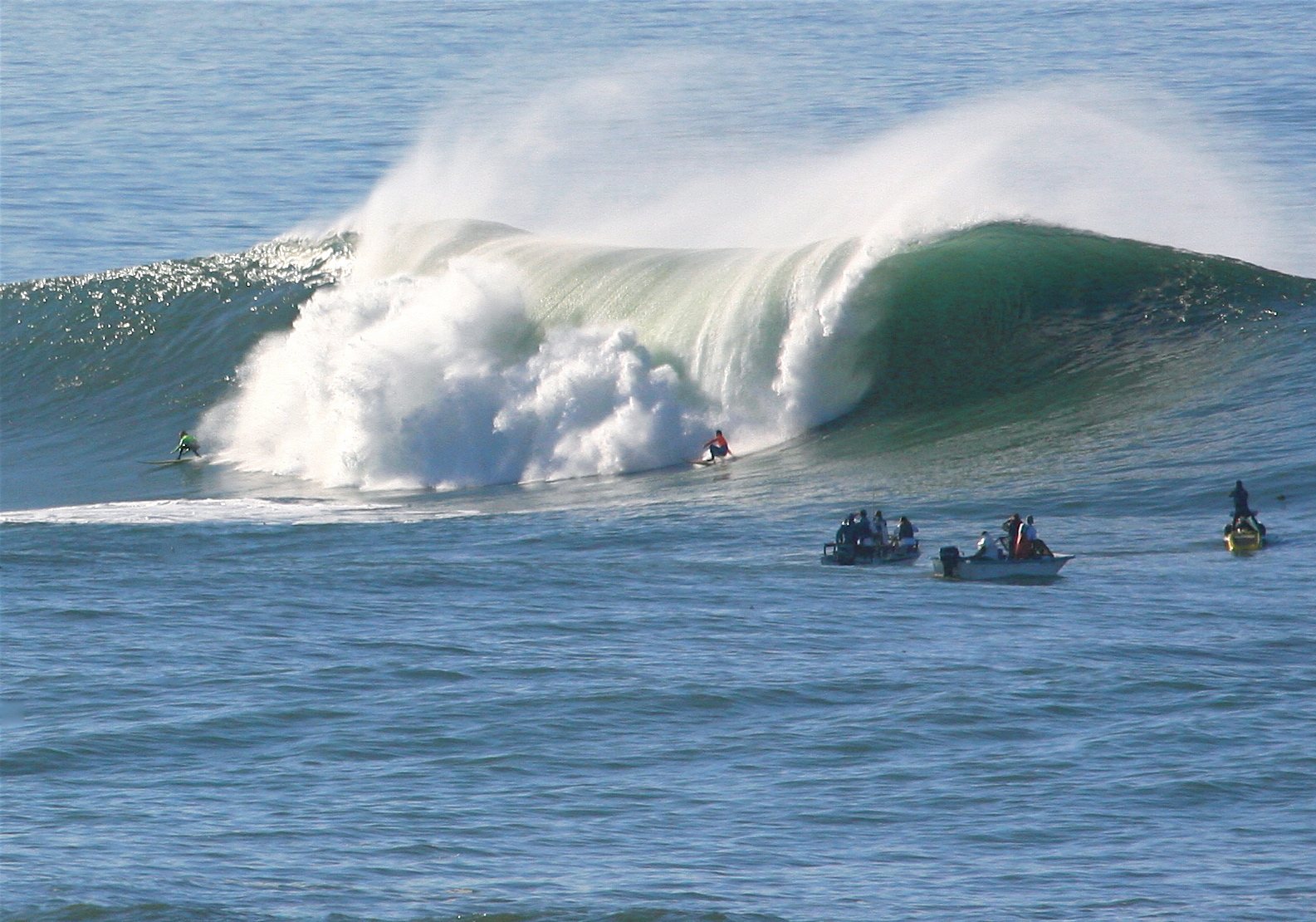
Surfers at Mavericks, off Half Moon Bay. Photo: Steve Jurvetson — CC BY 2.0. Cold, grey, enormous Northern Californian big-wave reef, breaking half a mile offshore over a rock shelf, with waves regularly over 12m. It has a fatality history including elite big-wave surfers, and the combination of hold-downs, rocks and cold water makes it uniquely punishing.
The reality: great white sharks are genuinely present. Viewing is from the bluff at Pillar Point.
No. 6 — Puerto Escondido (Playa Zicatela)
Oaxaca, Mexico
- Skill floor: EXPERT ONLY
- Danger: EXTREME
- Wave: Beach break, both
- Best season: April–September
The "Mexican Pipeline," and the heaviest beach break in the world — massive, fast, close-out-prone barrels detonating onto a steep sand bottom with vicious rips. Unlike reef waves, the sandbars shift, so it is unpredictable as well as heavy.
The reality: the beach itself is easy to reach and the town is a genuine destination, which lures people into water far beyond their ability. The rip currents alone are dangerous to swimmers. Nearby Playa Carrizalillo is the manageable alternative.
No. 7 — Cloudbreak
Tavarua, Fiji
- Skill floor: ADVANCED+
- Danger: HIGH
- Wave: Reef break, left
- Best season: April–October
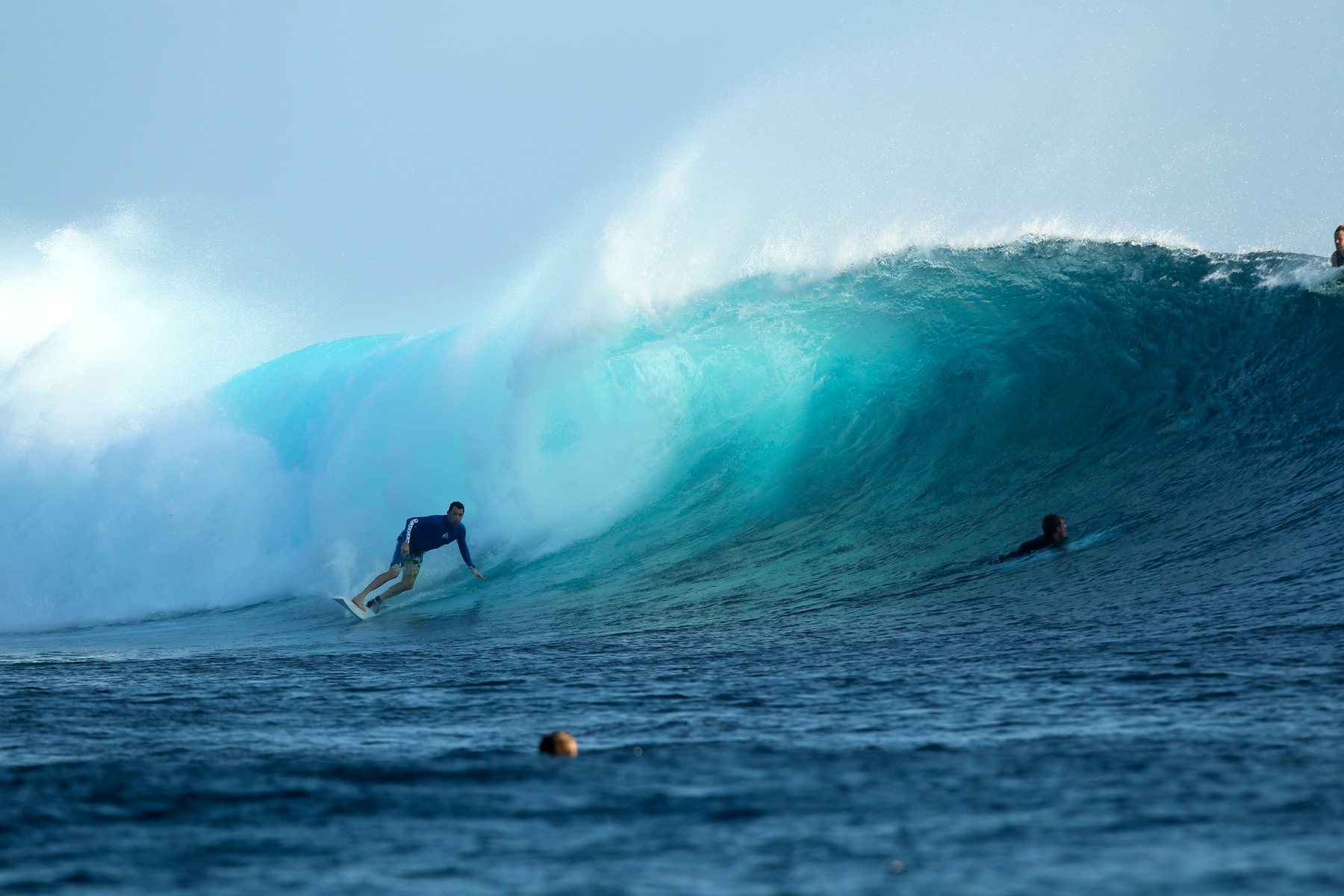
Inside the barrel at Cloudbreak, off Tavarua. Photo: dave.fin — CC BY 3.0. A long, flawless left reef pass breaking over coral a kilometre offshore, reached only by boat. Considered by many professionals the best wave in the world when it's on — long, fast, barrelling, with multiple sections. CT stop 8 in 2026.
The reality: shallow coral at low tide, and it gets genuinely huge. Restaurants, the adjacent wave, is more forgiving. Access is via boat from Tavarua or Namotu.
No. 8 — Jeffreys Bay (Supertubes)
South Africa
- Skill floor: ADVANCED
- Danger: HIGH
- Wave: Point break, right
- Best season: June–August
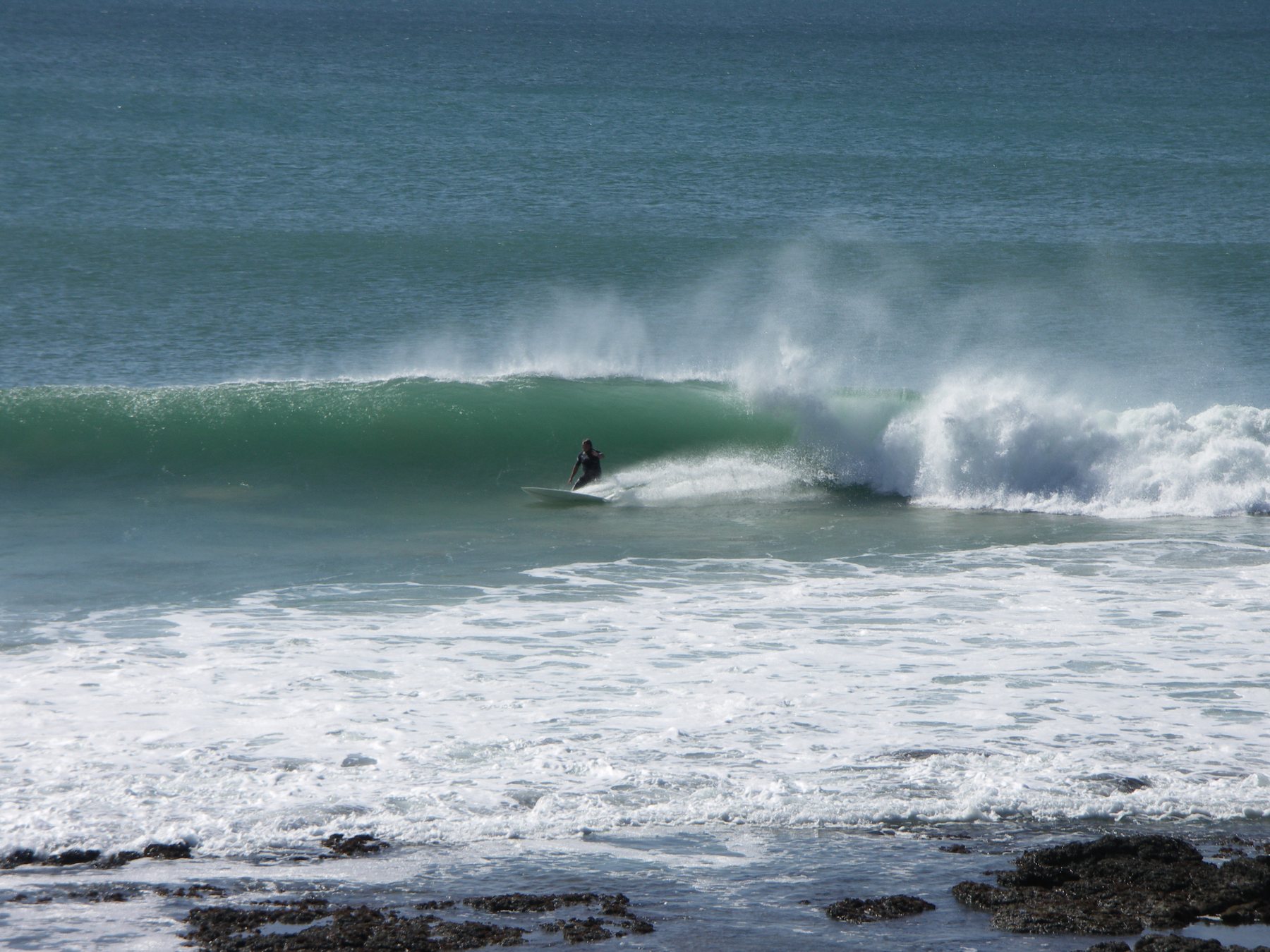
A surfer tucked into a wall at Supertubes, Jeffreys Bay. Photo: NJR ZA — CC BY-SA 3.0. The finest right-hand point break on earth — a fast, walling, endlessly sectioning wave that can run for 300m or more through Supertubes into Impossibles and Tubes. A long-standing fixture of professional surfing.
The reality: great white sharks are a documented presence, most famously in the 2015 incident broadcast live during a contest. Winter water is cold; a full wetsuit is essential.
Read the garden route city guide · Read the port elizabeth gqeberha city guide
No. 9 — Skeleton Bay
Namibia
- Skill floor: ADVANCED
- Danger: HIGH
- Wave: Sand-bottom point, left
- Best season: April–August
The longest barrel in the world. A freak sandbar on the Namibian desert coast produces a left that can run for nearly two kilometres, barrelling for much of it — rides of two minutes have been documented. Discovered relatively recently via satellite imagery.
The reality: extraordinarily remote, in freezing Benguela Current water, on the edge of the Skeleton Coast. The wave is so long it destroys legs; surfers walk back up the point for an hour between waves. Requires a serious expedition.
Read the swakopmund city guide · Read the luderitz city guide
No. 10 — Uluwatu
Bali, Indonesia
- Skill floor: ADVANCED
- Danger: HIGH
- Wave: Reef break, left
- Best season: April–October
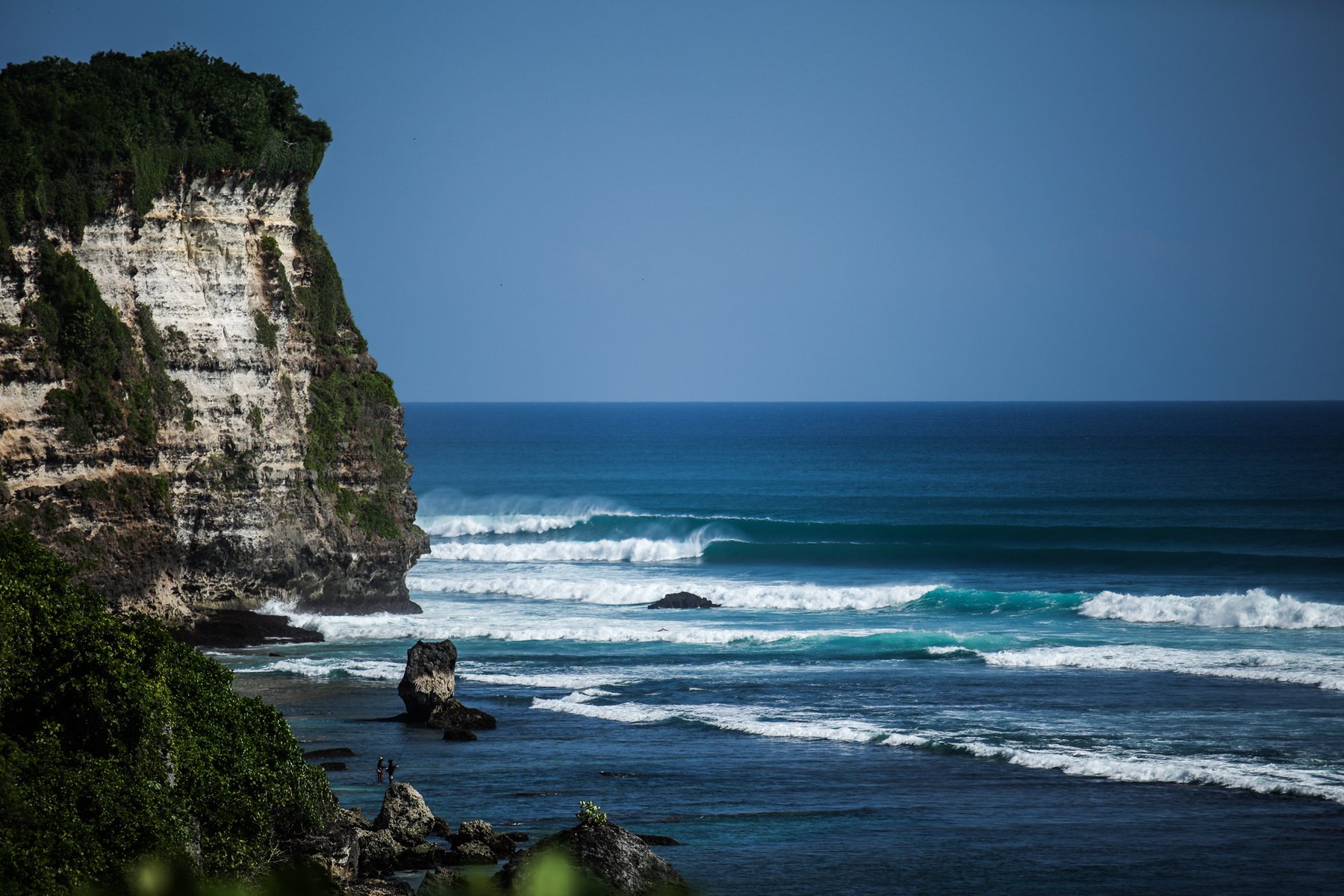
A wave wrapping off the point beneath Uluwatu's cliffs. Photo: Wokshots — CC BY-SA 4.0. Bali's defining wave and the spiritual centre of Indonesian surfing — a long left reef break below the cliffs and the Uluwatu temple, with several sections (Racetrack, Outside Corner, The Peak) working at different sizes and tides.
The reality: access is through a cave in the cliff, and the exit at low tide over dry reef is where most injuries happen. Extremely crowded. Reef boots are sensible.
No. 11 — Padang Padang
Bali, Indonesia
- Skill floor: EXPERT ONLY
- Danger: HIGH
- Wave: Reef break, left
- Best season: May–September
The "Balinese Pipeline" — a short, perfect, extremely shallow left barrel that only breaks properly on a solid swell at mid-to-high tide, and is genuinely one of the most beautiful waves in the world.
The reality: very shallow, very sharp coral, very crowded with very good surfers. The beach beside it is a fine place to watch, which is what the overwhelming majority of visitors should do.
No. 12 — Mundaka
Basque Country, Spain
- Skill floor: ADVANCED
- Danger: MODERATE
- Wave: Rivermouth sandbar, left
- Best season: September–December
Europe's best barrel — a long, hollow left peeling off a sandbar formed where the Oka estuary meets the sea at Mundaka. When the sandbar and swell align, it produces rides of 300m-plus with multiple barrel sections.
The reality: highly sensitive to sandbank condition and river flow; it can be world-class one season and mediocre the next. Strong estuary current. A beautiful part of Spain regardless, with Bilbao and San Sebastián both close.
Read the bilbao city guide · Read the san sebastian city guide
No. 13 — Supertubos
Peniche, Portugal
- Skill floor: ADVANCED
- Danger: HIGH
- Wave: Beach break, both
- Best season: October–March
Europe's heaviest beach break — fast, hollow, sand-bottom barrels that give Peniche its reputation. CT stop 11 in 2026, as the tour's penultimate event.
The reality: shallow sandbar barrels break bones. Peniche's advantage is that the peninsula holds surf in almost any wind direction, with gentler options — Baleal, Consolação — minutes away when Supertubos is beyond you.
No. 14 — Superbank / Snapper Rocks
Gold Coast, Australia
- Skill floor: ADVANCED
- Danger: MODERATE
- Wave: Sand point, right
- Best season: January–April
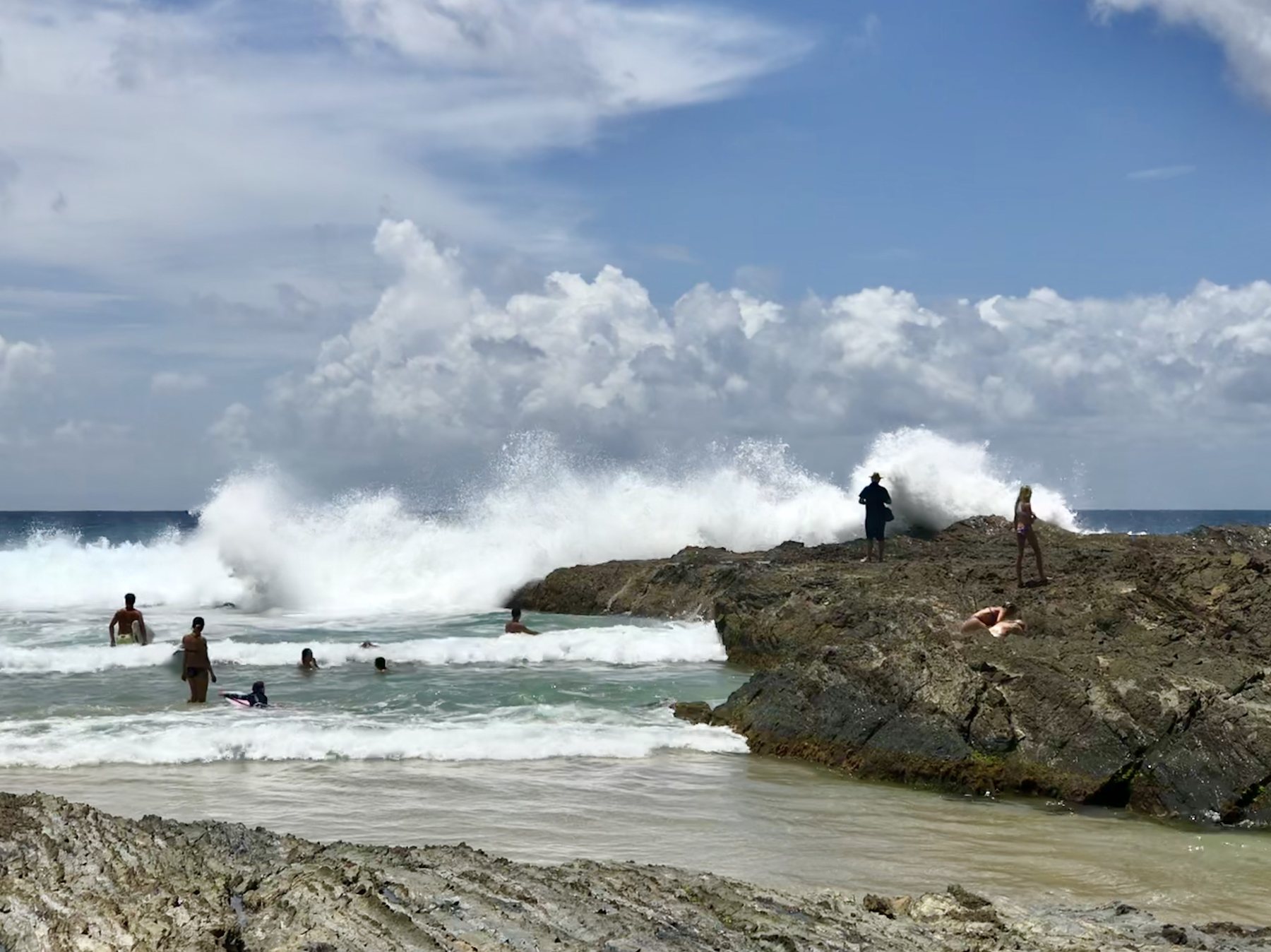
Waves breaking around Snapper Rocks, Coolangatta. Photo: Kgbo — CC BY-SA 4.0. An artificial masterpiece: sand pumped from the Tweed River created a bank linking Snapper Rocks through Rainbow Bay to Kirra, producing rides that on their day run over a kilometre. CT stop 3 in 2026.
The reality: the most crowded wave on earth. The danger here is collision and localism, not the wave itself — hundreds of surfers compete for the same take-off. Genuinely humbling if you're not sharp.
No. 15 — Desert Point
Lombok, Indonesia
- Skill floor: EXPERT ONLY
- Danger: HIGH
- Wave: Reef break, left
- Best season: May–September
A long, impossibly hollow left over shallow reef on Lombok's south-west tip, delivering barrels that run for 300m-plus. Regarded as one of the two or three best barrels in Asia.
The reality: breaks over razor-sharp coral in very shallow water, is fickle, and is remote — the nearest real medical facility is a long way off. Surfers wait weeks for it to turn on.
No. 16 — La Gravière
Hossegor, France
- Skill floor: ADVANCED
- Danger: HIGH
- Wave: Beach break, both
- Best season: September–October
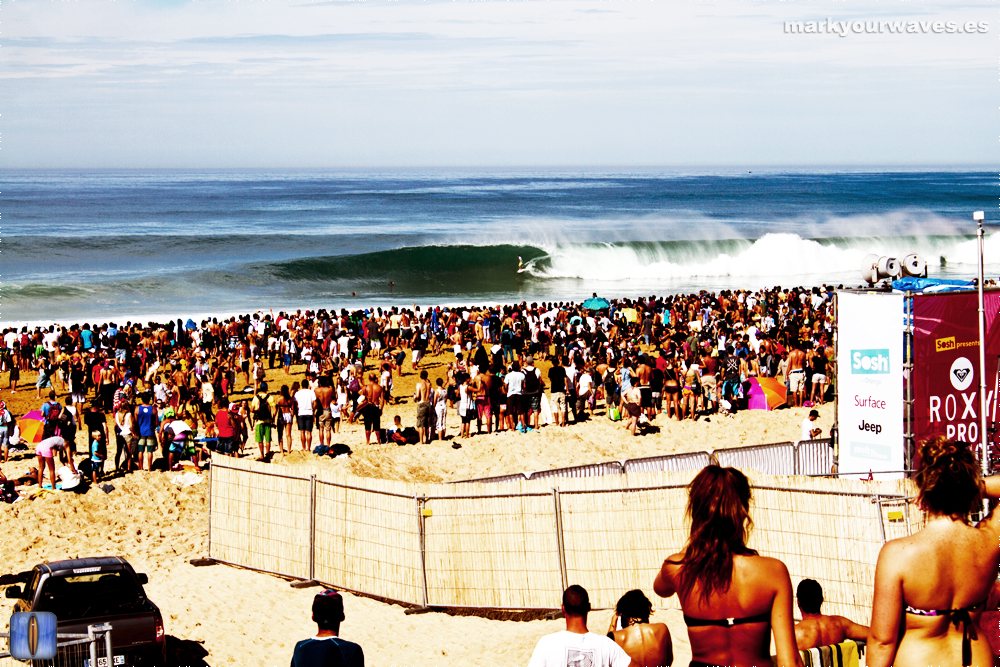
La Gravière, Hossegor, during the Quiksilver Pro France. Photo: MarkYourWaves Surf — CC BY-SA 2.0. The heaviest beach break in Europe alongside Supertubos, and the wave that made Hossegor the surf capital of France — steep, thick, fast barrels breaking close to shore over a shifting sandbar fed by an offshore canyon.
The reality: powerful enough to break boards and bodies. Hossegor's surrounding beaches offer far gentler options, and the region itself — Landes pine forest, excellent food — is a genuine holiday destination beyond the surf.
No. 17 — Bells Beach
Victoria, Australia
- Skill floor: INTERMEDIATE+
- Danger: MODERATE
- Wave: Reef/point, right
- Best season: March–October
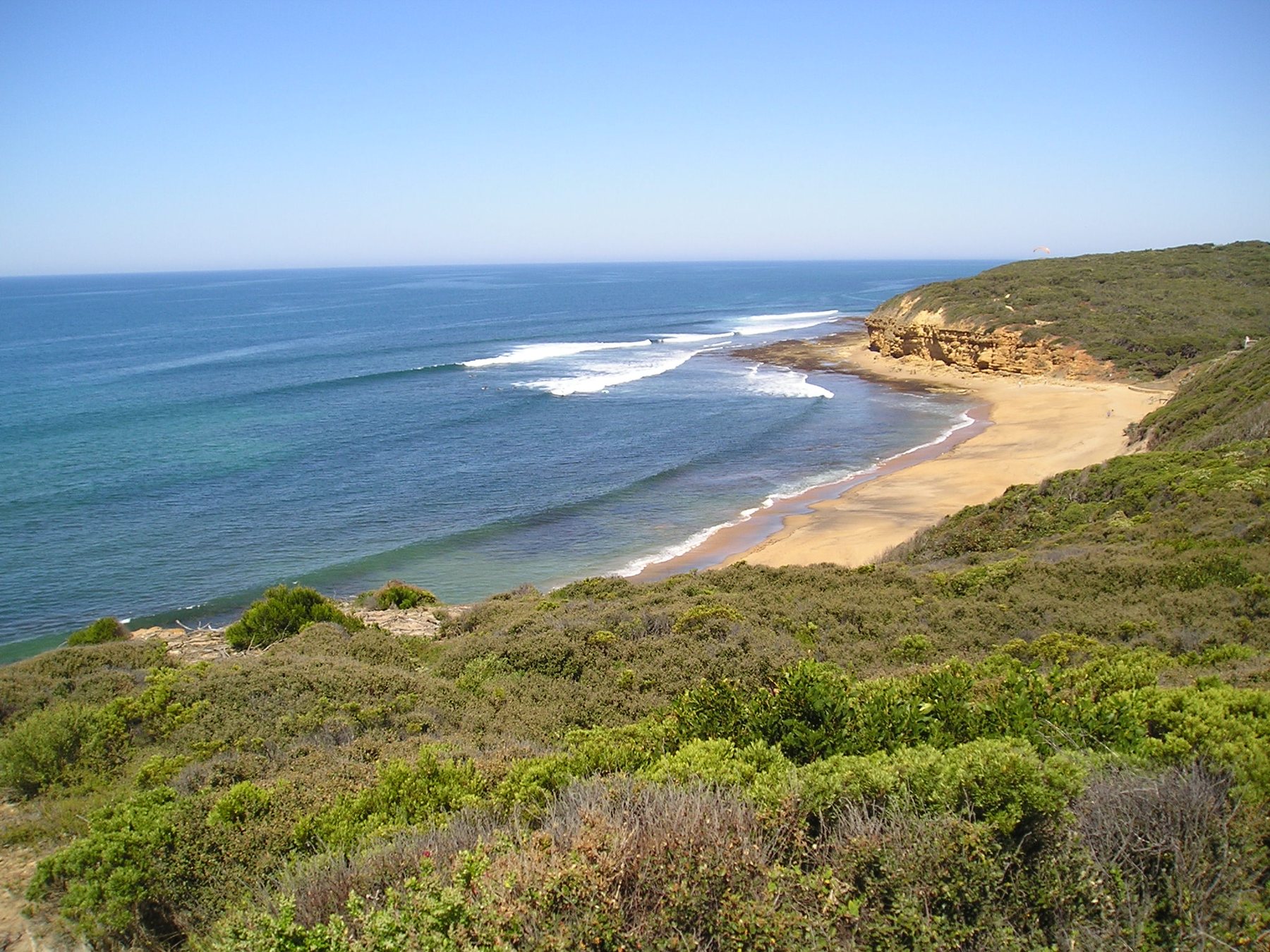
Bells Beach, Victoria, from the clifftop lookout. Photo: Triki-wiki — CC BY-SA 3.0. The oldest continuously running professional surf contest in the world — the Rip Curl Pro has been held here since 1962, and it opens the 2026 CT in April. Bells is a big, powerful, open-faced right that rewards long carving turns rather than barrel riding, which makes it far more approachable than most waves of its stature.
The reality: cold water requiring a decent wetsuit, and it can get very big. Nearby Winkipop is faster; Torquay has gentler beach breaks.
Pairs with: Volume 8 — the Great Ocean Road starts at Torquay, minutes away.
Read the great ocean road city guide · Read the melbourne city guide
No. 18 — Lower Trestles
San Clemente, California, USA
- Skill floor: INTERMEDIATE
- Danger: LOW
- Wave: Cobblestone point, both
- Best season: May–September
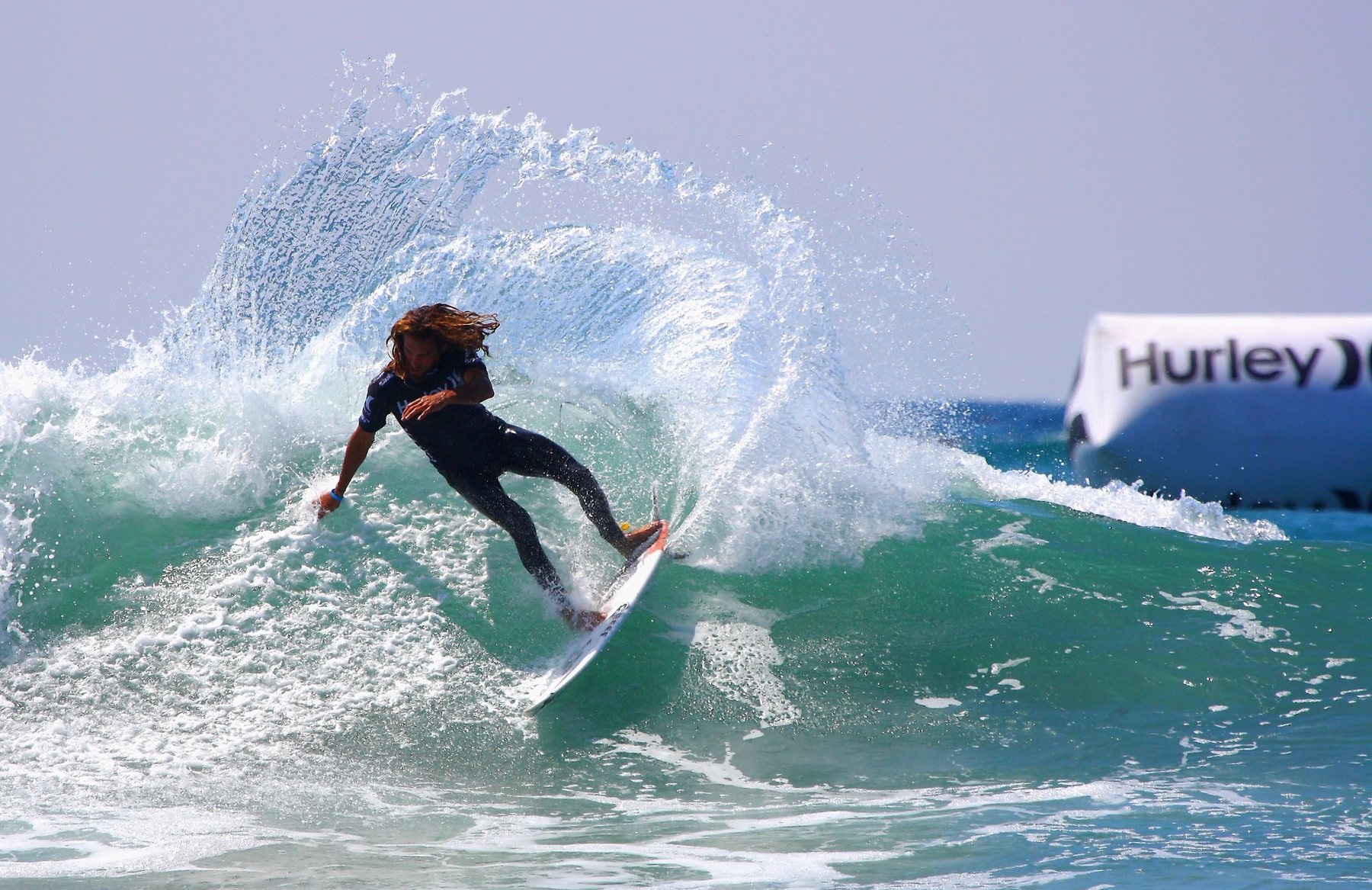
A surfer riding Lower Trestles, San Clemente. Photo: Mikefairbanks — CC BY-SA 3.0. The most user-friendly world-class wave on this list. Trestles is a forgiving, perfectly tapered cobblestone point that produces long, rippable walls without serious consequence — which is exactly why it's used to decide world titles. CT stop 9 in September 2026.
The reality: a 20-minute walk from the car park through San Onofre State Beach, and extremely crowded. But if you're an improving surfer who wants to ride one genuinely elite wave in your life, this is the one that will have you.
No. 19 — Raglan (Manu Bay)
New Zealand
- Skill floor: INTERMEDIATE
- Danger: MODERATE
- Wave: Point break, left
- Best season: April–September
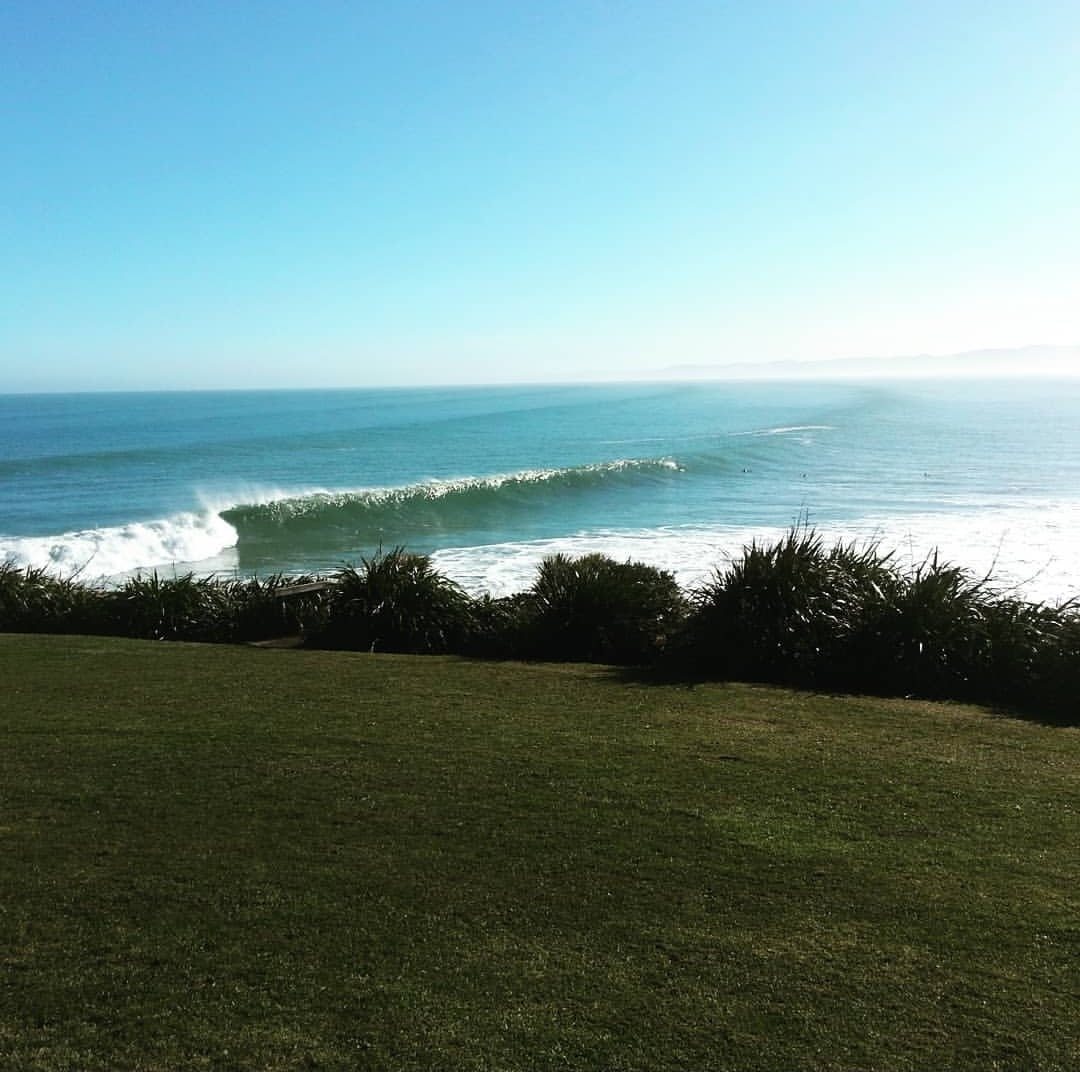
Surf at Manu Bay, Raglan. Photo: LoneKauriRoad — CC BY 4.0. One of the world's great long left points, made famous by The Endless Summer, with three linked sections — Manu Bay, Whale Bay and Indicators — that on a big clean swell can join into a ride of over a kilometre. Joins the CT as stop 4 in May 2026.
The reality: rock-bottom entry and exit require care, and the water is cold. But the wave itself is long, predictable and forgiving by world-class standards.
Read the hamilton waikato city guide · Read the auckland city guide
No. 20 — Chicama
Peru
- Skill floor: INTERMEDIATE
- Danger: LOW
- Wave: Sand-bottom point, left
- Best season: April–September
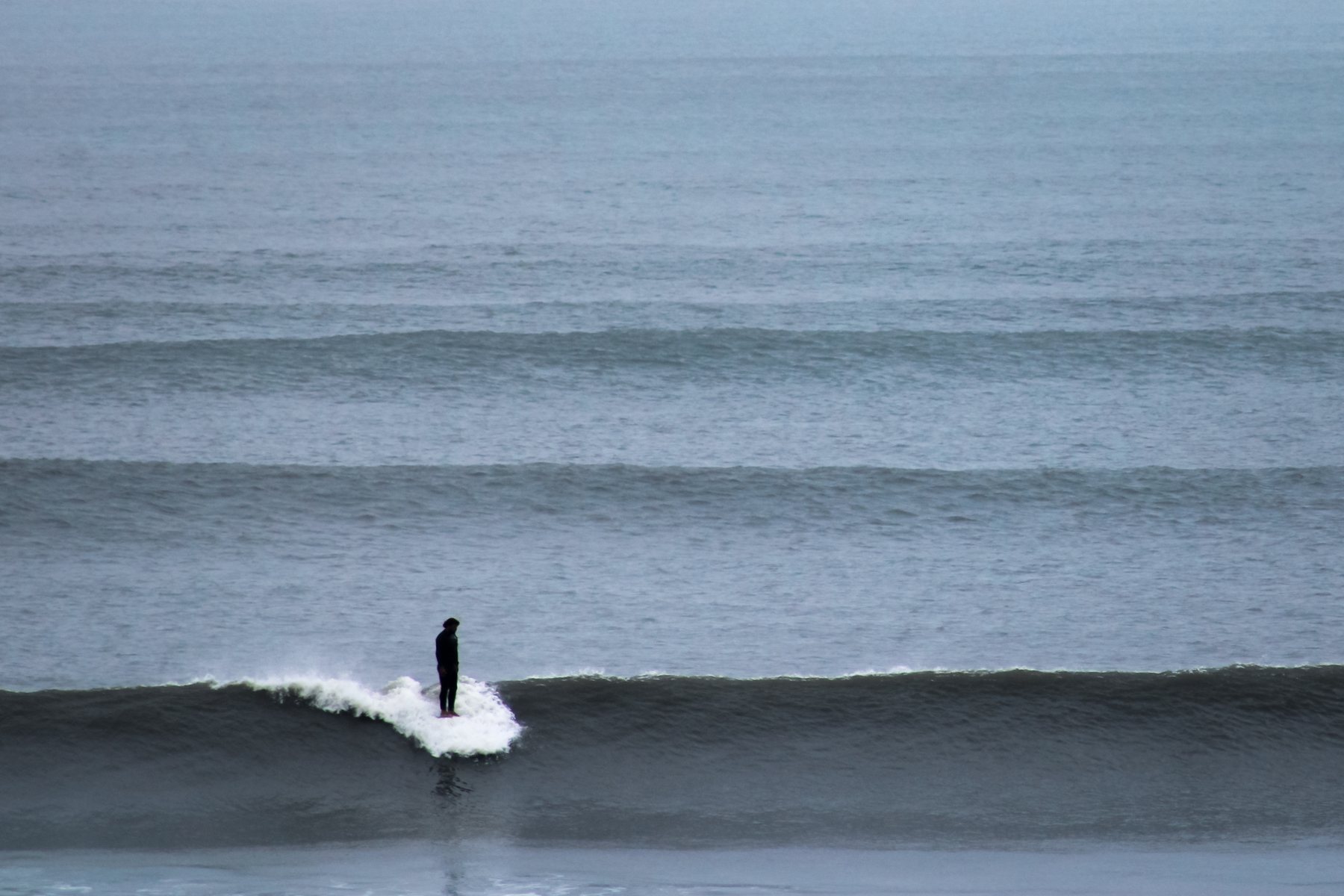
A surfer at Chicama, Peru. Photo: Carolina Garcia — CC BY-SA 4.0. The longest rideable left in the world — a sand-bottom point in northern Peru where a single wave can be ridden for over two kilometres across multiple sections. Legally protected under Peruvian law as a natural heritage wave.
The reality: the wave is mellow rather than steep, so it suits intermediates well; the challenge is stamina and the long paddle back. Boats and tuk-tuks shuttle surfers back up the point. Cold water — the Humboldt Current — needs a wetsuit despite the latitude.
No. 21 — Pavones
Costa Rica
- Skill floor: INTERMEDIATE
- Danger: LOW
- Wave: Point break, left
- Best season: April–October
Reputedly the second-longest left in the world, in Costa Rica's remote far south near the Panamanian border — rides of up to a kilometre on a big southern swell, in warm water with no wetsuit required.
The reality: genuinely remote, a long drive from anywhere, and very swell-dependent. Warm water and a forgiving wave make it one of the most pleasant world-class waves to surf.
Pairs with: Volume 11 — Costa Rica also appears in the family travel guide.
No. 22 — Punta Roca
La Libertad, El Salvador
- Skill floor: INTERMEDIATE+
- Danger: MODERATE
- Wave: Point break, right
- Best season: March–October
Central America's best right-hand point — long, fast, and consistent through the long Pacific swell season. CT stop 5 in June 2026, and the wave that has driven El Salvador's reinvention as a surf destination.
The reality: rocky entry, and the inside section gets shallow. El Salvador's coastal surf towns have developed rapidly; standard urban precautions still apply away from the tourist strip.
No. 23 — Waikiki
Oahu, Hawaii, USA
- Skill floor: BEGINNER
- Danger: LOW
- Wave: Reef break, both
- Best season: May–September
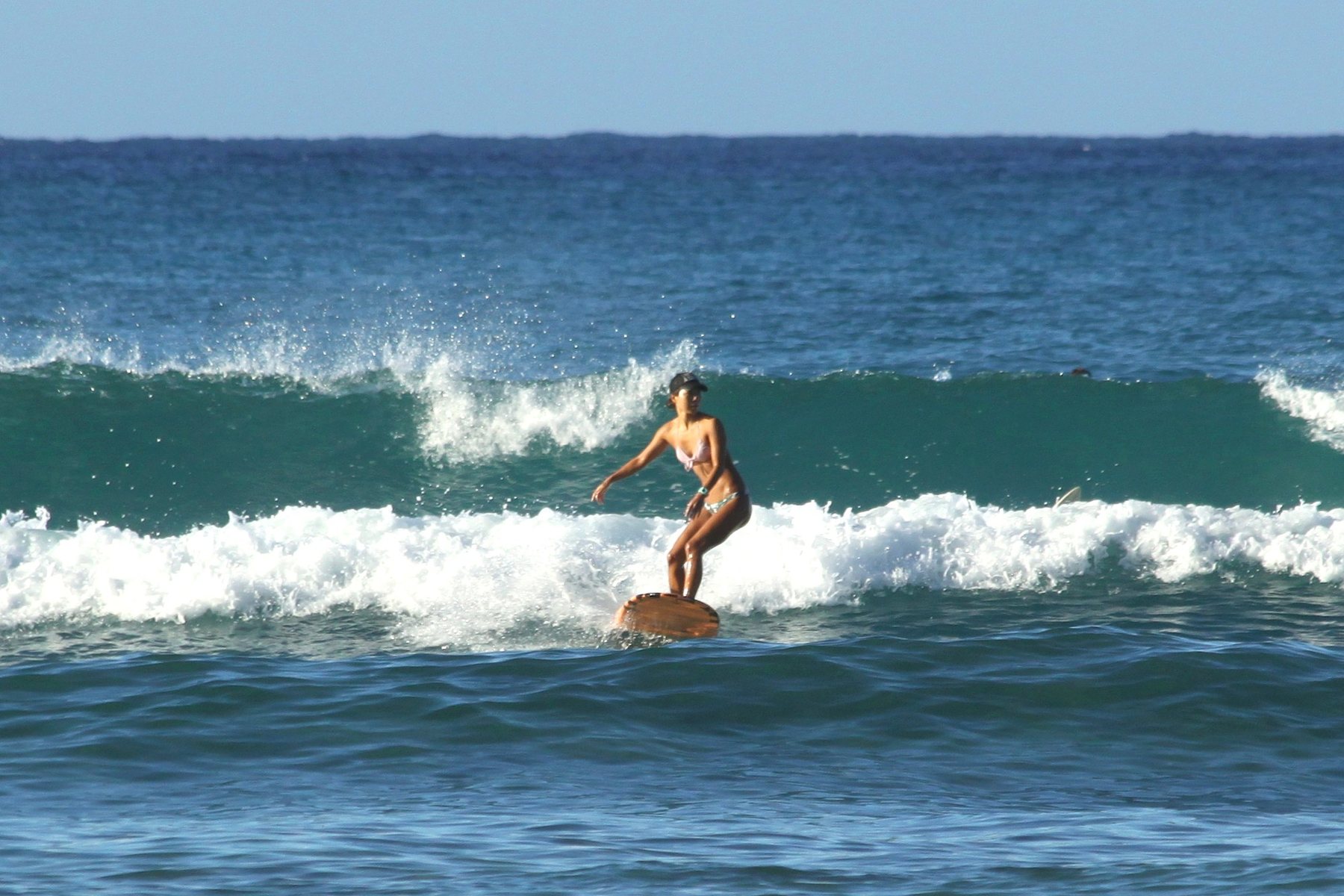
Surfing at Waikiki Beach, Honolulu. Photo: Prayitno — CC BY 2.0. The birthplace of modern surfing, and still the best place on earth to learn. Waikiki's waves break slowly over a distant reef and roll for hundreds of metres, giving beginners unusually long, gentle rides — and Duke Kahanamoku taught the world to surf on exactly this water.
The reality: crowded, and the reef is shallow in places at low tide. Take a lesson from one of the beach schools rather than going alone.
No. 24 — Batu Bolong, Canggu
Bali, Indonesia
- Skill floor: BEGINNER
- Danger: LOW
- Wave: Reef break, both
- Best season: April–October
The gentlest of Bali's main breaks — a soft, slow, forgiving wave over a mostly flat reef, with an enormous surf-school infrastructure and a town built entirely around the activity.
The reality: extremely crowded with other learners, which is its own hazard. Rip currents exist. Reef boots recommended at low tide.
No. 25 — Taghazout
Morocco
- Skill floor: BEGINNER+
- Danger: LOW
- Wave: Points and beaches
- Best season: October–March
A former fishing village turned surf town on Morocco's Atlantic coast, with a genuinely rare spread: beginner beach breaks (Crocodiles, Panorama, Devil's Rock) within minutes of world-class advanced points (Anchor Point, Killer Point). That range is what makes it the best learning base outside the tropics.
The reality: water is cool enough for a wetsuit most of the year. Anchor Point itself is a serious advanced wave — do not confuse the two. Winter is the season, which conveniently is Europe's off-season.
Two things every surfer learns eventually, and visiting surfers should learn first.
Surf your level, honestly. The waves in Part One are not aspirational goals for a good holiday surfer — they are professional arenas. Watching Pipeline from the sand or Nazaré from the fort is a genuinely extraordinary experience and carries no risk of killing you.
The lineup has rules. Don't drop in on someone already riding, don't paddle straight to the peak on arrival, and understand that at crowded waves — Uluwatu, Snapper, Canggu — local surfers have priority in practice whatever the theory says. At several waves on this list, ignoring that is how visitors get hurt, and it isn't the wave that does it.
Sources: Anchored to the 2026 World Surf League Championship Tour schedule (twelve stops, nine countries); remaining entries are AVARA's own curation. Swell seasons are typical windows and vary year to year. Skill and danger ratings are guidance, not guarantees — conditions at every wave here change dramatically with swell size, tide and wind. Volume 12 of the AVARA Best Of Guides.
See the full AVARA Best Of collection · Browse all AVARA city guides