The 7 Best Safaris in the World
No academy votes on safaris the way one does on restaurants or hotels — the closest real signal is the World Travel Awards' annual safari categories, which named Tanzania World's Leading Safari Destination for the second consecutive year in 2025 and Rwanda's Bisate Lodge World's Leading Safari Lodge. Useful data points, but a single "leading destination" title doesn't make a list of seven on its own.
So this is AVARA's own curated seven, held to a genuinely high bar: each destination had to combine real, current wildlife density (not marketing copy — actual population figures and sighting-rate data where they exist), a distinct ecological reason to be here rather than somewhere else, and a conservation and operating model serious enough that the wildlife will still be there in twenty years. Six are in Africa, because Africa still produces the highest concentration of world-class safari ecosystems on Earth and pretending otherwise for the sake of geographic balance would be dishonest. The seventh crosses continents entirely, because it's simply too good — and too different — to leave out of a genuinely global list.
No. 1 — Sabi Sands
Sabi Sands, South Africa
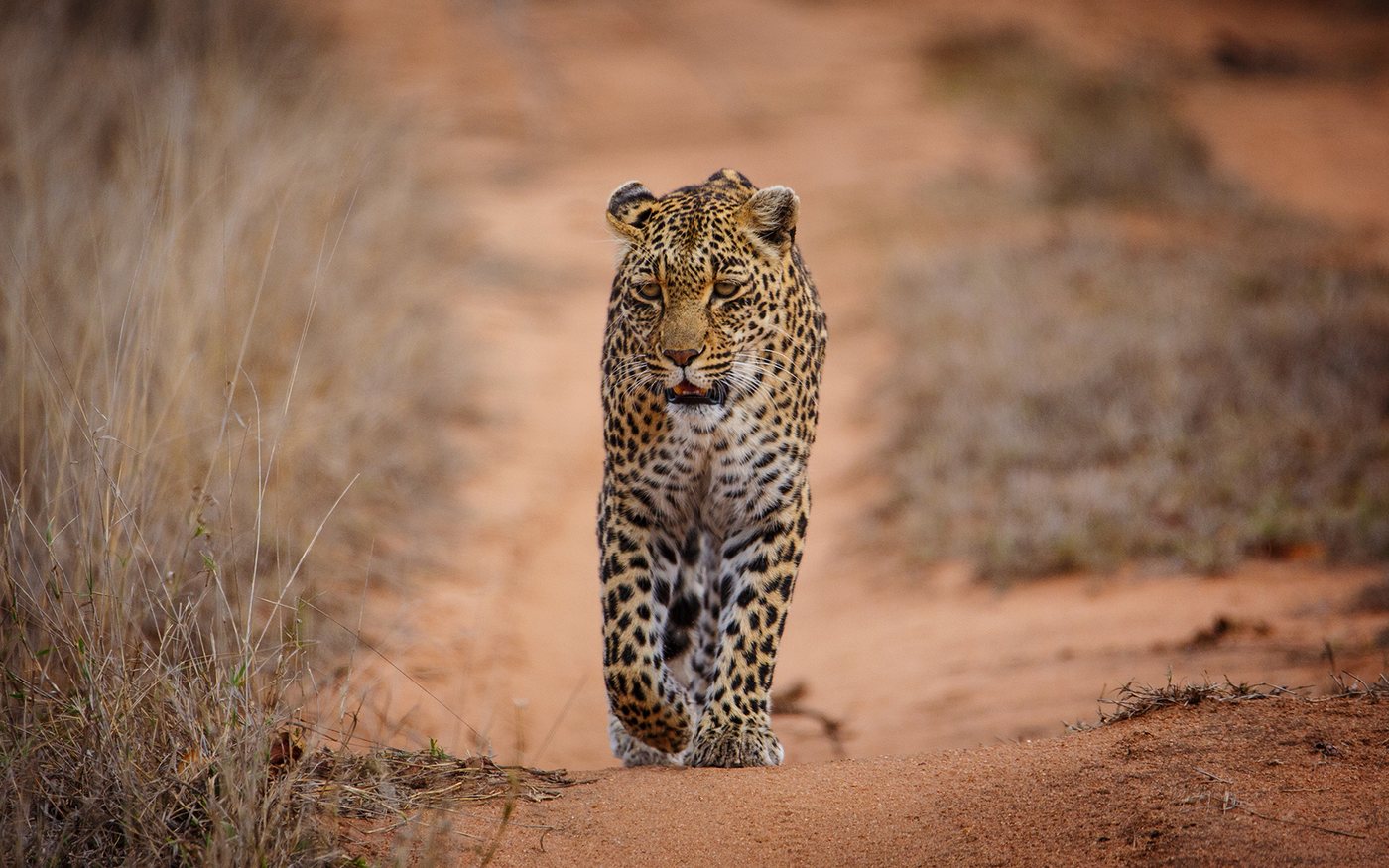
An African leopard on patrol in the Djuma Concession, Sabi Sands Game Reserve. Photo: Fir0002 / Wikimedia Commons — CC BY-SA 3.0. MalaMala, on Sabi Sands' eastern boundary, was established as a hunting property in 1927 before becoming one of Africa's earliest dedicated photographic safari operations after Mike Rattray acquired it in 1964. Sabi Sands shares an unfenced border with Kruger National Park, so wildlife moves freely between a private reserve run on strict low-density principles and one of the largest protected areas in Africa — the combination has earned it an exceptional reputation for reliable, unhurried leopard viewing. Off-road tracking is permitted here in a way it isn't in the public park next door, which is the practical difference between seeing a leopard from 200 metres and watching one relaxed at 20.
The detail: MalaMala began as a hunting property in 1927 and became a dedicated photographic safari operation in 1964 — an early model for the modern private-reserve safari.
Best for: exceptionally reliable leopard sightings and the private-reserve flexibility — off-road driving, night drives and walking — that the adjacent public park doesn't allow.
No. 2 — Serengeti
Serengeti, Tanzania
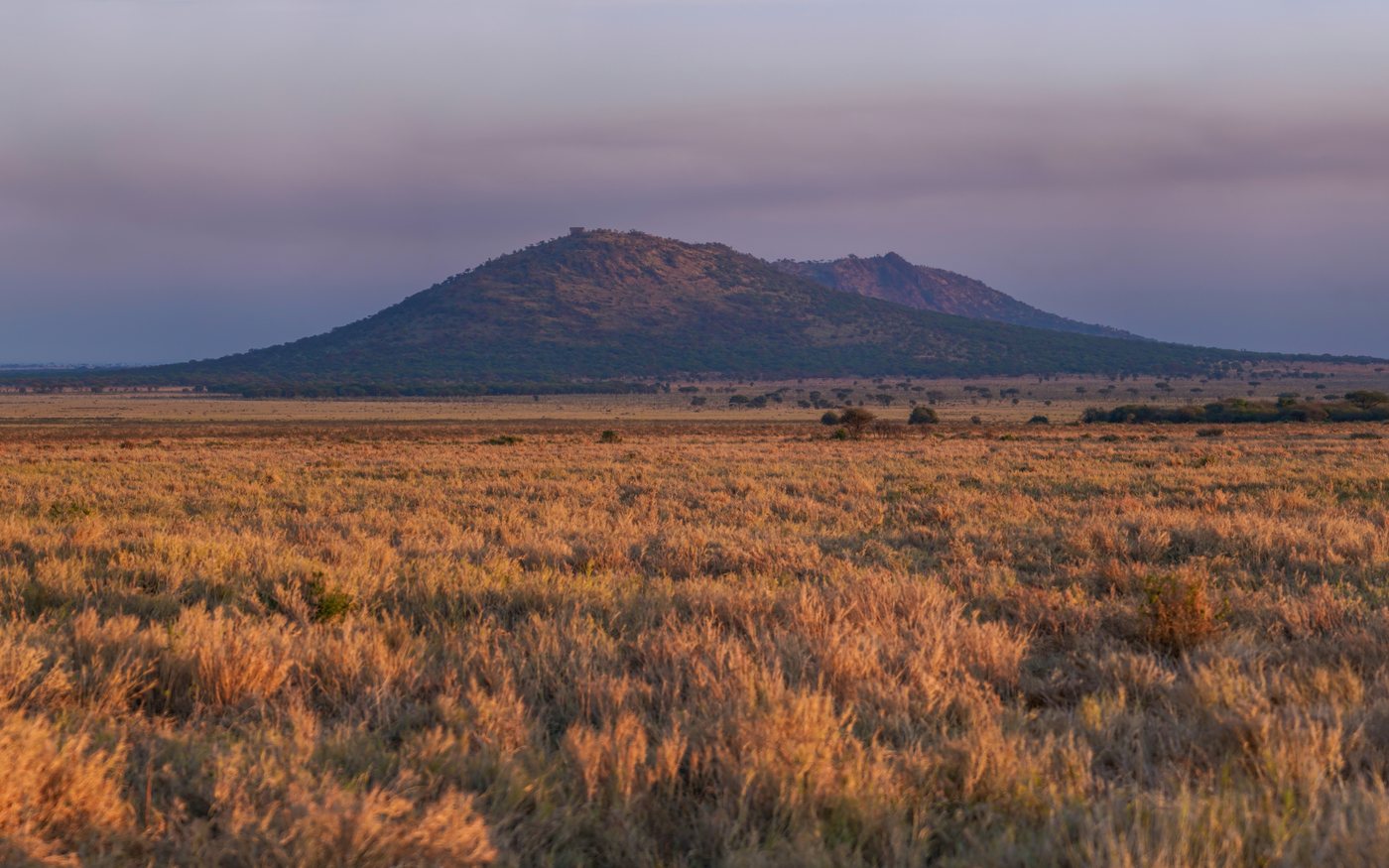
Golden-hour sunrise over the plains of Serengeti National Park. Photo: Giles Laurent / Wikimedia Commons — CC BY-SA 4.0. Home ecosystem of the Great Migration — traditionally estimated at roughly 1.3 million wildebeest plus hundreds of thousands of zebra and gazelle, moving in a continuous, rain-driven loop across the Serengeti-Mara ecosystem all year, not just during the famous crossings. A 2025 satellite study suggested a lower wildebeest figure, so current estimates vary. The migration's first serious obstacle is the Grumeti River crossing inside the Serengeti itself, typically from around May through July before the herds continue north toward Kenya. Tanzania was named World's Leading Safari Destination at the 2025 World Travel Awards for the second year running, and the Serengeti's roughly 14,763 square kilometres of largely unbroken plains help explain the country's enduring reputation.
The detail: the Serengeti-Mara ecosystem supports the world's largest remaining terrestrial mammal migration; the long-standing aerial-survey estimate is roughly 1.3 million wildebeest, though newer satellite analysis suggests a lower figure.
Best for: travellers who want the actual migration in its home range, with genuine wilderness scale rather than a concentrated single hotspot.
No. 3 — Maasai Mara
Maasai Mara, Kenya
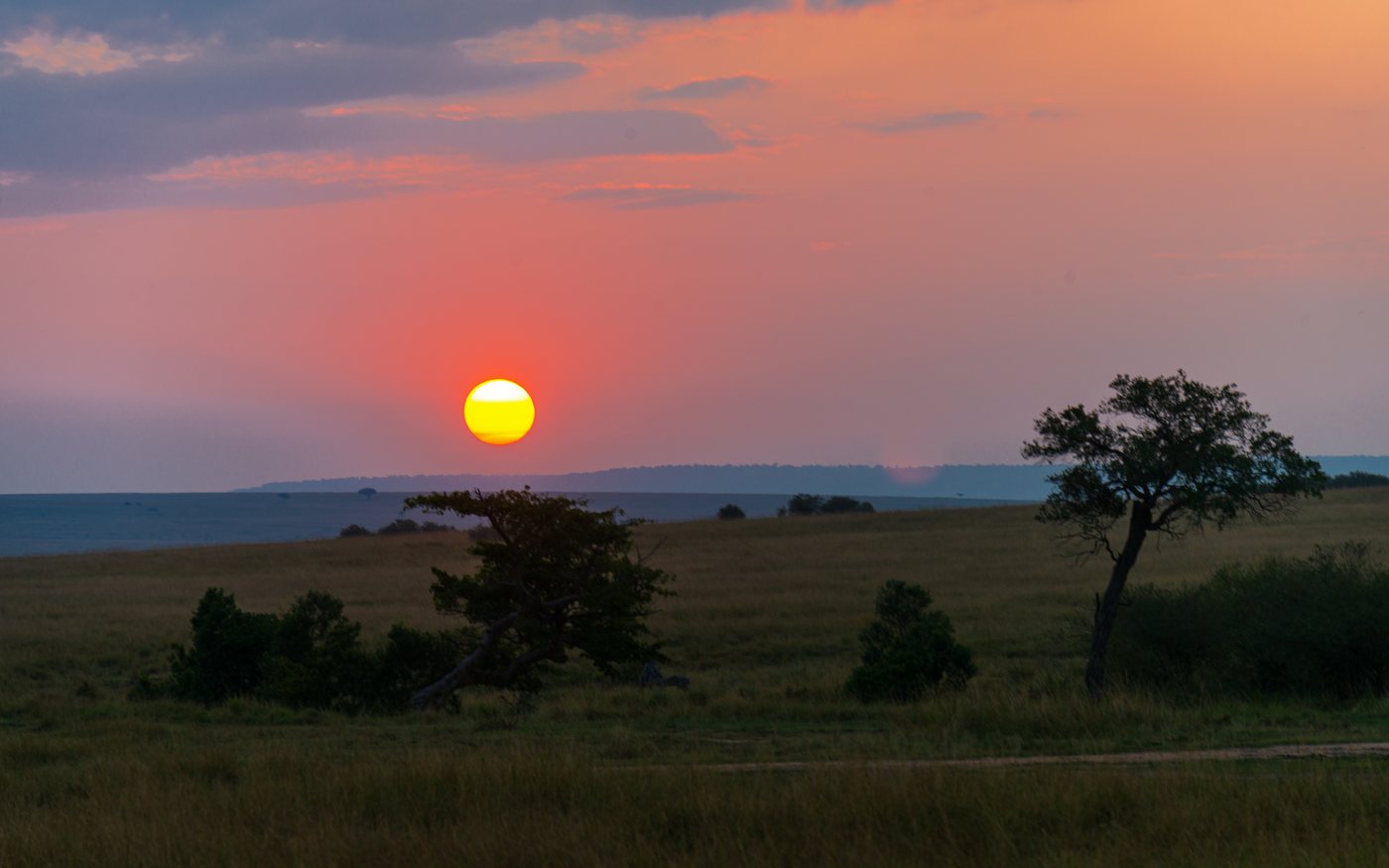
Sunset over the rolling savanna of the Maasai Mara National Reserve. Photo: Daniel Case / Wikimedia Commons — CC BY-SA 4.0. The Serengeti's northern extension across the Tanzania-Kenya border, and where the migration's single most dramatic moment plays out each year: the Mara River crossings, typically occurring from July through October, with the heaviest activity usually in August and September. Independent of migration season, the Mara maintains one of Africa's richest resident predator populations — lion prides, cheetah coalitions and hyena clans that don't migrate and can be found year-round, which is why serious repeat safari-goers often rate the Mara's non-migration months just as highly as the crossing season everyone books around.
The detail: individual Mara River crossing events can move tens of thousands of wildebeest within hours, with crossings recurring over days and weeks during the July-to-October season.
Best for: the single most concentrated, high-adrenaline wildlife spectacle in Africa, plus genuinely excellent predator viewing outside migration season too.
No. 4 — Ngorongoro Crater
Ngorongoro Crater, Tanzania
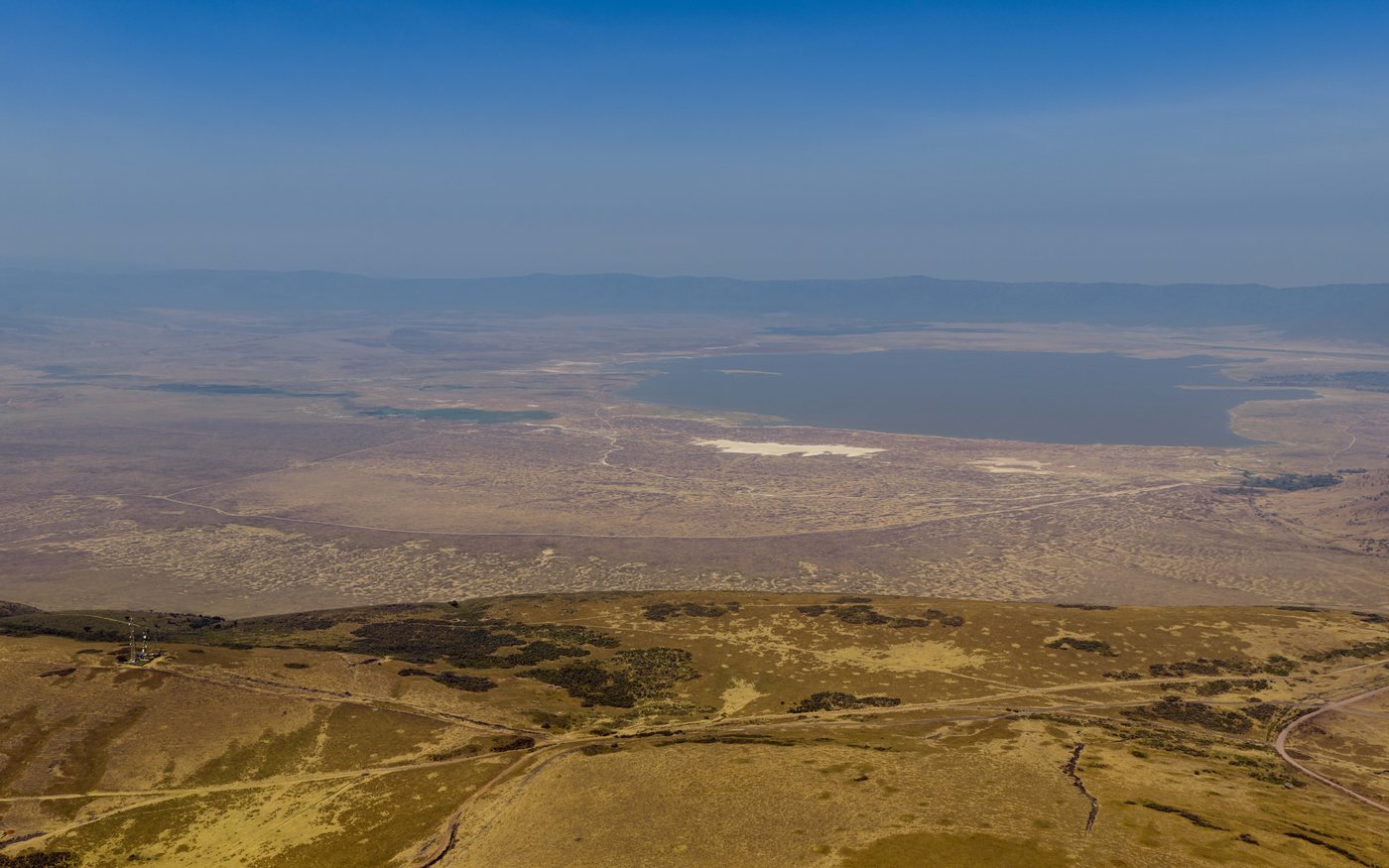
Aerial view across the Ngorongoro ecosystem and its volcanic highlands. Photo: Arnold Tibaijuka / Wikimedia Commons — CC BY-SA 4.0. A collapsed volcanic caldera roughly 20km across, walled in by a crater rim that keeps a remarkably dense, largely non-migratory wildlife population concentrated in one accessible bowl. Its resident black rhino population, currently estimated at around 30 to 40 individuals under intensive ranger protection, represents one of the most secure and viewable black rhino concentrations left on the continent. Around 60 resident lions across multiple prides complete a concentration of wildlife matched in few places elsewhere.
The detail: the crater's black rhino population fell from roughly 110 in the mid-1960s to around 20 by the mid-1970s, and to fewer than 15 by the 1990s, before recovering under intensive protection.
Best for: the highest concentration of visible wildlife, including reliable black rhino sightings, inside the smallest, most self-contained geographic area on this list.
No. 5 — Okavango Delta
Okavango Delta, Botswana
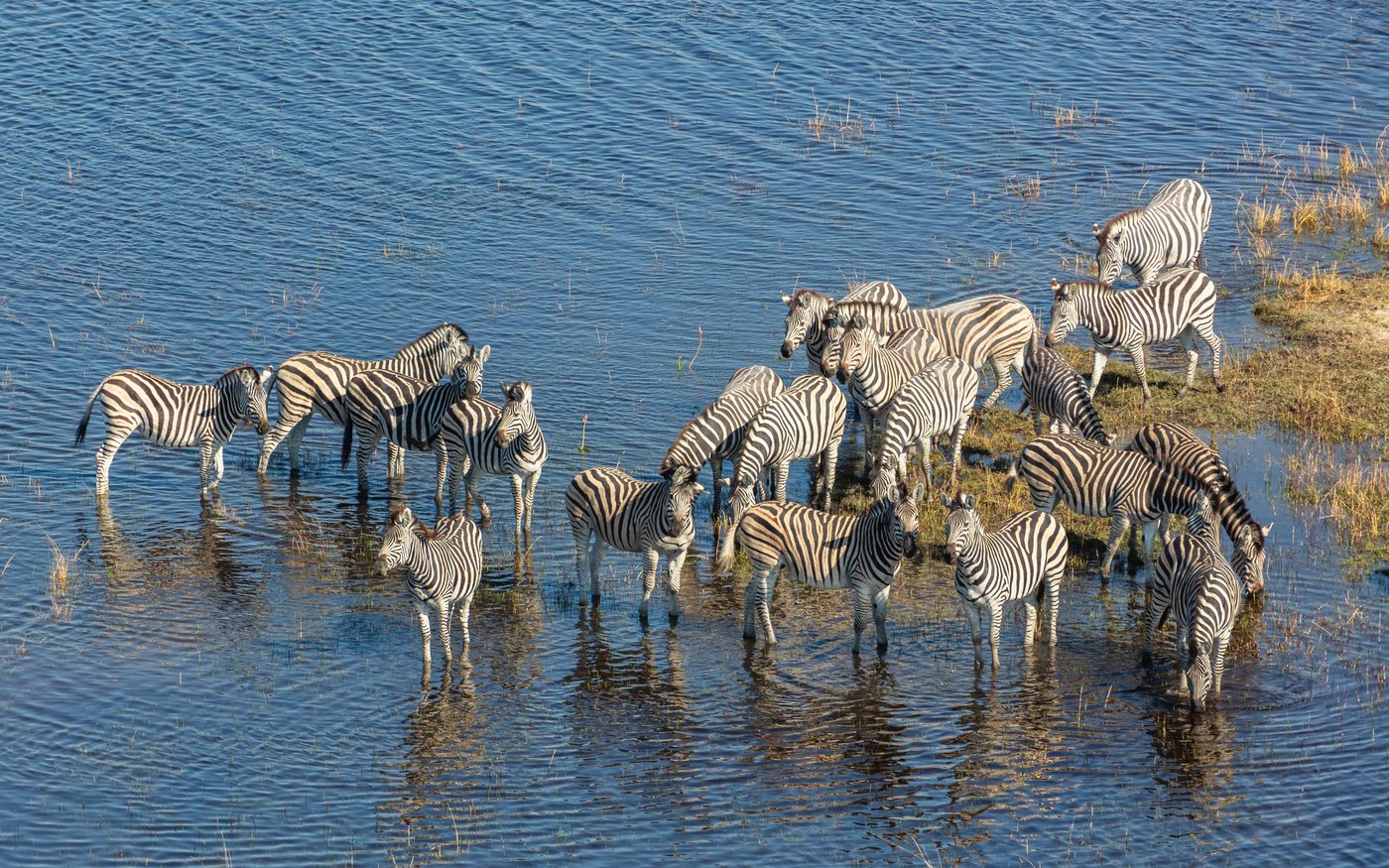
Burchell's zebras crossing the flooded channels of the Okavango Delta. Photo: Diego Delso / Wikimedia Commons — CC BY-SA 4.0. The world's largest inland delta, and unlike anywhere else on this list, one where much of the safari happens partly by water — mokoro canoe and boat alongside traditional game drives. Inscribed as UNESCO's 1,000th World Heritage Site in 2014, the delta's roughly 2 million hectares remain in near-pristine condition. Botswana's explicit high-cost, low-volume tourism policy limits bed numbers by concession; the resulting roughly 60 to 70 camps, many reachable only by light aircraft, keep visitor density well below what comparable ecosystems elsewhere absorb. The result is a wilderness that feels genuinely uncrowded even at the destination's most exclusive camps, with elephant, lion, wild dog and a water-based ecosystem — hippo, crocodile, sitatunga — found nowhere else on this list.
The detail: Botswana pursues an explicit high-cost, low-volume tourism policy, limiting bed numbers by concession rather than imposing a fixed total-camp quota.
Best for: a genuinely different safari format — water and land combined — inside one of the least crowded major wilderness areas left in Africa.
No. 6 — South Luangwa
South Luangwa, Zambia
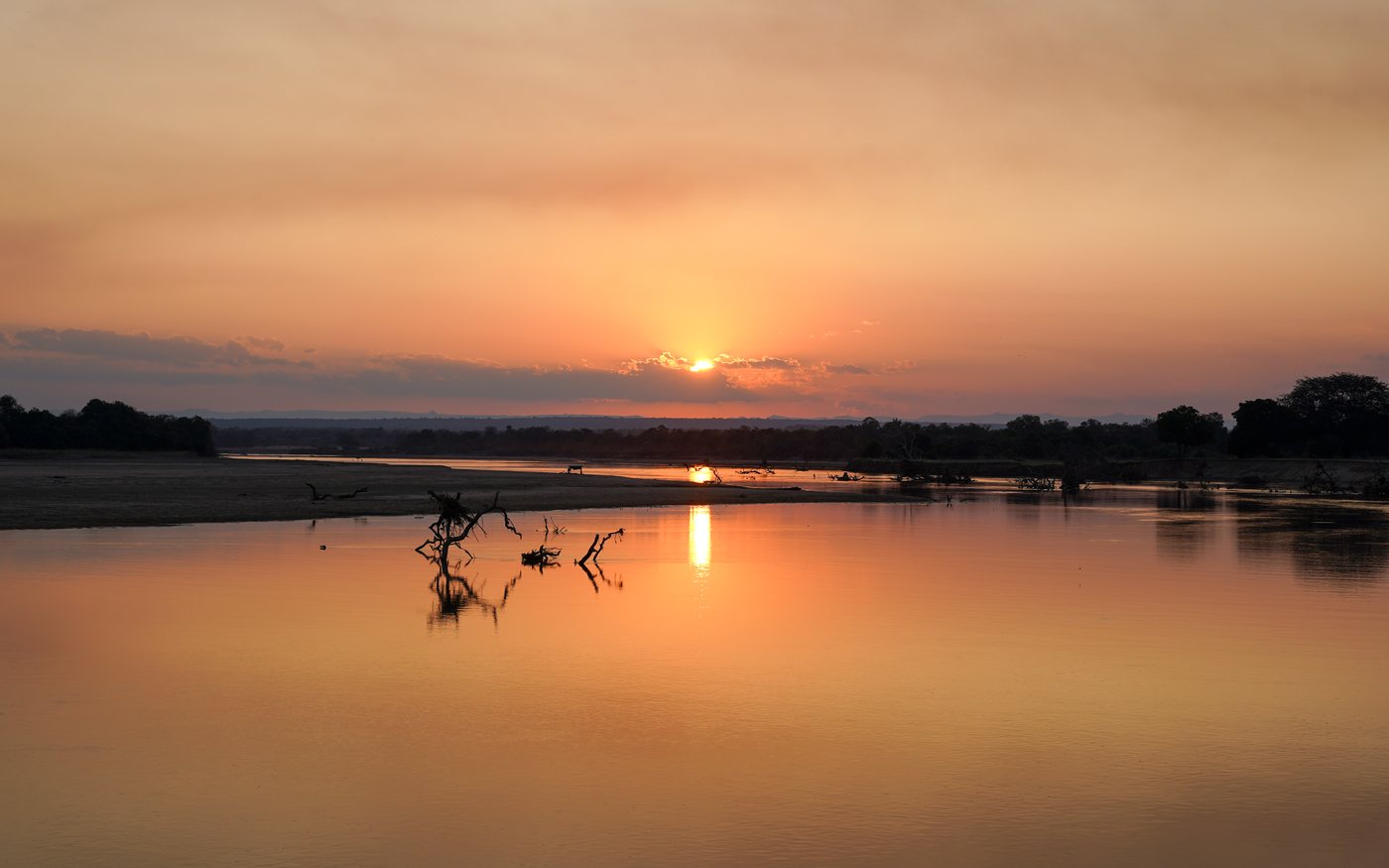
Sunset over the Luangwa River in South Luangwa National Park. Photo: A7C / Wikimedia Commons — CC BY-SA 4.0. Where the walking safari took its modern form. Conservationist Norman Carr persuaded Chief Nsefu to set aside a reserve in 1950 and opened Nsefu Camp — Northern Rhodesia's first non-hunting safari camp — in 1952, pioneering the then-radical idea of observing and photographing wildlife rather than shooting it. South Luangwa remains the walking-safari benchmark today, with a leopard density regularly cited among the highest in Africa and one of the continent's significant surviving African wild dog populations. It's also considerably less visited than the East African circuit, which means walking trails and bush camps here still feel like the original version of what a safari was meant to be, rather than a scaled-up tourist product.
The detail: Norman Carr secured land for a non-hunting reserve in 1950 and opened Nsefu Camp in 1952, laying the foundations for Zambia's modern walking-safari tradition.
Best for: travellers who want the safari on foot, guide-led and unhurried, in a landscape with genuinely low visitor numbers.
No. 7 — Pantanal
Pantanal, Brazil
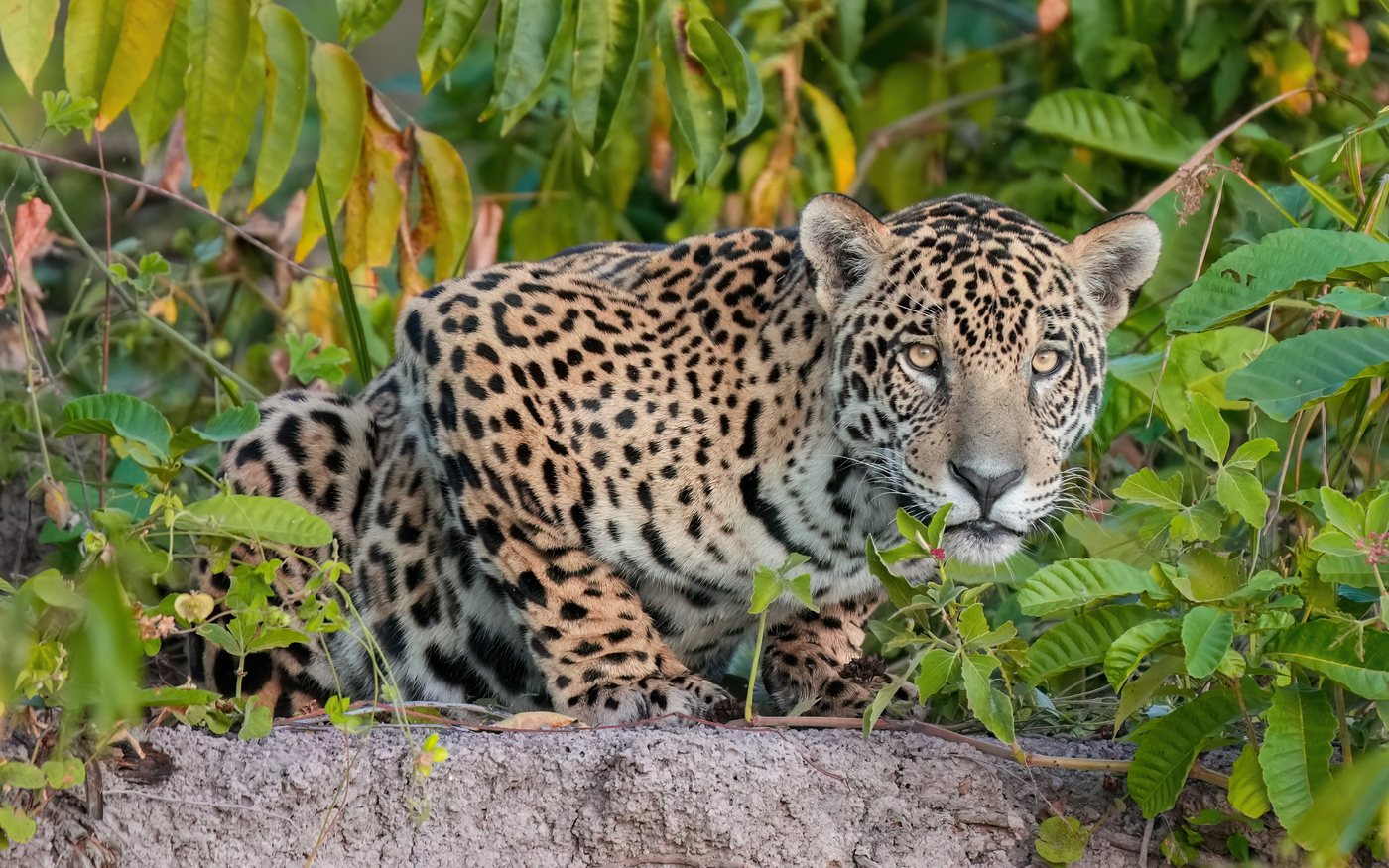
A female jaguar patrols a riverbank in Encontro das Águas State Park. Photo: Giles Laurent / Wikimedia Commons — CC BY-SA 4.0. The one non-African entry, and the only defensible way to leave Africa off a "best in the world" list entirely: the Pantanal, the world's largest tropical wetland, offers an exceptional chance to see wild jaguars. Brazil holds over half the world's estimated 173,000 wild jaguars, and the Pantanal's northern reaches along the Transpantaneira road hold some of the highest jaguar densities recorded anywhere — with the unusual advantage that Pantanal jaguars are frequently active by day. Operators report jaguar-sighting success rates in the 80–90% range during multi-day river trips in the July-to-October dry season, though no independent audit establishes a guaranteed figure.
The detail: Pantanal jaguars are unusually diurnal, hunting capybara and caiman along riverbanks in daylight — behaviour rarely seen in jaguar populations anywhere else in their range.
Best for: the highest-probability daytime jaguar sightings anywhere on Earth, and a genuinely different wetland rather than savanna safari ecosystem.
Volume 7 of the AVARA Best Of series. Same disclosure as the ski resorts and Italian coastal towns volumes: no single competitive authority exists for safaris, so this reflects AVARA's own curation against explicit, statable criteria — verified wildlife density and population data, ecological distinctiveness, and a conservation model built to last.
Sources checked September 2026: World Travel Awards, UNESCO World Heritage Centre, Tanzania National Parks, Oxford Department of Biology, published conservation research, and official destination conservation authorities.
See the full AVARA Best Of collection · Browse all AVARA city guides