The 54 Best Golf Courses You Can Actually Play
Every course in this guide can be played by someone reading it. That is the entire organising principle, and it is what separates this from every other "world's best courses" list in circulation.
Those lists are dominated by Augusta National, Pine Valley, Cypress Point, Seminole and Shinnecock Hills — genuinely among the finest courses ever built, and genuinely unavailable to you. There is no application form for Augusta National. Cypress Point's membership is measured in the low hundreds. Presenting those courses as travel content is a category error: they belong in architectural history, not in a trip plan.
So we started from GOLF Magazine's Top 100 Courses in the World, 2025-26 edition — published 19 November 2025 and voted by an international panel of 126 raters, whose deliberately loose methodology lets each rater weigh design, challenge, setting and enjoyment as they see fit — and then applied one consistent test to all 100:
Can an international visitor book this course without a member introducing them?
That test, applied uniformly, leaves 54 courses. It is a deliberately literal standard. A club that sets aside Tuesday mornings for visitors passes, even if the booking is difficult. A club that welcomes you warmly but only at a member's invitation does not, however famous it is. Resort courses pass where the round is tied to a room booking, because anyone can book a room.
Applying that test honestly produces some results that look odd at first glance and are correct on inspection. St George's Hill sits at world No.57 and takes visitors Monday to Thursday, so it is in. Rye sits at No.90 and states plainly that it has very limited opportunity to welcome visitors without a member's introduction, so it is out. Shanqin Bay, at No.64, is one of the finest courses in Asia and admits guests of members only, so it is out too.
Not one entry here is filler: every single one is a top-100 course in the world on merit, and every single one will take your booking if you plan properly.
Courses are listed in their world-ranking order, with the world rank shown, so you can see exactly where each sits among the greatest courses on earth. The regional index below is for building actual trips.
Access types. PUBLIC means book direct, online or by phone, with no membership or introduction. BALLOT means public, but demand exceeds supply, so entry is by lottery or a timed release. RESORT means play is tied to staying on site, or resort guests get decisive priority. VISITOR TIMES means a private club that sets aside specific days or windows for visitors; book far ahead, and expect some to ask for a handicap certificate or a letter from your home club.
Green fee bands are indicative peak-season rates for 2026, per round, before caddie or cart: € under €100, €€ €100–200, €€€ €200–400 and €€€€ over €400. Fees change every season and most of these courses charge substantially less in shoulder months. Always confirm with the club — many of the links courses below cost a third of their peak rate in April or October, for weather that is often perfectly good.
Building a trip. Scotland has thirteen courses in this guide; England nine; Ireland and Northern Ireland six; the USA eight; Australia seven; New Zealand three; Canada and the Netherlands two each; and Japan, Norway, Saint Lucia and the Dominican Republic one each. The efficient clusters: Fife and East Lothian (St Andrews, Kingsbarns, Carnoustie, North Berwick and Muirfield, within about two hours' drive of one another; St Andrews to Carnoustie is well under an hour, Carnoustie to Muirfield closer to two); Ireland's south-west (Ballybunion and Lahinch, roughly an hour apart via the Shannon ferry); Bandon, Oregon (three in this guide on one property); Melbourne's Sandbelt (four); and Cape Breton (two on one resort).
No. 1 — St Andrews — Old Course
St Andrews, Fife, Scotland
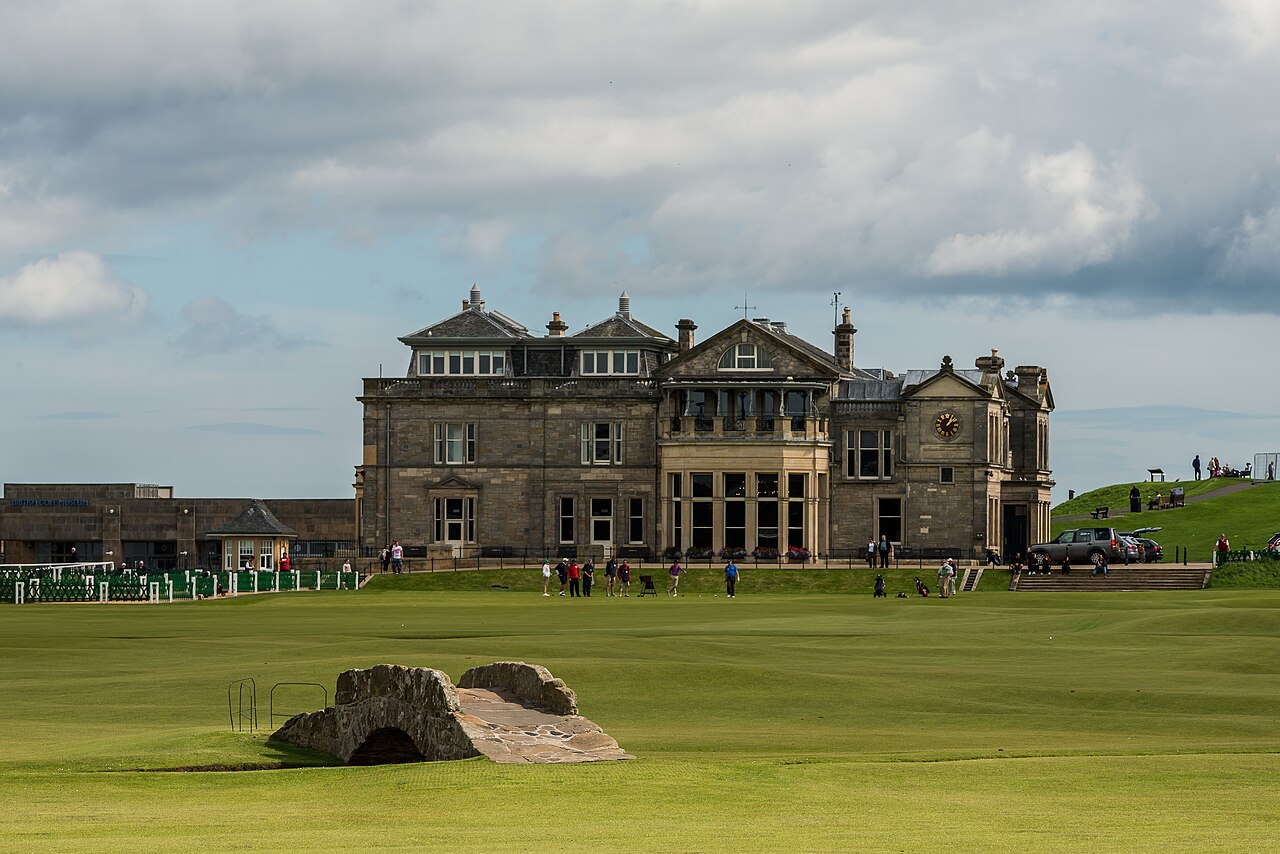
St Andrews (Old Course). Photo: Optograph — CC BY-SA 3.0. The oldest golf course in the world, in continuous play since roughly the 15th century, and the only course of its stature that any traveller can genuinely walk onto. It is public land — owned by the town, not a club — which is the historical accident that keeps it open to everyone.
The design is unlike anything built since: seven vast double greens shared between two holes, a first fairway wide enough to be almost impossible to miss, and hazards that are invisible from the tee and learned only by playing or listening to a caddie. The Road Hole 17th, played over a reconstructed railway shed to a green guarded by the deepest small bunker in golf and a public road behind, is the most examined hole in the sport. The 18th, with the Swilcan Bridge and the town façade behind the green, is golf's most photographed finish.
Access: BALLOT
World ranking: No. 3 in GOLF Magazine's 2025-26 world top 100
Green fee: €€€€
Best months: May–September
How to book: enter the daily ballot two days ahead (free, online), or apply in the advance release that opens the preceding autumn. Singles can often join a group by turning up early. Closed Sundays, when locals walk their dogs across it.
Stay: the Old Course Hotel overlooks the 17th; the town itself is full of cheaper options within walking distance.
No. 2 — Royal County Down
Newcastle, Northern Ireland
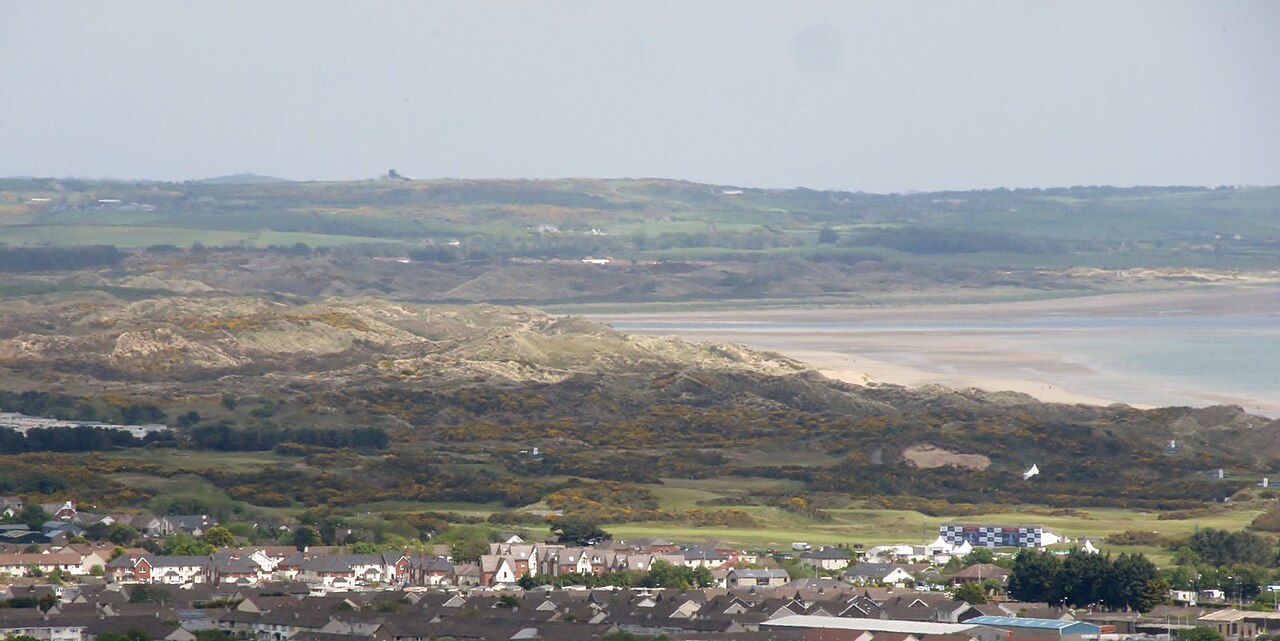
Royal County Down. Photo: Eric Jones — CC BY-SA 2.0. Widely held to be the most beautiful links on earth, and by consensus the best course in the world that a visitor can arrange to play. It runs out along Dundrum Bay beneath the Mountains of Mourne, and the framing — purple heather, golden gorse, grey mountains, blue water — is genuinely without equal.
Tom Morris laid it out in 1889 for a sum recorded as not exceeding £4. What he produced is an exercise in blind drives over dunes, bearded revetted bunkers fringed with marram grass, and greens that sit hidden until you crest the ridge in front of them. The front nine is regarded as the finest in golf. The 9th tee shot, played blind over a dune with the Slieve Donard hotel and the mountains framing the fairway beyond, is the picture everyone knows.
Access: VISITOR TIMES
World ranking: No. 4 in GOLF Magazine's 2025-26 world top 100
Green fee: €€€€
Best months: May–September
How to book: visitor tee times are released well in advance via a booking enquiry form. Play is available for visitors on Mon, Tue, Thu, Fri, and Sun. A handicap certificate is expected.
Stay: the Slieve Donard Resort sits directly beside the course. Belfast is an hour away.
No. 3 — Royal Melbourne — West
Black Rock, Victoria, Australia
Alister MacKenzie's finest work outside the United States, and the course that made the Melbourne Sandbelt a global reference point for bunkering. MacKenzie spent only a few months in Australia in 1926, but the routing he left, completed by Alex Russell, has been studied by every serious architect since.
The sand base gives fast, firm turf and enormous, sloping greens that repel anything approached from the wrong angle — the defining Sandbelt characteristic. The bunkers are the real signature: vast, irregular, flashed-sand hazards cut hard against the putting surfaces so that a bail-out miss is often worse than a bold one. The 6th, a dogleg right over a bunkered ridge, asks you to decide exactly how much you are willing to risk.
Access: VISITOR TIMES
World ranking: No. 7 in GOLF Magazine's 2025-26 world top 100
Green fee: €€€€
Best months: October–April
How to book: overseas visitors can apply for a tee time on Mondays, Tuesdays and Wednesday afternoons. The club uses a digital verification process instead of a letter of introduction. Apply well in advance. All play is walking with a mandatory caddie.
Stay: central Melbourne is 30 minutes away and far more interesting than staying locally.
No. 4 — Muirfield
Gullane, East Lothian, Scotland
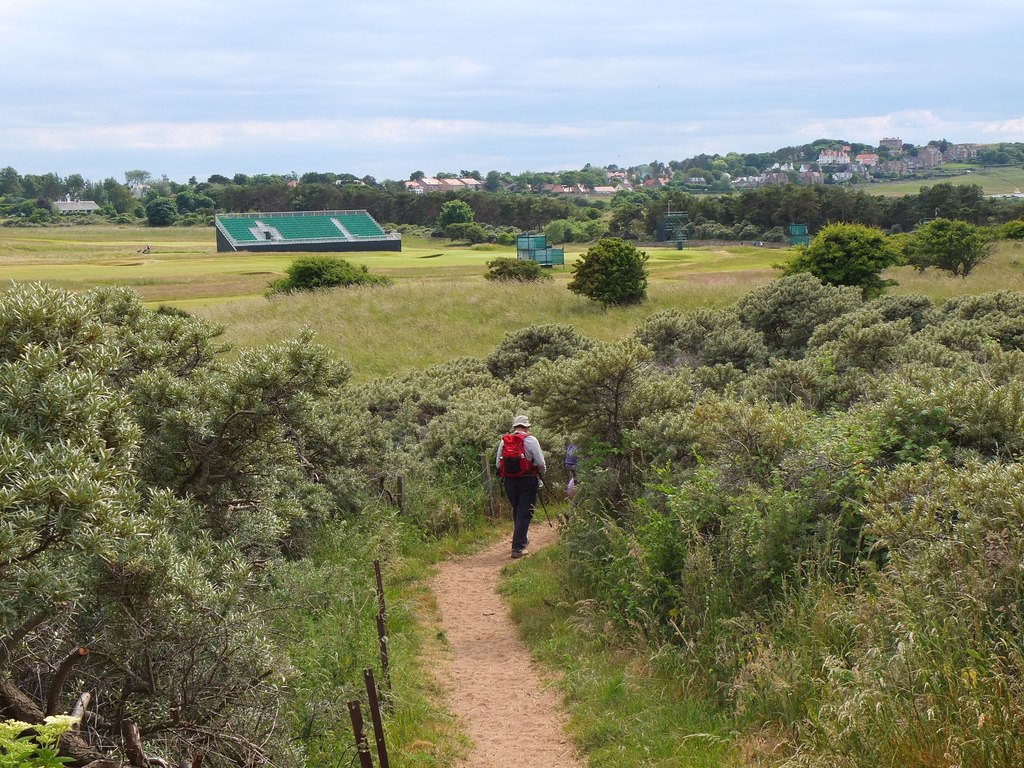
Muirfield. Photo: Jim Barton — CC BY-SA 2.0. Home of the Honourable Company of Edinburgh Golfers, the oldest organised golf club in the world, whose written rules from 1744 predate the formation of most nations on this list.
The design is the fairest of all the Open venues and the one professionals most admire. Two returning loops of nine — the outer running clockwise, the inner anticlockwise inside it — mean the wind never blows from the same quarter for more than a few holes, so no player gets a sustained advantage. Nothing is blind, nothing is tricked up; the challenge is simply that every shot must be correct. The bunkering is famously precise, with steep revetted faces that often allow only a sideways escape.
Access: VISITOR TIMES
World ranking: No. 11 in GOLF Magazine's 2025-26 world top 100
Green fee: €€€€
Best months: May–September
How to book: visitor days are traditionally Tuesdays and Thursdays, booked well in advance. The 2026 visitor dates are now full; 2027 dates opened to independent visitors in March 2026, so apply roughly a year ahead. A handicap certificate is required. The club maintains a formal culture — respect the dress code.
Stay: Greywalls sits alongside the 10th tee. Gullane village has three further fine courses within walking distance, and Edinburgh is 40 minutes west.
No. 5 — Royal Dornoch
Dornoch, Sutherland, Scotland
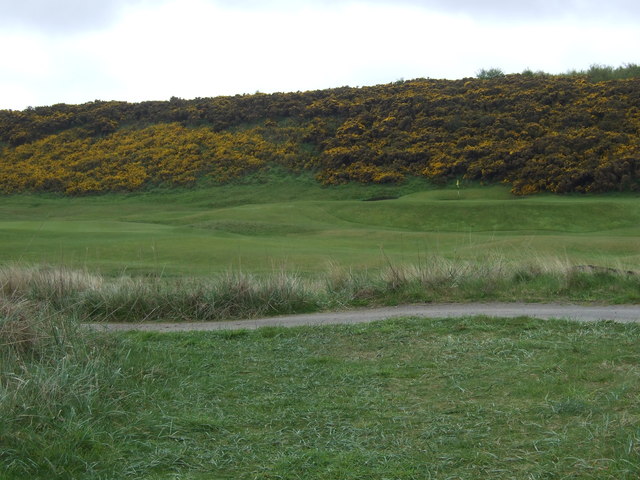
Royal Dornoch. Photo: JThomas — CC BY-SA 2.0. The most remote great course in Britain and, for many who make the drive, the best pure links experience available anywhere. Golf has been played here since at least 1616; Old Tom Morris extended it to eighteen holes in 1886.
Donald Ross was born in Dornoch and learned the game on this ground before emigrating to America, where he built Pinehurst No. 2 and hundreds of others — which makes this the taproot of a vast amount of American golf architecture. The signature feature is the raised, crowned green, shedding anything less than precise to closely mown collection areas around it. The course runs out along a raised plateau above a spectacular beach and returns along the shoreline, with the 14th, Foxy — a double-dogleg with no bunkers at all — regarded as one of the great holes in golf.
Access: VISITOR TIMES
World ranking: No. 12 in GOLF Magazine's 2025-26 world top 100
Green fee: €€€€
Best months: May–September
How to book: the club takes visitor bookings through an online system or via email for future seasons. Summer fills months ahead, and Championship course green fees drop substantially outside peak.
Stay: Links House at Dornoch, or the Royal Golf Hotel. Inverness is an hour south.
No. 6 — Royal Portrush — Dunluce
Portrush, County Antrim, Northern Ireland
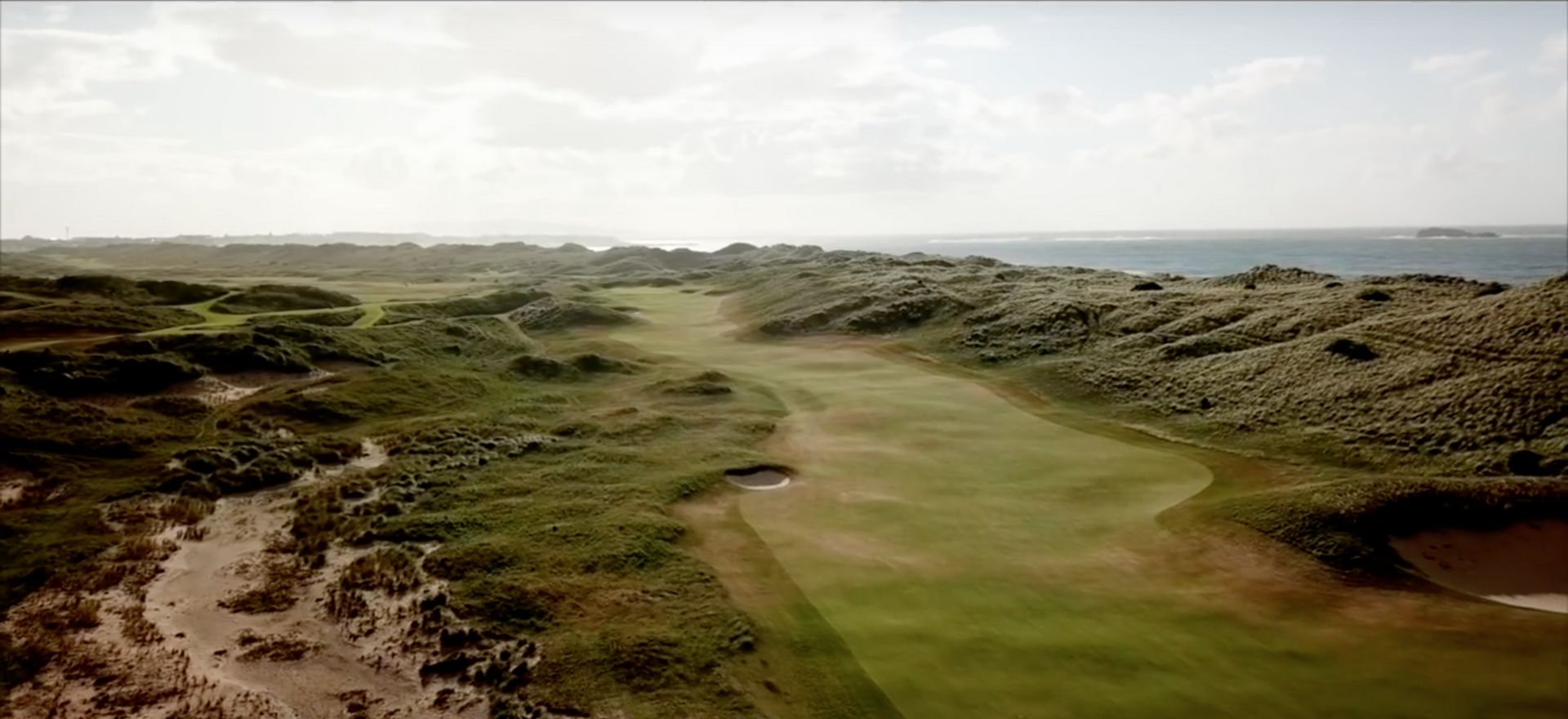
The 7th hole on the Dunluce course at Royal Portrush. Photo: Average Golfer — CC BY 3.0. The only course outside Great Britain in The Open rota, and after hosting in 2019 and again in 2025, firmly re-established among the elite championship links.
Harry Colt considered it his masterpiece. It plays through enormous dunes above the Antrim coast with views to the Skerries and, on a clear day, Islay. Unusually for a links, Portrush defends itself with subtle internal contours and out-of-bounds pressure rather than heavy bunkering — several holes have surprisingly few. Calamity Corner, the par-3 16th, plays some 210 yards across a deep ravine with a 30-metre drop to the right of the green; bailing left into Bobby Locke's Hollow is the accepted survival play. The newer 7th and 8th, built for the 2019 Open, sit among the best modern links holes anywhere.
Access: VISITOR TIMES
World ranking: No. 14 in GOLF Magazine's 2025-26 world top 100
Green fee: €€€€
Best months: May–September
How to book: visitor times released in advance; the club is used to international visitors and the process is straightforward. Book early for summer.
Stay: Portrush town, or Bushmills nearby — with the distillery and the Giant's Causeway both minutes away.
No. 7 — Pebble Beach
Pebble Beach, California, USA
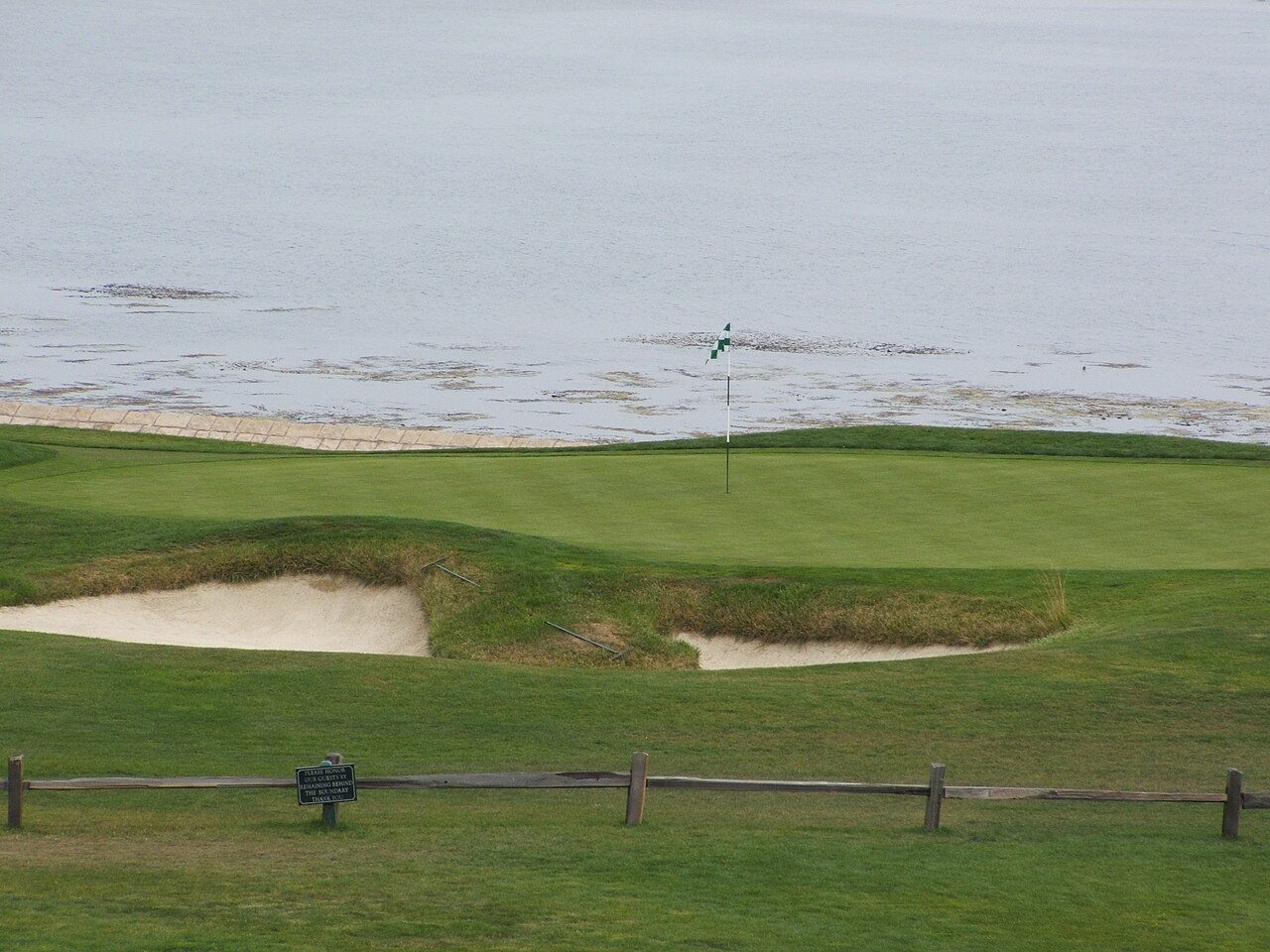
Pebble Beach. Photo: Tewy — CC BY 2.5. The most accessible truly great course in the United States and the most expensive green fee in mainstream golf. It is worth it once.
The routing saves everything for the coast: after a fairly ordinary opening, the course reaches the cliffs at the 4th and stays there through the 10th, a stretch that includes the 7th — a downhill wedge of barely 100 yards to a green ringed by bunkers and ocean, which in wind becomes one of the hardest short holes in golf — and the 8th, whose second shot is played across a chasm of Pacific to a clifftop green. The closing 18th runs 540 yards along the seawall with the ocean the entire length of the left side.
Access: RESORT
World ranking: No. 15 in GOLF Magazine's 2025-26 world top 100
Green fee: €€€€
Best months: April–May, September–October
How to book: resort guests can book up to 18 months out and are effectively guaranteed. Non-guests can book only 24 hours ahead, subject to availability, which in practice rarely works in summer. Staying is the reliable route.
Stay: The Lodge at Pebble Beach or Casa Palmero. Spyglass Hill and Spanish Bay are on the same resort.
No. 8 — Trump Turnberry — Ailsa
Turnberry, Ayrshire, Scotland
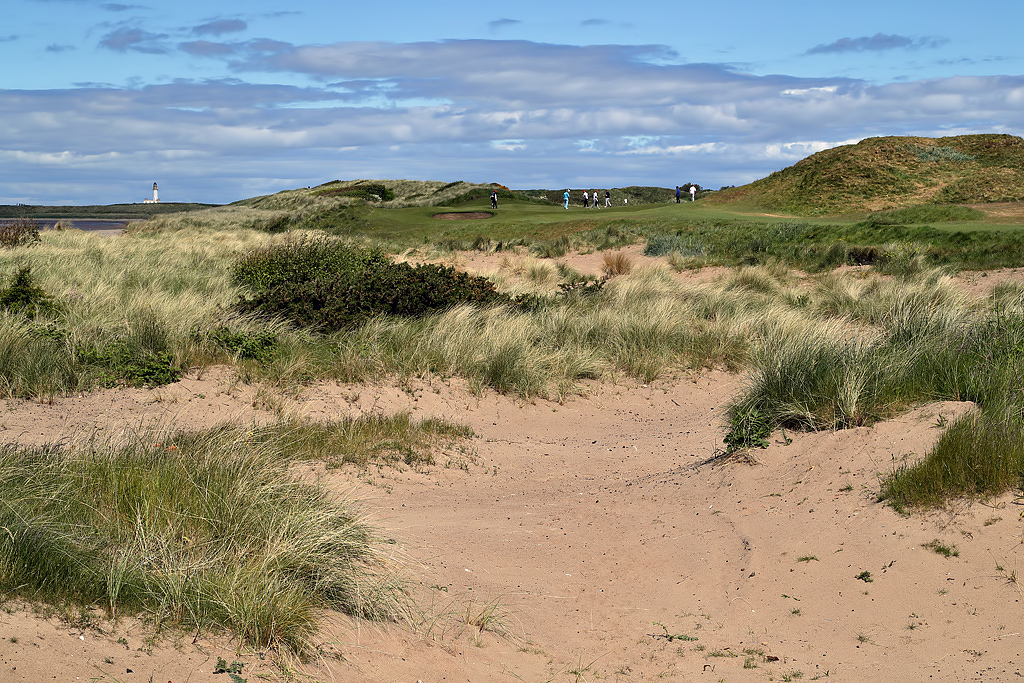
Trump Turnberry (Ailsa). Photo: Walter Baxter — CC BY-SA 2.0. The most dramatic stretch of coastal golf in Britain. The Ailsa runs along the Ayrshire cliffs with the Isle of Arran, the Mull of Kintyre and the granite dome of Ailsa Craig offshore, and a working lighthouse at its turn.
A 2016 Mackenzie & Ebert redesign pushed several holes closer to the sea and rebuilt the 9th as a par 3 played from a tee on the rocks beneath the lighthouse to a clifftop green — one of the most spectacular one-shot holes in the game. The course hosted the 1977 Open "Duel in the Sun" between Nicklaus and Watson, still the most celebrated head-to-head in the sport's history.
Access: RESORT
World ranking: No. 18 in GOLF Magazine's 2025-26 world top 100
Green fee: €€€€
Best months: May–September
How to book: resort guests get priority and preferential rates; non-guest times are available but limited and expensive. Book through the resort.
Stay: the Turnberry hotel on the hill above, with the view down over the course to the sea. Glasgow is 90 minutes north, Prestwick and Royal Troon both 30 minutes.
No. 9 — Pinehurst No. 2
Pinehurst, North Carolina, USA
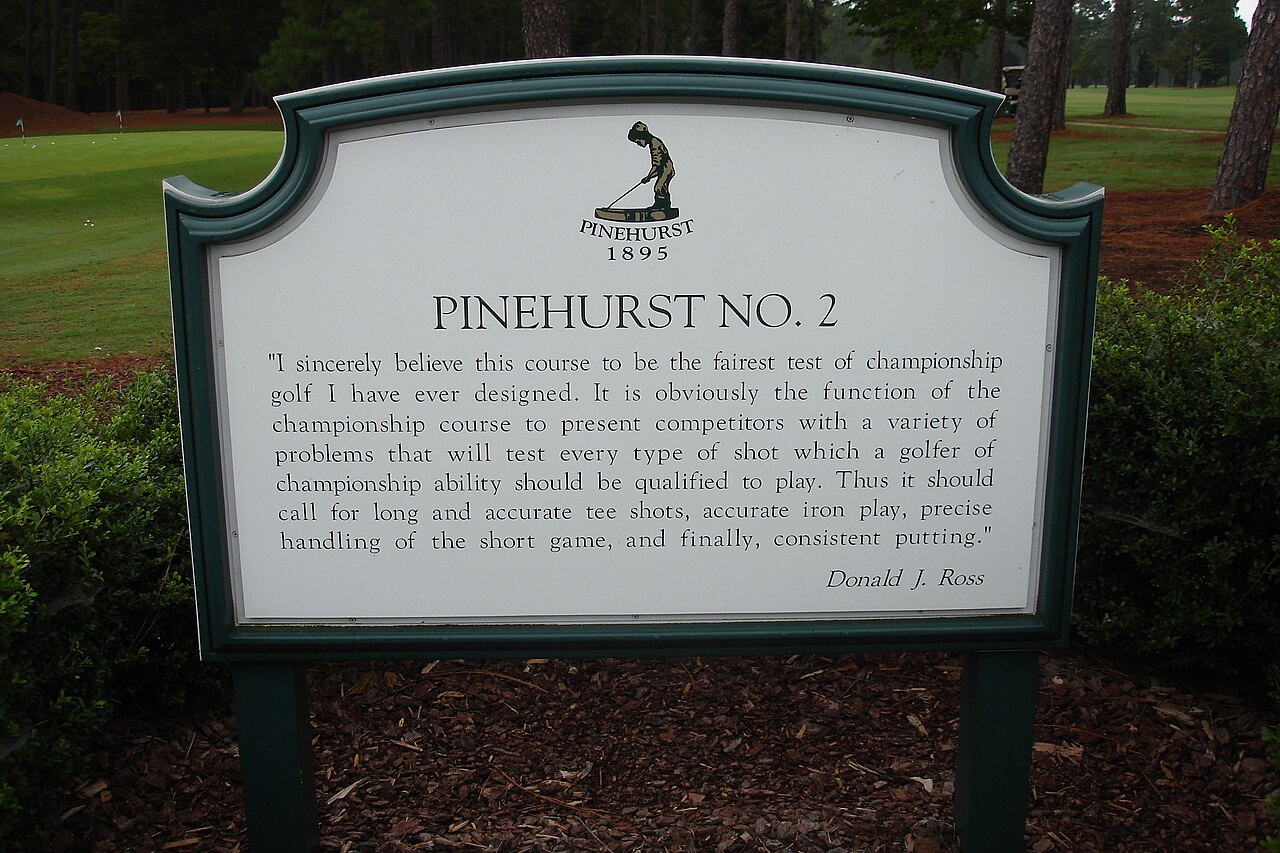
Pinehurst No. 2. Photo: Zhans33 — Public domain. Donald Ross's masterwork and his home course for four decades — he lived beside the 3rd green and adjusted the design continuously until his death in 1948.
The 2011 Coore & Crenshaw restoration is the reason it sits this high today: they stripped 35 acres of rough and irrigation back to sandy waste, wiregrass and hardpan, returning the course to something close to Ross's intent and making it both more playable for average golfers and more demanding for good ones. The defining feature is the greens — convex, crowned turtlebacks that repel approaches to closely shaved surrounds, leaving recovery shots where putter, wedge and hybrid are all defensible choices. It is now an anchor site for the US Open, returning repeatedly.
Access: RESORT
World ranking: No. 20 in GOLF Magazine's 2025-26 world top 100
Green fee: €€€€
Best months: March–May, September–November
How to book: resort guests book tee times with their stay; packages across the nine other Pinehurst courses are the standard approach. No. 4, No. 8 and the Cradle short course are all worth the extra day.
Stay: The Carolina or the Holly Inn, both on the resort.
No. 10 — Sunningdale — Old
Sunningdale, Berkshire, England
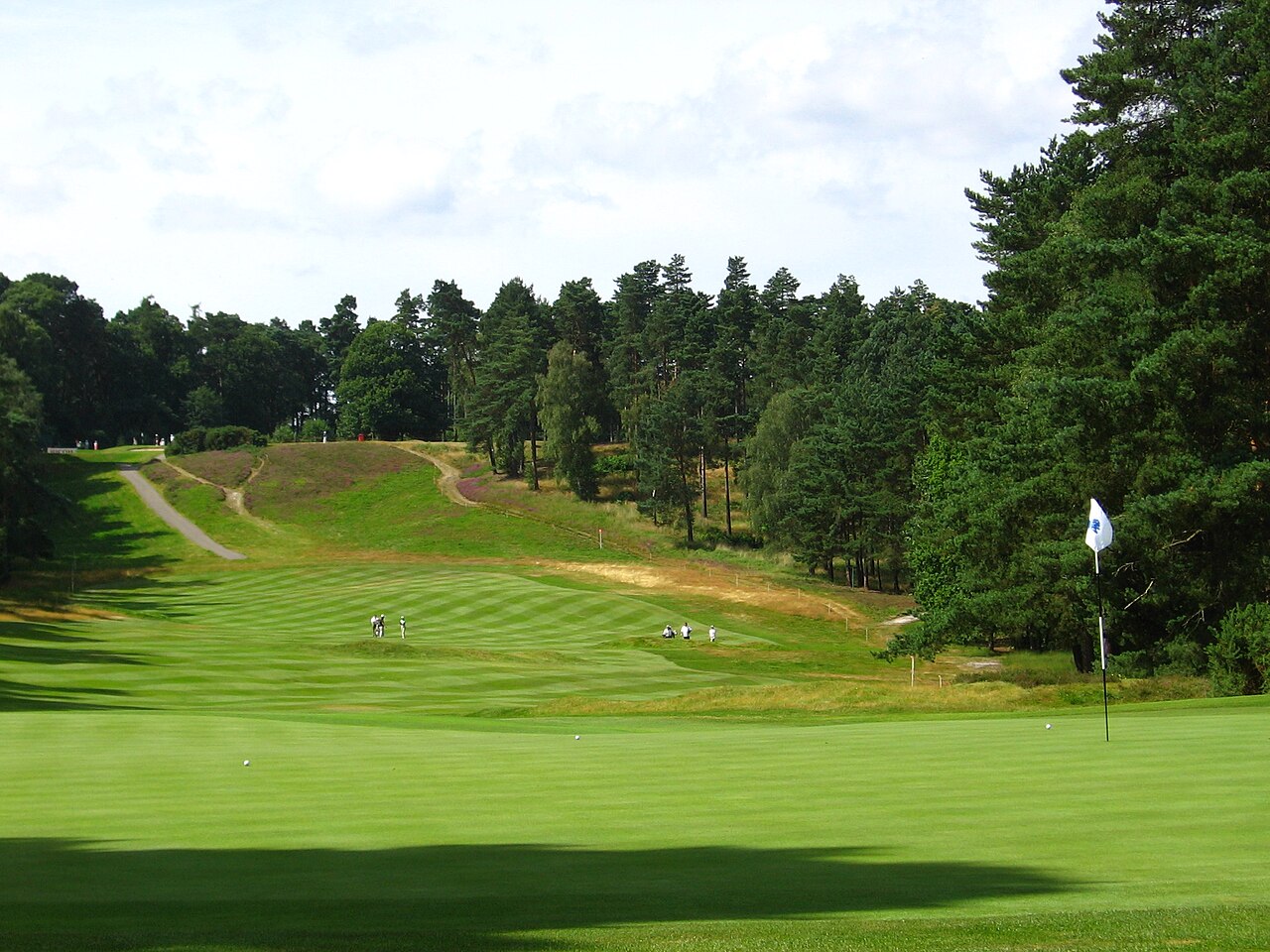
Sunningdale (Old). Photo: Wojciech Migda — CC BY-SA 3.0. The definitive English heathland course and the template for a whole category of golf — sandy soil, heather, silver birch and pine, an hour from central London.
Willie Park Jr. laid it out in 1901 and Harry Colt, as club secretary, spent two decades refining it into what stands today. The character is gentler than links golf but no less strategic: fairways tumble through heather corridors, greens sit on natural plateaux, and the bunkering asks constant questions about which side of the fairway earns the better angle. The 5th, played over water to an elevated green, and the short 10th, dropping downhill from a high tee, are the holes everyone remembers. The halfway hut's sausage sandwich is a genuine institution.
Access: VISITOR TIMES
World ranking: No. 22 in GOLF Magazine's 2025-26 world top 100
Green fee: €€€€
Best months: April–October
How to book: visitors are accepted Monday to Thursday from May to October with advance arrangement; a handicap certificate is required. The diary for each season typically fills over a year in advance.
Stay: Ascot or Windsor nearby; central London is a 50-minute train ride.
No. 11 — Kingston Heath
Cheltenham, Victoria, Australia
The Sandbelt's other great course, on a smaller and flatter site than Royal Melbourne, which makes what was achieved here more impressive rather than less.
Dan Soutar routed it in 1925; MacKenzie was brought in the following year specifically to design the bunkering, and that bunkering is the finest set on any course in Australia — sprawling, sculpted, pressed hard against greens and landing zones, framing every decision from the tee. The 15th, a short par 3 played slightly uphill to a green almost entirely encircled by sand, is among the best one-shot holes in world golf. The turf, on pure sand, runs fast and firm in a way that rewards the running approach.
Access: VISITOR TIMES
World ranking: No. 24 in GOLF Magazine's 2025-26 world top 100
Green fee: €€€
Best months: October–April
How to book: limited visitor times (midweek) requiring advance application and online verification from your home club. melbourne golf tour operators can arrange sandbelt packages covering several clubs at once.
Stay: Melbourne city centre, 30 minutes away.
No. 12 — North Berwick — West Links
North Berwick, East Lothian, Scotland
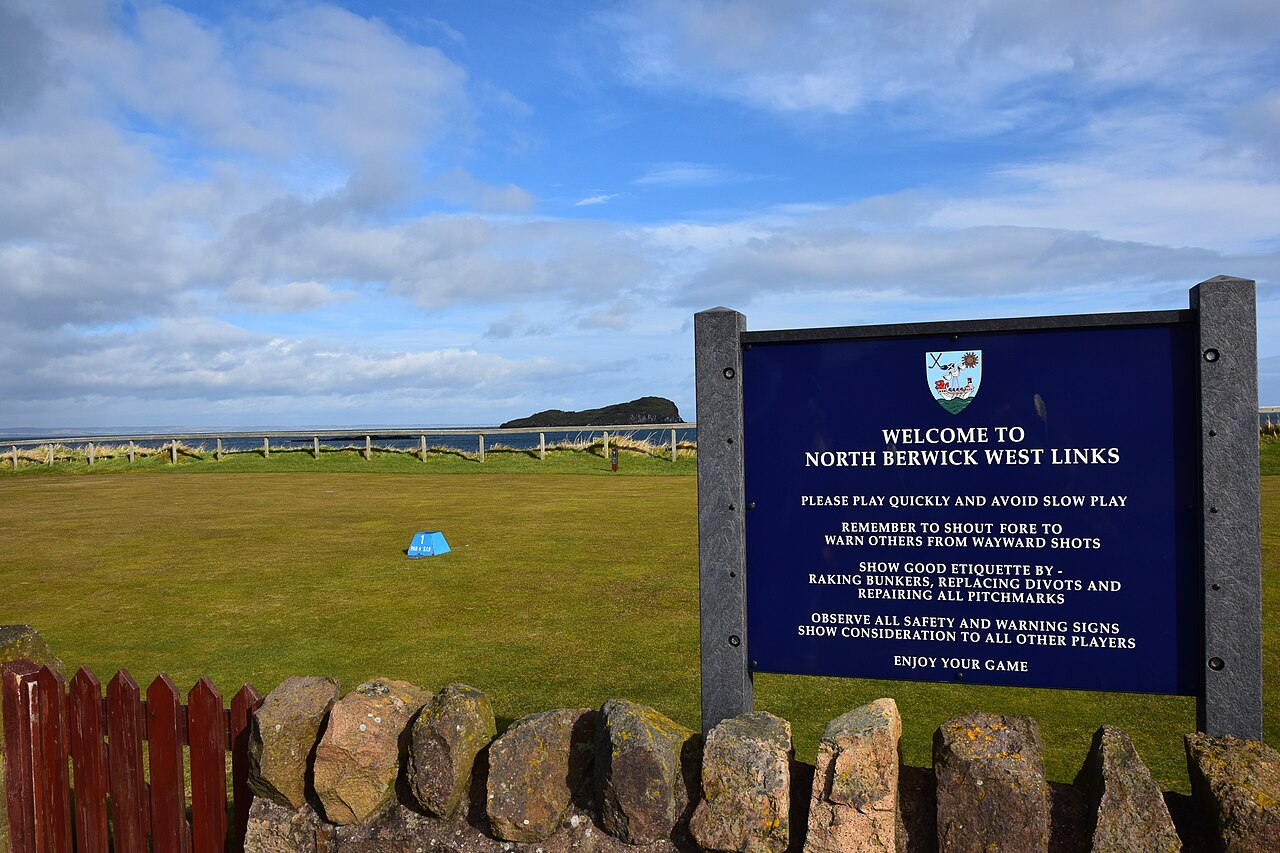
North Berwick (West Links). Photo: Robertaleotta2020 — CC BY-SA 4.0. The most eccentric great course in the world, and the most purely enjoyable round on this entire list.
It has been played continuously since 1832 and retains features no modern architect would dare build: stone walls crossing fairways, blind shots over dunes, greens on the far side of ditches. The 13th, Pit, plays to a green sitting immediately behind a waist-high stone wall. The 15th, Redan, is the most copied hole in golf — a par 3 to a green angled away from the player and falling from front-right to back-left, demanding a running shot that feeds down the slope. Versions of it exist on hundreds of courses worldwide, most of them inferior to the original.
Access: PUBLIC
World ranking: No. 25 in GOLF Magazine's 2025-26 world top 100
Green fee: €€€
Best months: May–September
How to book: genuinely public and bookable online, though summer demand is heavy. Notably good value for a course of this standing.
Stay: North Berwick town. Muirfield, Gullane and Archerfield are all within fifteen minutes, making this the best golf base in Scotland.
No. 13 — Ballybunion — Old
Ballybunion, County Kerry, Ireland
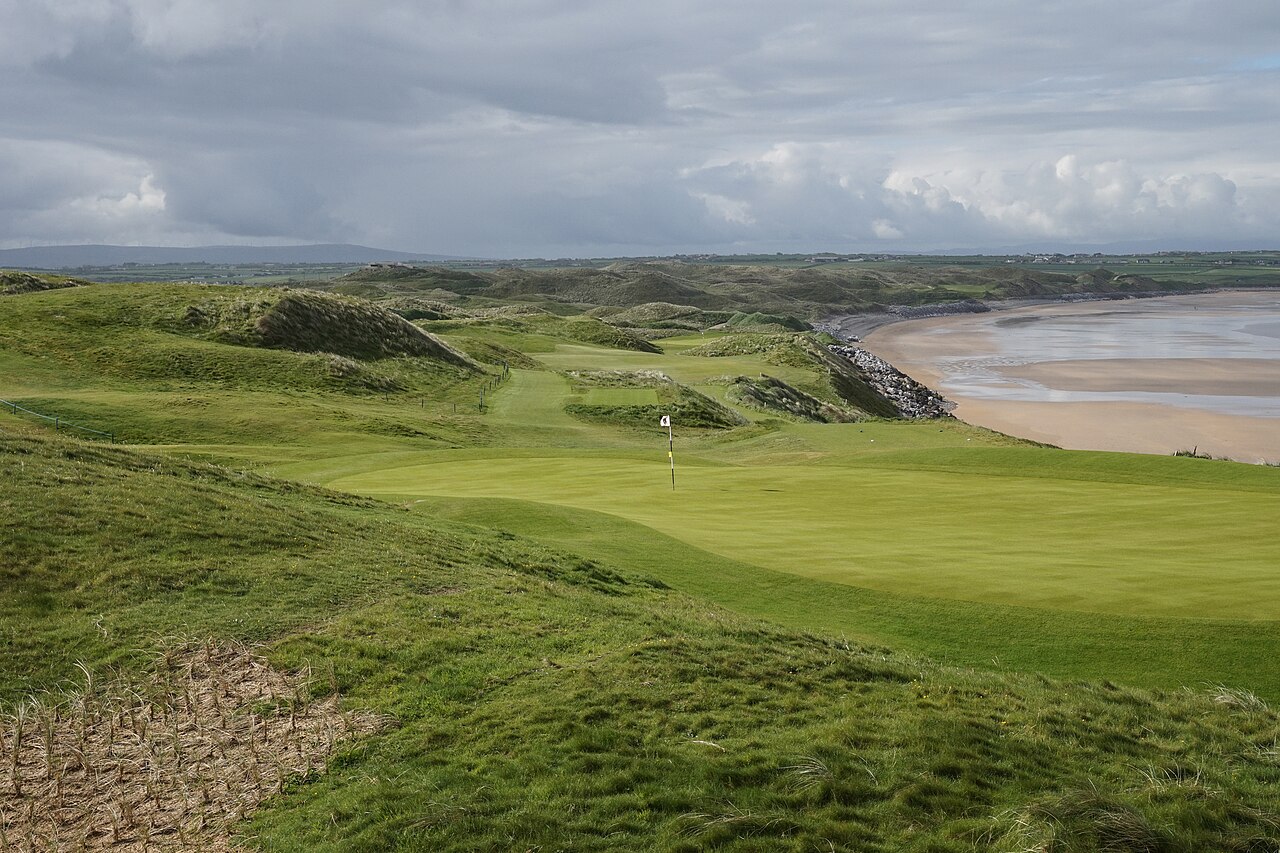
Ballybunion (Old). Photo: Bernard Gagnon — CC BY-SA 4.0. Tom Watson, who won five Opens, called it the finest links he had ever played and spent years quietly helping the club refine it.
The course runs through towering dunes directly above the Atlantic, with a graveyard beside the first tee that most visitors photograph before their opening drive. The land is extraordinary: the 11th plays from an elevated tee along the cliff edge with the beach far below, and the stretch from the 7th through the 17th moves through dune corridors with almost no flat lies anywhere. It is a course of exposure and improvisation rather than precision — in wind, the low running shot is the only reliable option.
Access: PUBLIC
World ranking: No. 29 in GOLF Magazine's 2025-26 world top 100
Green fee: €€€€
Best months: May–September
How to book: genuinely bookable and used to visitors. Summer books up months ahead; shoulder-season rates are dramatically lower.
Stay: Ballybunion village is small; many visitors base in Tralee or Killarney. Lahinch is 90 minutes north, making the two a natural pairing.
No. 14 — Royal St George's
Sandwich, Kent, England
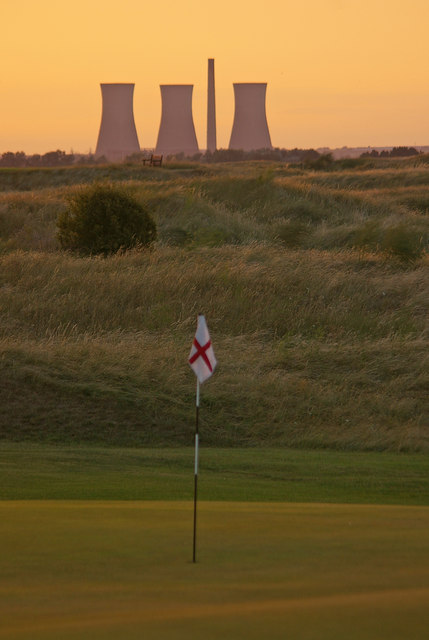
Royal St George's. Photo: Ian Capper — CC BY-SA 2.0. England's most frequent Open venue outside Lancashire, and the first course outside Scotland to host the championship, in 1894.
It is a genuine old-school links of humps, hollows and blind shots, laid across rumpled dune land where flat lies are rare and bounces are unpredictable — which some players find unfair and others consider the entire point. The 4th features the deepest bunker in championship golf, a vast revetted pit set into a dune face that has ended tournaments. The 15th and 16th are among the strongest closing stretches in England.
Access: VISITOR TIMES
World ranking: No. 30 in GOLF Magazine's 2025-26 world top 100
Green fee: €€€€
Best months: May–September
How to book: visitor tee times on set days, typically midweek, with a handicap certificate required. Advance booking essential.
Stay: Sandwich or Deal. Royal Cinque Ports and Prince's are both minutes away — three top courses within a few miles makes this an efficient Kent trip.
No. 15 — Lahinch — Old
Lahinch, County Clare, Ireland
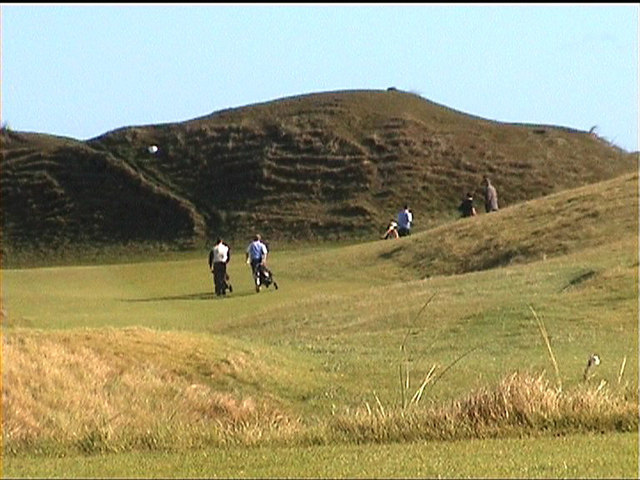
Lahinch (Old). Photo: Russ Davies — CC BY-SA 2.0. Known as the St Andrews of Ireland, and the most characterful course on the west coast. Old Tom Morris laid it out in 1892 and called the ground the finest natural links he had seen; MacKenzie revised it in 1927.
Two holes from the original survive and define the place. The Klondyke, a par 5, requires a second shot played blind directly over an enormous dune, with a man posted to signal when the fairway beyond is clear. The Dell, a par 3, is played entirely blind over a dune ridge to a green hidden in a hollow between two more, with a white stone moved daily to indicate the pin position. No architect would build either today, and the course would be poorer without them. The club's resident goats have long been said to forecast weather by sheltering near the clubhouse.
Access: PUBLIC
World ranking: No. 34 in GOLF Magazine's 2025-26 world top 100
Green fee: €€€€
Best months: May–September
How to book: straightforward online booking; the club welcomes visitors.
Stay: Lahinch village, with the Cliffs of Moher fifteen minutes away.
No. 16 — Pacific Dunes
Bandon, Oregon, USA
The best modern course in the United States, and the one that confirmed Bandon Dunes Resort as the most important golf development of the last half-century.
Tom Doak routed it in 2001 along clifftops above the Pacific, with holes threading between gorse and dune and four par 3s on the back nine — an unconventional decision that works because each is entirely different in length, direction and character. The 13th plays along the cliff edge with the ocean hard left the whole way. Nothing is overbuilt; the design principle throughout is to use ground that was already there and move as little of it as possible.
Access: RESORT
World ranking: No. 35 in GOLF Magazine's 2025-26 world top 100
Green fee: €€€€
Best months: May–October
How to book: resort guests only in practice. Book a multi-day package — the resort has five full courses plus the Preserve short course, and Bandon Dunes and Bandon Trails also appear in this guide.
Stay: on the resort. Walking is encouraged and caddies are the norm; there are no carts on most rounds.
No. 17 — Carnoustie — Championship
Carnoustie, Angus, Scotland
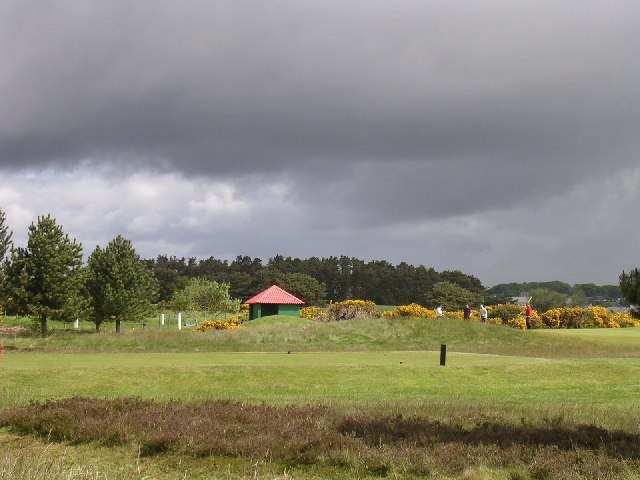
Carnoustie (Championship). Photo: Val Vannet — CC BY-SA 2.0. The hardest course in The Open rota, and the least forgiving links in Scotland. Players call it Car-nasty, and mean it.
There is no scenic softening here — no cliffs, no mountains, just flat coastal ground, punishing rough, out-of-bounds pressure and the Barry Burn snaking through the closing holes. The finish is the most feared in golf: the 16th is a 250-yard par 3 that plays into the prevailing wind; the 17th requires crossing the burn twice; the 18th demands a drive over it and an approach across it again to a green with the water immediately short. Jean van de Velde's collapse here in 1999, taking a triple bogey with a three-shot lead, remains the sport's most replayed disaster.
Access: PUBLIC
World ranking: No. 39 in GOLF Magazine's 2025-26 world top 100
Green fee: €€€€
Best months: May–September
How to book: publicly bookable online, and reasonable value by championship-links standards.
Stay: Carnoustie Golf Hotel overlooks the 18th. St Andrews is under an hour south.
No. 18 — Barnbougle Dunes
Bridport, Tasmania, Australia
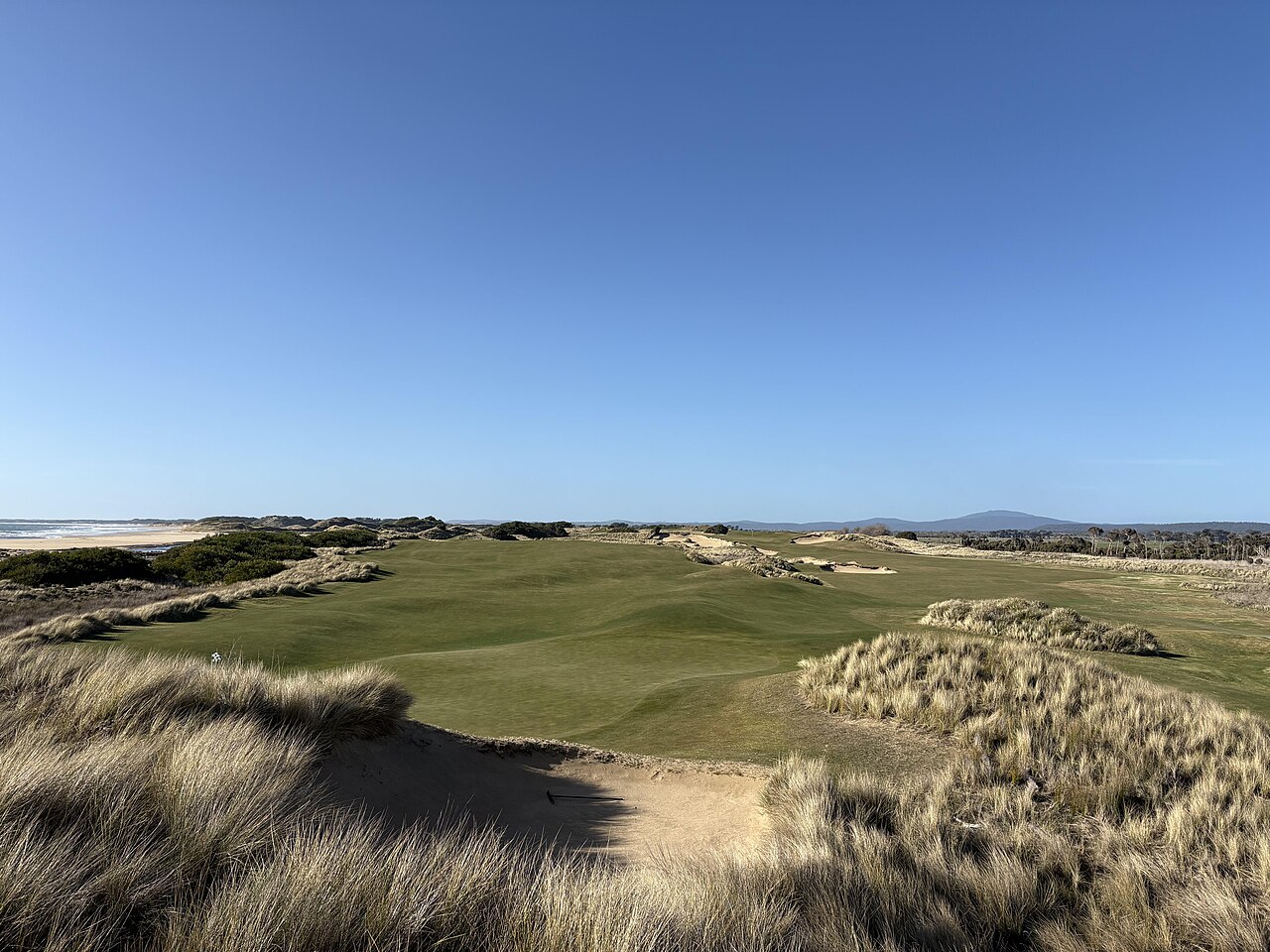
Barnbougle Dunes. Photo: Johnorchard — CC BY-SA 4.0. The course that proved Australian destination golf could compete globally. Doak and Mike Clayton built it in 2004 on a potato farmer's coastal dunes in a remote corner of northern Tasmania, on the theory that if the land was good enough, people would travel.
They were right. The dunescape is as good as any in the world, and the design leaves it largely alone — wide fairways, huge greens, deep natural blowout bunkers and constant wind off Bass Strait. The 7th, a drivable par 4 of around 100 metres with a green set in a dune bowl, is the most discussed short hole in Australian golf. Its sister course, Lost Farm, sits alongside and is nearly as highly regarded.
Access: RESORT
World ranking: No. 41 in GOLF Magazine's 2025-26 world top 100
Green fee: €€
Best months: October–April
How to book: book directly through the resort with accommodation. Genuinely good value relative to the quality.
Stay: on-site lodgings. Launceston is roughly 90 minutes away; fly into Tasmania rather than driving from the mainland.
No. 19 — Royal Birkdale
Southport, Merseyside, England
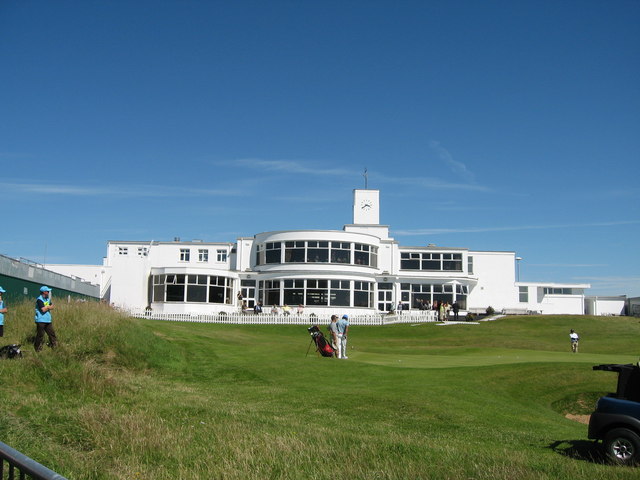
Royal Birkdale. Photo: Sue Adair — CC BY-SA 2.0. The most respected of England's Open venues among professionals, for a specific architectural reason: its fairways run along flat-bottomed valleys between the dunes rather than over them, so bounces are predictable and good shots are rewarded. It is the fairest links in England.
The dunes themselves are enormous, giving natural amphitheatres that make it the best spectating course in the country. The 12th, a par 3 played to a green cut into a dune, and the closing 18th, with its art-deco clubhouse behind, are the signatures. Birkdale has produced a notably high-quality roll of champions, which players attribute directly to the absence of luck in its design.
Access: VISITOR TIMES
World ranking: No. 42 in GOLF Magazine's 2025-26 world top 100
Green fee: €€€€
Best months: May–September
How to book: visitor tee times on set days with advance booking; handicap certificate required.
Stay: Southport. The surrounding coast holds Royal Lytham, Hillside, Formby and Royal Liverpool — the densest concentration of championship links in England.
No. 20 — St Patrick's Links
Rosapenna, County Donegal, Ireland
The newest course in this guide's upper reaches, opened in 2021, and proof that genuinely world-class links can still be built.
Tom Doak was given an enormous Donegal dunescape — land two failed courses had previously occupied — and essentially started again, routing eighteen holes through dunes that in places run to 20 metres high. The result feels ancient rather than new: firm, wide, windswept, with greens that accept running approaches and punish aerial ones in wind. Donegal's remoteness means you will often have long stretches of the course to yourself.
Access: RESORT
World ranking: No. 44 in GOLF Magazine's 2025-26 world top 100
Green fee: €€€
Best months: May–September
How to book: through the Rosapenna resort, which also has two further courses (Sandy Hills and the Old Tom Morris links) on site.
Stay: Rosapenna Hotel. This is a genuine detour — Donegal is a long way from Dublin — which is precisely why it stays quiet.
No. 21 — New South Wales
La Perouse, Sydney, Australia
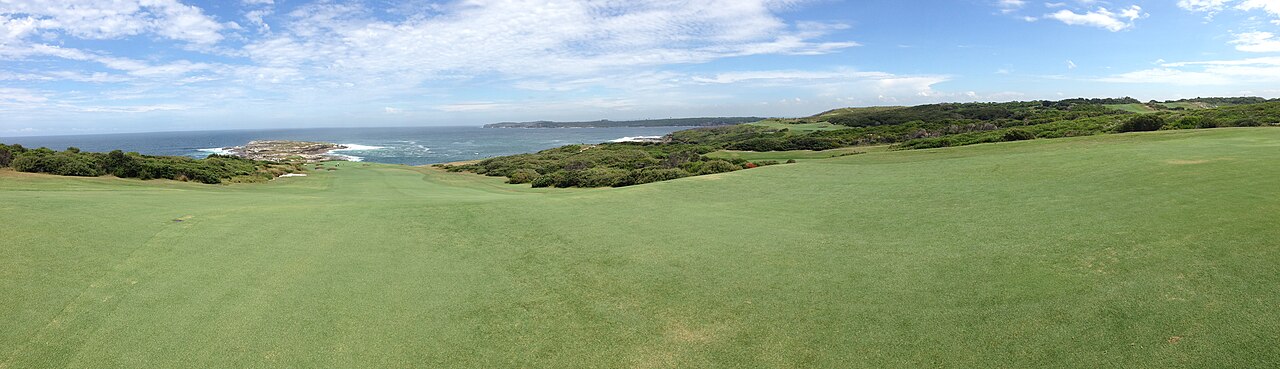
New South Wales. Photo: Eddy23 — CC BY-SA 4.0. MacKenzie again, this time on a headland above Botany Bay where Captain Cook first landed, twenty minutes from central Sydney.
The setting is the draw: the course runs along and over an exposed rocky peninsula with ocean on three sides and genuine wind almost every day. The 6th is the famous hole — a par 3 played from a clifftop tee across an inlet of open sea to a green on a rocky promontory, with no bail-out and nothing but water between. The 5th, a par 5 played downhill towards the ocean, is nearly as good. Exposure means scoring depends heavily on conditions.
Access: VISITOR TIMES
World ranking: No. 46 in GOLF Magazine's 2025-26 world top 100
Green fee: €€€€
Best months: September–April
How to book: limited unaccompanied guest access on weekdays only for those residing outside of NSW; bookings are essential and should be made well in advance through the club's website.
Stay: Sydney city — this is a course you visit from the city rather than basing around.
No. 22 — Sand Valley — The Lido
Rome, Wisconsin, USA
The most unusual course in this guide: a full hole-by-hole reconstruction of a course that no longer exists.
C.B. Macdonald's Lido Club, built on Long Island in 1917 on reclaimed marshland at enormous cost, was among the most admired courses in America before it was lost to the Second World War. Using surviving plans, aerial photographs and a digital model built by an architecture researcher, the Keiser family rebuilt it hole-for-hole in Wisconsin sand, opening in 2023. The result is a working time machine — template holes including Redan, Biarritz and Channel played exactly as designed a century ago, on ground that mimics the original.
Access: RESORT
World ranking: No. 48 in GOLF Magazine's 2025-26 world top 100
Green fee: €€€
Best months: May–October
How to book: Lido access is tied to Sand Valley resort stays and is the most restricted tee sheet on the property — arrange it when booking the stay, not on arrival.
Stay: Sand Valley resort, which also has Sand Valley, Mammoth Dunes and the Sandbox short course.
No. 23 — Swinley Forest
South Ascot, Berkshire, England
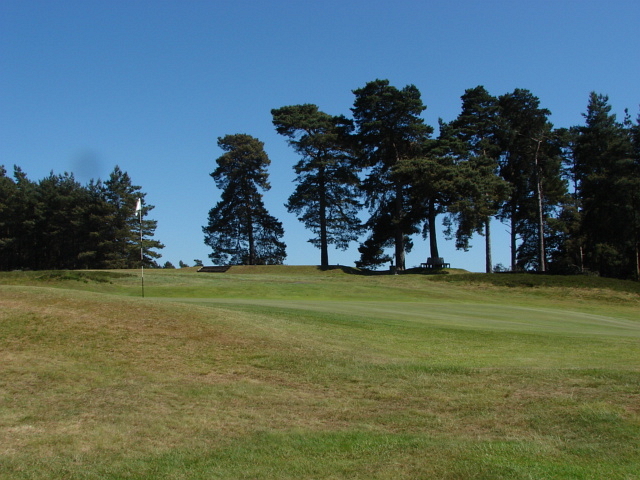
Swinley Forest, among the Surrey–Berkshire heathland pines. Photo: Alan Hunt — CC BY-SA 2.0. Harry Colt described it as "the least bad course I ever built" — an aristocratic understatement about a course many consider his purest expression of heathland design.
It is a short course by modern standards and entirely unbothered by that fact. There are no medal competitions and traditionally no scorecards in general play; members and guests play matches. The result is a course meant to be enjoyed rather than survived, with five excellent par 3s, fairways cut through heather and rhododendron, and an atmosphere of complete seclusion twenty minutes from Heathrow.
Access: VISITOR TIMES
World ranking: No. 50 in GOLF Magazine's 2025-26 world top 100
Green fee: €€€
Best months: April–October
How to book: email the club office directly — no member introduction is needed, which is why it qualifies for this guide. Visitors are accepted on weekdays only, strictly by prior arrangement and in limited numbers; weekends are members only. The club has no reciprocal arrangements with other clubs; confirm the current green fee when you book.
Stay: Ascot. Sunningdale's two courses are ten minutes away.
No. 24 — Royal Troon — Old
Troon, Ayrshire, Scotland
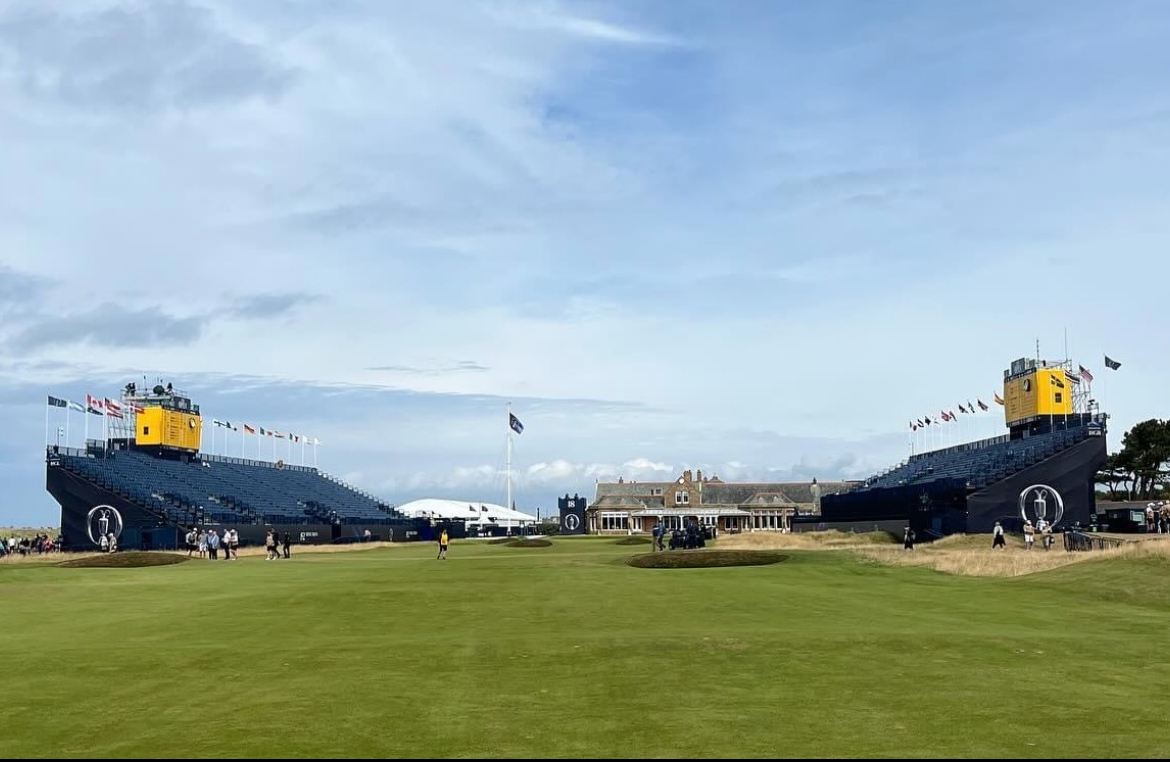
The Old Course at Royal Troon during the 2024 Open Championship. Photo: Goodreg3 — CC0. An Open venue with the most extreme pair of holes in championship golf sitting back to back.
The 8th, the Postage Stamp, is a par 3 of barely 120 yards to a green eight paces wide, surrounded by deep bunkers and falling ground on every side — the shortest hole in Open golf and one where professionals routinely make double bogey. The 11th, the Railway, runs alongside the Glasgow–Ayr line with out-of-bounds tight down the right for its entire length, and is one of the hardest holes in the rota. The course itself follows a classic out-and-back links routing: out along the shore with the wind, back into it.
Access: VISITOR TIMES
World ranking: No. 53 in GOLF Magazine's 2025-26 world top 100
Green fee: €€€€
Best months: May–September
How to book: visitor times available on Mondays, Tuesdays, and Thursdays; advance arrangement via email or phone is required; handicap limits apply (20 for men, 30 for women).
Stay: Troon or Ayr. Turnberry and Prestwick are both within 30 minutes, making Ayrshire a tight three-course trip.
No. 25 — Portmarnock — Old
Dublin, Ireland
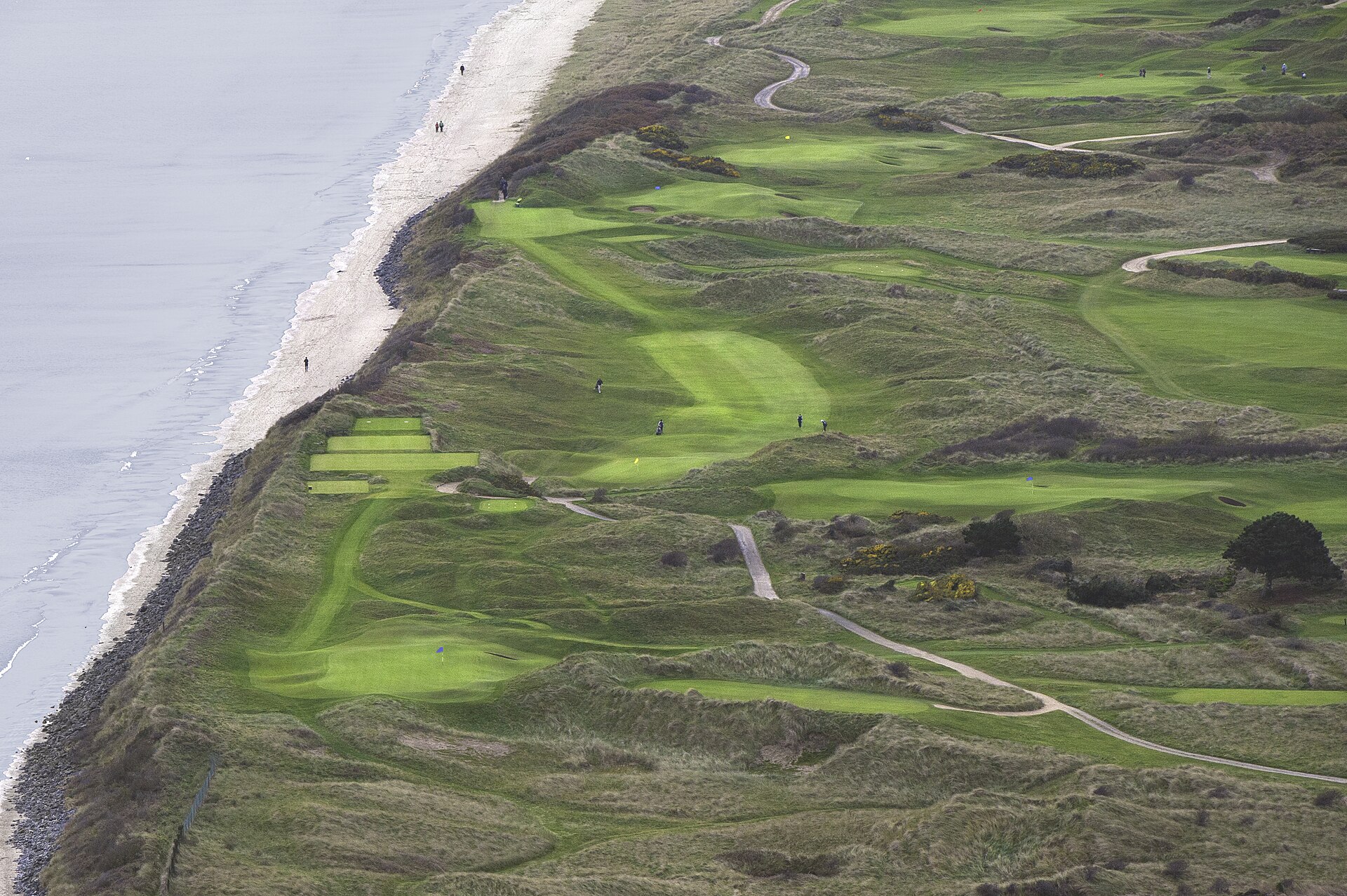
The 14th, 15th and 16th holes at Portmarnock, from the air. Photo: PGC — CC0. The great Dublin links and the most convenient world-class course in Ireland — twenty minutes from Dublin Airport, on a peninsula with water on three sides.
It is a pure, honest links with no gimmicks: flat-ish terrain, subtle contours, and defence built almost entirely on wind and bunkering rather than dunes or blind shots. Because it runs in constantly changing directions, no two consecutive holes play the same wind. The 14th is widely regarded as one of the finest par 4s in Ireland, and the 15th, a par 3 along the shoreline, was called by Arnold Palmer the best short hole he had played.
Access: PUBLIC
World ranking: No. 54 in GOLF Magazine's 2025-26 world top 100
Green fee: €€€€
Best months: May–September
How to book: visitor times available on Mondays, Tuesdays, Thursdays, and Sundays; booking opens far in advance and the club is often fully booked a year ahead.
Stay: Dublin city, twenty minutes away — making this the easiest world-top-100 course to combine with a normal city trip.
No. 26 — Sunningdale — New
Sunningdale, Berkshire, England
The other Sunningdale course, built by Harry Colt in 1922 and, by some assessments, the better of the two.
It is more exposed than the Old — less tree cover, more heather, firmer and more open to wind — which gives it a rawer, more links-like character despite being forty miles inland. The greens are subtler and the bunkering more penal. Members tend to debate Old versus New endlessly; the honest answer is that the Old has the charm and the New has the golf.
Access: VISITOR TIMES
World ranking: No. 55 in GOLF Magazine's 2025-26 world top 100
Green fee: €€€€
Best months: April–October
How to book: visitor times on Mondays through Thursdays from May to October; bookings must be made by contacting the club directly; handicap limits apply (18.4 for men, 24.4 for women).
Stay: Ascot or Windsor; London 50 minutes by train.
No. 27 — Bethpage Black
Farmingdale, New York, USA
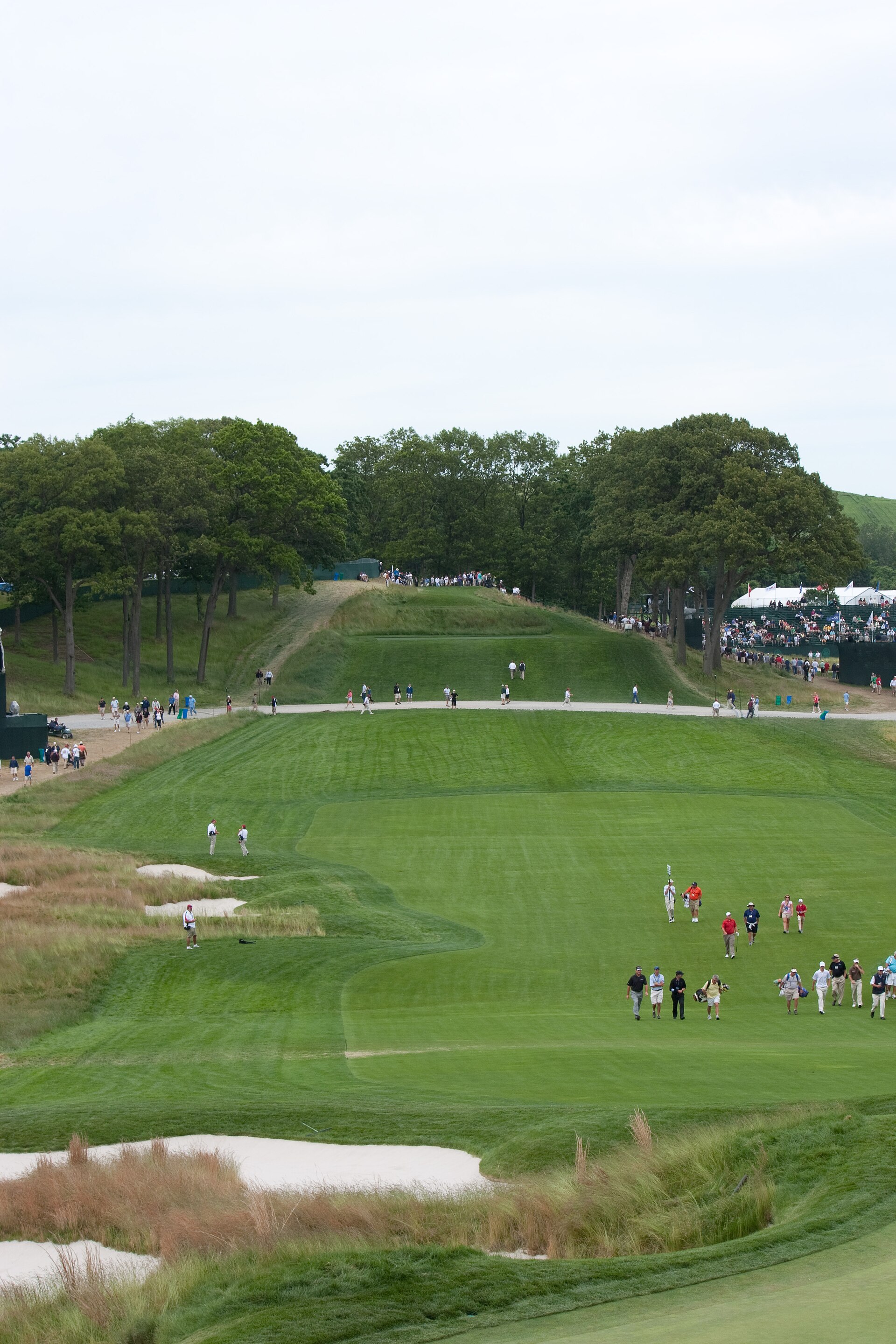
Bethpage Black during the 2009 US Open. Photo: Dov Harrington — CC BY 2.0. The most remarkable entry in this guide: a genuinely public, state-owned municipal course that hosts US Opens and the Ryder Cup, and charges a fraction of what comparable courses ask.
A sign at the first tee warns that the Black is "an extremely difficult course which we recommend only for highly skilled golfers" — which is accurate. A.W. Tillinghast's 1936 design is brutally long, with forced carries over sprawling bunkers, severe elevation changes and thick rough. The 4th, a long par 5 with a diagonal bunker complex to carry on the second shot, and the uphill 15th are the defining holes.
Access: PUBLIC
World ranking: No. 56 in GOLF Magazine's 2025-26 world top 100
Green fee: €€
Best months: May–October
How to book: New York State residents get 7-day advance booking priority online; non-residents can book 5 days ahead or queue overnight in the car park for early morning slots.
Stay: Long Island or New York City, an hour away.
No. 28 — St George's Hill
Weybridge, Surrey, England
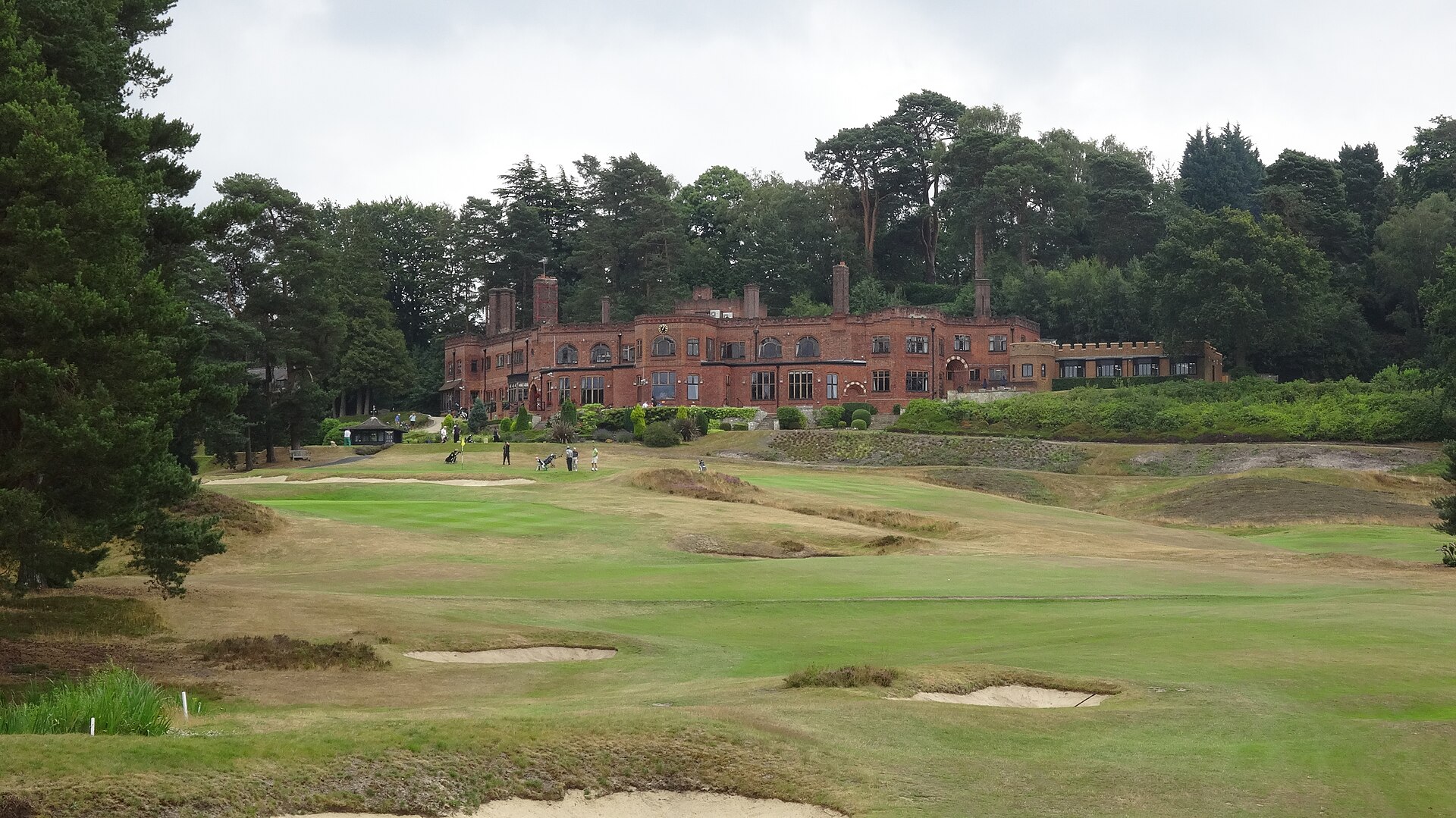
St George's Hill, with the clubhouse beyond the course. Photo: University of Exeter — CC BY 2.0. Harry Colt's 1913 heathland course, built as the centrepiece of one of England's first private housing estates, and the design many architects rate alongside Sunningdale and Swinley as the finest of the Surrey sand belt.
The land is more dramatic than its neighbours — genuine elevation change, with tee shots played from raised ground down into heather-lined valleys and approaches climbing back up to greens set on natural shelves. The opening tee shot, dropping away downhill, is among the best starts in English golf. Colt lived locally and refined the course over decades, and the three loops of nine (A, B and C) mean the composite eighteen used for visitor play can vary.
Access: VISITOR TIMES
World ranking: No. 57 in GOLF Magazine's 2025-26 world top 100
Green fee: €€€
Best months: April–October
How to book: telephone the club office rather than emailing — they specifically recommend it, because availability is tight. Visitors are welcome in groups of 15 or fewer from April to mid-December, Monday to Thursday, with very limited Friday-morning availability. No visitors Friday afternoons, weekends or bank holidays. For 2026 the 18-hole visitor green fee is £300 from April to July and £200 from August to October, and the club recommends a playing handicap of 22 or less. Red course renovations run from August 2026 to April 2027, so the eighteen in that period is Green and Blue. Societies and corporate days run Wednesdays and Thursdays with a 16-player minimum.
Stay: Weybridge or Woking. Sunningdale, Swinley Forest and Wentworth are all within 20 minutes, making this the densest heathland cluster in the world.
No. 29 — Prestwick
Prestwick, Ayrshire, Scotland
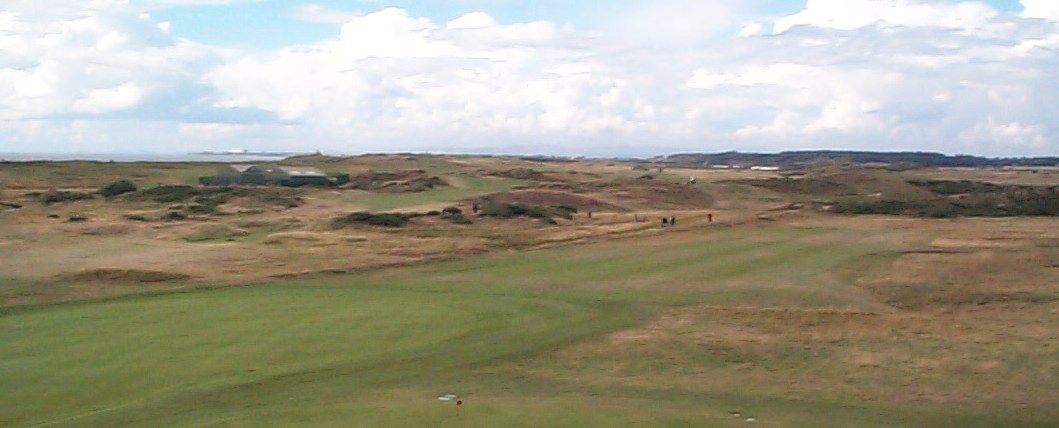
The 18th hole at Prestwick, seen from the clubhouse. Photo: Markatty (Wikimedia Commons) — Public domain. The birthplace of The Open Championship, which was first played here in 1860 and held here 24 times.
Prestwick is a living museum of Victorian golf and makes no apology for it. The original course was twelve holes; today's eighteen retain features that are wildly anachronistic and completely charming — the Cardinal bunker, a vast railway-sleepered trench crossing the 3rd fairway; the Himalayas 5th, a blind par 3 over a towering dune; stone walls and railway boundaries throughout. Purists complain it is unfair. That is missing the point entirely.
Access: VISITOR TIMES
World ranking: No. 58 in GOLF Magazine's 2025-26 world top 100
Green fee: €€€€
Best months: May–September
How to book: visitor times available on weekdays and Sundays (no Saturday play); advance booking via email or phone is recommended.
Stay: Prestwick town, next to the airport. Troon is ten minutes, Turnberry thirty.
No. 30 — Cruden Bay
Cruden Bay, Aberdeenshire, Scotland
The cult favourite of Scottish links, and the course architecture enthusiasts recommend most often to people who think they have seen everything.
Tom Simpson's 1926 routing moves through a wildly contoured dunescape north of Aberdeen, producing blind shots, punchbowl greens, plunging elevation changes and holes that no committee would approve today. The 14th is a blind par 3 to a green in a hollow; the 15th plays from a high tee down to a fairway hidden below. It is quirky in the way North Berwick is quirky, and enormous fun.
Access: PUBLIC
World ranking: No. 61 in GOLF Magazine's 2025-26 world top 100
Green fee: €€€
Best months: May–September
How to book: bookable by email or phone only (no online system); visitors are welcome daily, though weekend tee times are restricted to the afternoon.
Stay: Cruden Bay village or Aberdeen, 40 minutes south. Combine with Royal Aberdeen and Trump International Scotland nearby.
No. 31 — Kawana — Fuji
Ito, Shizuoka, Japan
The finest course in Japan that a visitor can play, and one of the most beautiful resort courses anywhere.
C.H. Alison, the English architect whose deep bunkering left such a mark on Japanese golf that the term arisonbanka — Alison bunker — entered the language, completed it in 1936. The Fuji course runs along cliffs above Sagami Bay on the Izu Peninsula, with Mount Fuji visible across the water on clear days. The 15th, a long par 5 descending towards the sea, is the signature. Conditioning is immaculate in the Japanese manner, and caddies are standard.
Access: RESORT
World ranking: No. 62 in GOLF Magazine's 2025-26 world top 100
Green fee: €€€
Best months: March–May, October–November
How to book: standard access is tied to staying at the Kawana Hotel; while occasional day-play promotions exist, staying on-site remains the primary way for visitors to secure a time.
Stay: the Kawana Hotel itself, a 1936 property that is part of the experience. Roughly two hours from Tokyo.
No. 32 — Cape Kidnappers
Te Awanga, Hawke'S Bay, New Zealand
Possibly the most dramatic setting of any course on earth. Tom Doak built it in 2004 on farmland atop cliffs that fall 140 metres straight into the Pacific, with fingers of land running out towards the sea between deep ravines.
Several holes play directly along the cliff edge, with the 15th — Pirate's Plank — running out onto a narrowing promontory with enormous drops on both sides. The scale is genuinely disorienting; photographs consistently fail to convey it. The golf beneath the spectacle is excellent too: wide fairways, firm turf, and greens that demand the right angle of approach.
Access: RESORT
World ranking: No. 65 in GOLF Magazine's 2025-26 world top 100
Green fee: €€€€
Best months: October–April
How to book: visitor times are available to non-guests; booking can be made via the pro shop or the resort website, with rates varying significantly by season.
Stay: the lodge. Hawke's Bay is also one of New Zealand's best wine regions, which makes the trip easy to justify twice over.
No. 33 — Lofoten Links
GimsøYsand, Lofoten Islands, Norway
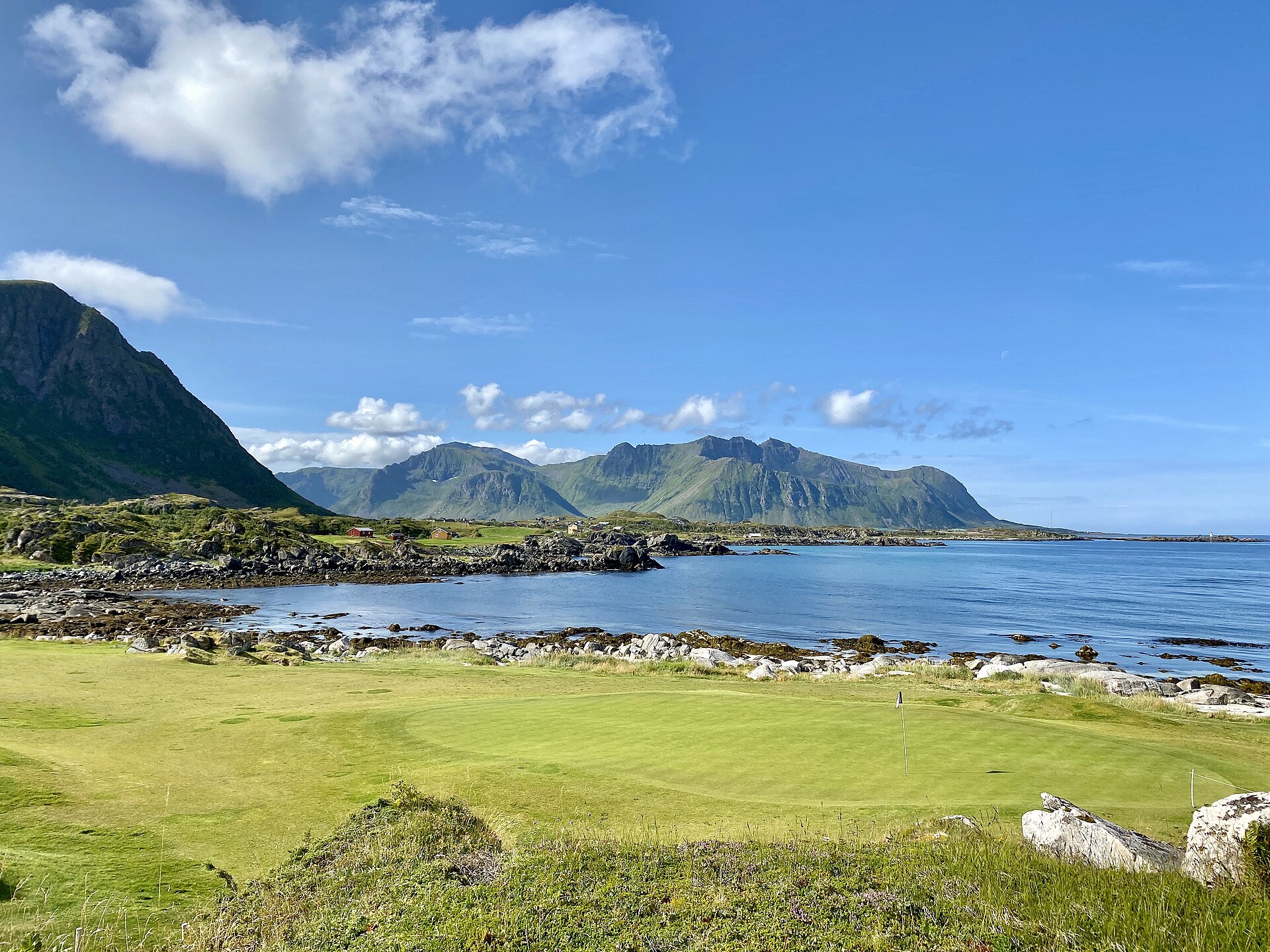
Hole 1 at Lofoten Links, Gimsøya. Photo: Zerblatt — CC BY-SA 4.0. The most northerly great course in the world, on an island inside the Arctic Circle, where in midsummer you can tee off at midnight in daylight.
The course runs between the sea and jagged granite peaks, with several holes played directly along the shoreline over rocky inlets and Viking-era archaeological sites within the property. The 2nd green sits on a small peninsula almost surrounded by the Norwegian Sea. It is exposed, frequently cold and often windy — and completely unlike any other round of golf available anywhere.
Access: PUBLIC
World ranking: No. 66 in GOLF Magazine's 2025-26 world top 100
Green fee: €€€
Best months: June–August
How to book: publicly bookable. Midnight tee times in June and July are the thing to arrange.
Stay: local rorbuer — converted fishermen's cabins — around Gimsøy and Svolvær.
No. 34 — Royal Lytham & St Annes
Lytham St Annes, Lancashire, England
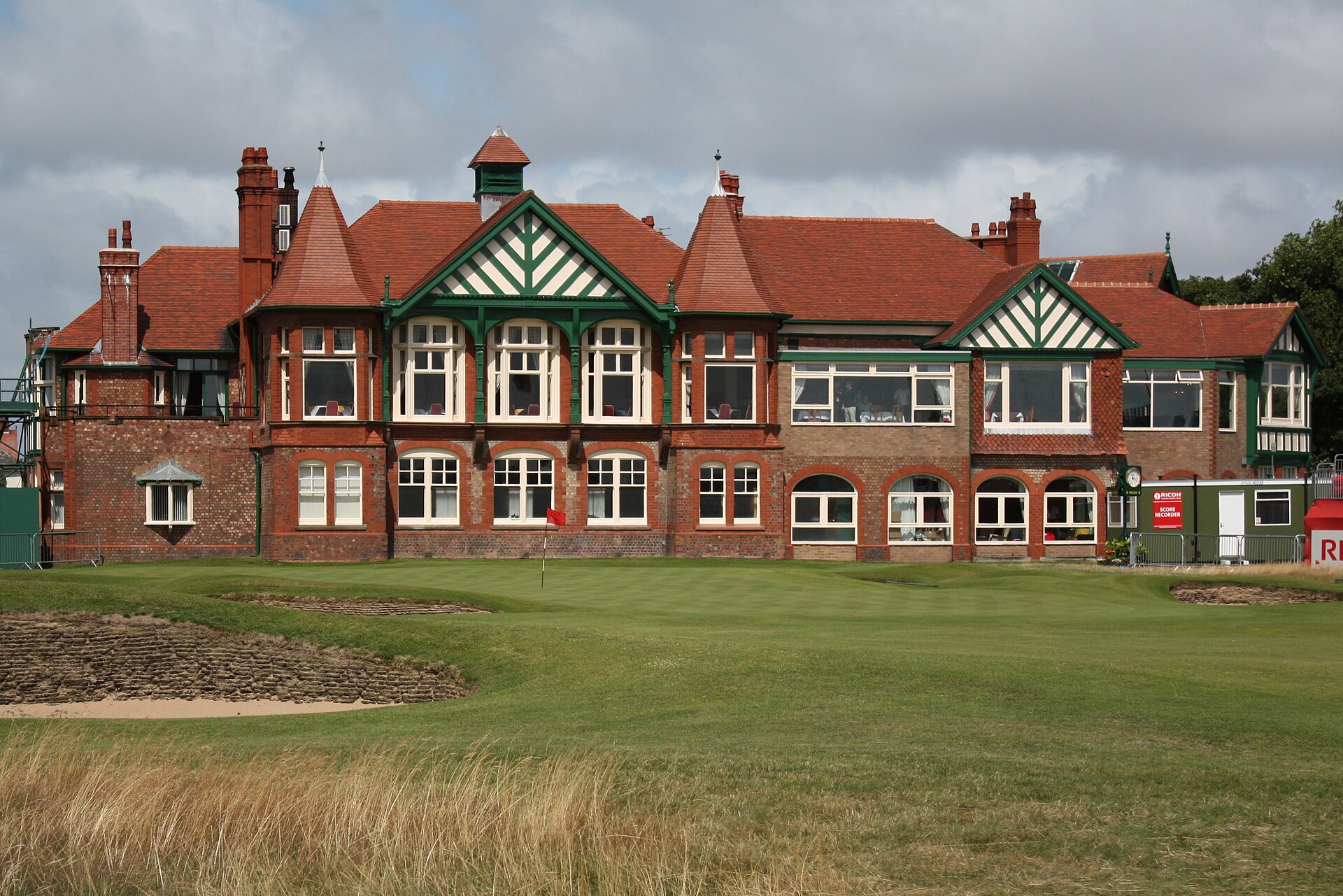
The 18th green and clubhouse at Royal Lytham & St Annes. Photo: Wojciech Migda (Wmigda) — CC BY-SA 3.0. The most unusual Open venue: an inland-feeling links surrounded by red-brick suburban housing and a railway line, starting with a par 3 — the only course in the rota to do so.
What it lacks in sea views it makes up for in sheer quality and difficulty. There are over 200 bunkers, many small, deep and precisely placed to catch good shots that are slightly off line. The wind swirls unpredictably between the surrounding buildings. Seve Ballesteros won here twice, famously from a car park in 1979, and the club's affection for him is visible throughout the clubhouse.
Access: VISITOR TIMES
World ranking: No. 68 in GOLF Magazine's 2025-26 world top 100
Green fee: €€€€
Best months: May–September
How to book: visitor times on set days; advance booking and handicap certificate required.
Stay: Lytham or Blackpool. Royal Birkdale, Hillside and Formby are all within 30 minutes.
No. 35 — Cabot Saint Lucia — Point Hardy
Cap Estate, Saint Lucia
The most spectacular new course in the Caribbean, opened in 2023 on a rugged headland at the northern tip of Saint Lucia.
Coore & Crenshaw routed it across cliffs and coves with nine holes touching the Atlantic and the Caribbean on either side of the point. The 16th, 17th and 18th run out along a narrow rocky promontory with ocean on both sides — a closing stretch with few equals anywhere. The land is volcanic and severe, and the architects left it largely intact rather than softening it.
Access: RESORT
World ranking: No. 69 in GOLF Magazine's 2025-26 world top 100
Green fee: €€€€
Best months: December–April
How to book: through Cabot Saint Lucia; resort and residence guests get priority.
Stay: on the property. Saint Lucia's dry season, December to April, is both the best golf weather and the peak rate period.
No. 36 — Kiawah Island — Ocean
Kiawah Island, South Carolina, USA
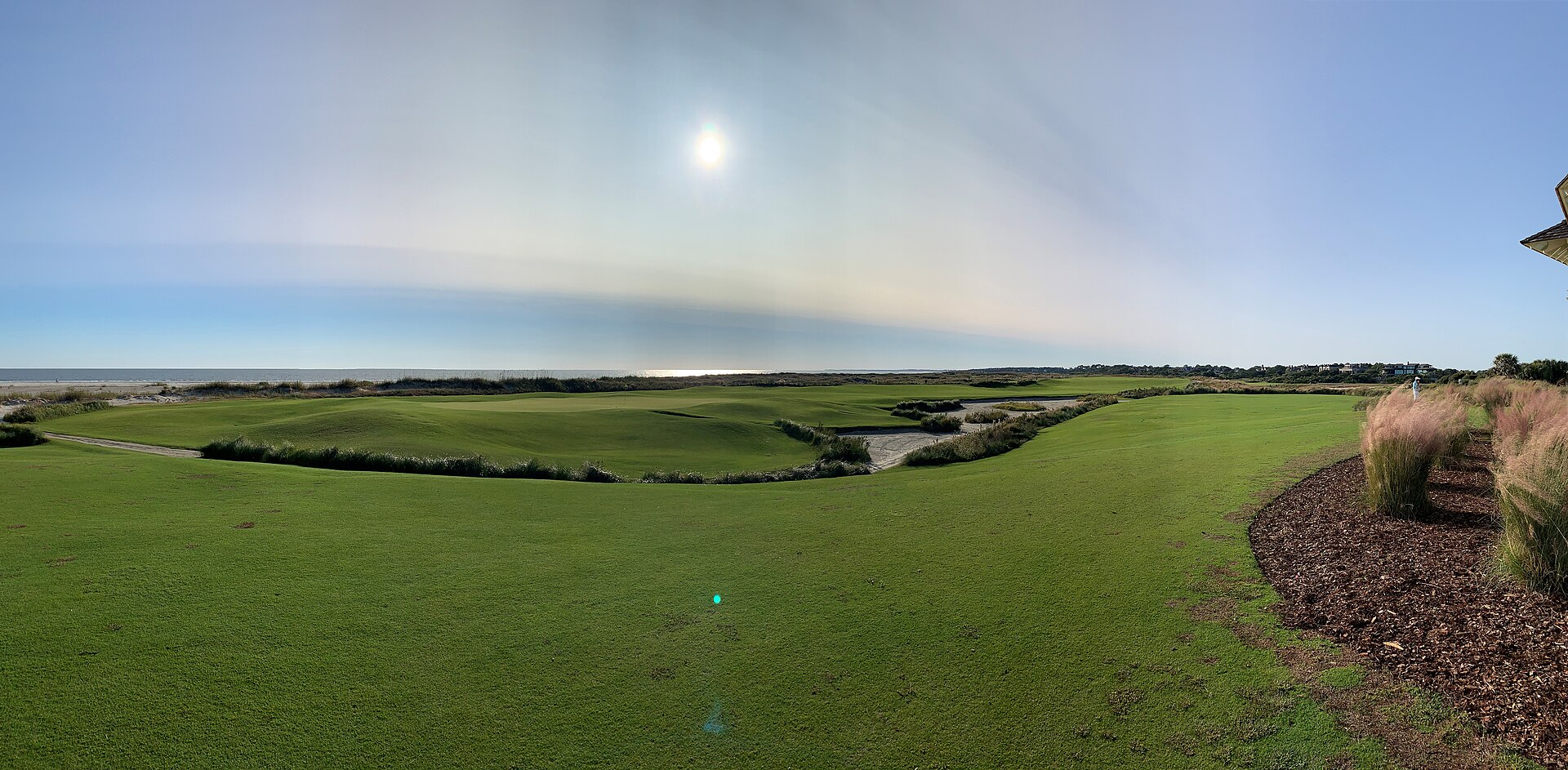
The 18th green of the Ocean Course, Kiawah Island. Photo: N75746 — CC BY-SA 4.0. Pete Dye's 1991 course, built for the Ryder Cup that became known as the War on the Shore, and subsequently a two-time PGA Championship venue.
It has more seaside holes than any course in the Northern Hemisphere — ten directly along the Atlantic — and Dye raised the entire course so that the ocean is visible from every hole. It is a ferocious test in wind: exposed, long, with waste areas, marsh carries and Dye's characteristic visual intimidation from the tee. The 17th, a par 3 entirely over water, is the hole that decides most rounds.
Access: RESORT
World ranking: No. 71 in GOLF Magazine's 2025-26 world top 100
Green fee: €€€€
Best months: March–May, September–November
How to book: resort guests get priority and meaningfully better rates; non-guest play possible but expensive and limited.
Stay: The Sanctuary at Kiawah Island, or villa rentals on the island. Charleston is 45 minutes away.
No. 37 — Ardfin
Isle of Jura, Scotland
The most exclusive course in this guide and the hardest to reach — on Jura, a Hebridean island with one road, one distillery and a population of around 200.
Bob Harrison's 2017 design runs across a coastal estate with holes on raised clifftops above the Sound of Islay, through woodland and along a rocky shoreline. The routing is severe and the scenery relentless. Play is limited to a very small number of rounds per day, which means you will effectively have the course to yourself — an experience no other course at this level can offer.
Access: RESORT
World ranking: No. 72 in GOLF Magazine's 2025-26 world top 100
Green fee: €€€€
Best months: May–September
How to book: play is reserved for guests of the Ardfin estate lodge. Very expensive, very limited, and requires committing to the stay.
Stay: Ardfin's own accommodation. Getting there involves a flight to Islay and a ferry, or a boat transfer — build in a full travel day each way.
No. 38 — Woodhall Spa — Hotchkin
Woodhall Spa, Lincolnshire, England
The best inland course in England that anyone can simply book, and home of England Golf, which owns the property.
Colonel Stafford Hotchkin's heathland course is famous for its bunkering: deep, sheer-faced sand pits, some over two metres deep, cut into heather and silver birch. Recovery from them is frequently impossible in any direction but backwards. The course is long, quiet and beautifully maintained, and because Lincolnshire is off the main golf-tourism routes, tee times are far easier than the quality suggests.
Access: PUBLIC
World ranking: No. 74 in GOLF Magazine's 2025-26 world top 100
Green fee: €€€
Best months: April–October
How to book: publicly bookable online and outstanding value for a world top-100 course.
Stay: Woodhall Spa village, an Edwardian spa town. The second course, the Bracken, is worth a round too.
No. 39 — Bandon Trails
Bandon, Oregon, USA
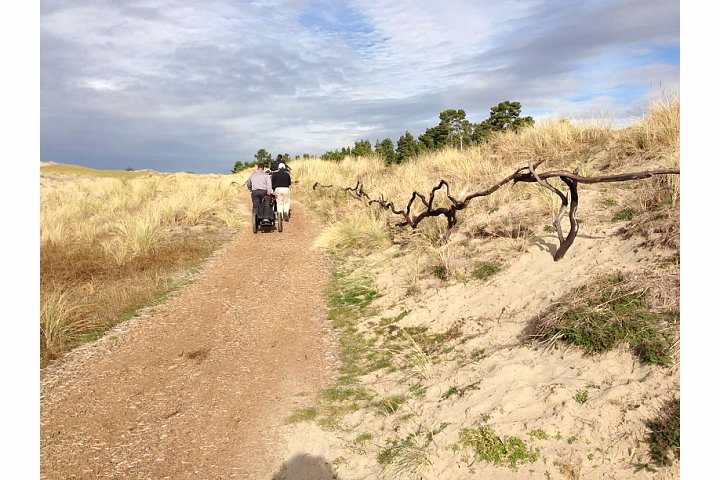
Approaching the 18th fairway at Bandon Trails. Photo: Mwlloyd1216 — CC BY-SA 4.0. The odd one out at Bandon Dunes — the only course on the property with no ocean views — and, by many accounts, the best pure golf of the five.
Coore & Crenshaw routed it inland through three distinct landscapes: it opens in dunes, moves into forest of Douglas fir and shore pine, and returns through meadow. The variety is the point, and the absence of ocean forces attention onto the architecture. The 14th, a short par 4 playing to a green cut into a hillside, is among the best holes on the property.
Access: RESORT
World ranking: No. 76 in GOLF Magazine's 2025-26 world top 100
Green fee: €€€
Best months: May–October
How to book: as part of a Bandon Dunes resort stay, usually within a multi-round package.
Stay: on the resort. North Bend/Coos Bay is the nearest airport, roughly an hour away.
No. 40 — Cabot Cape Breton — Cabot Cliffs
Inverness, Nova Scotia, Canada
Coore & Crenshaw's 2016 course on the Cape Breton coast, and the more dramatic of Cabot's two.
It has six holes on cliffs above the Gulf of St Lawrence, six inland through dunes and six in a river valley — again the deliberate variety that marks this design team's best work. The 16th, a par 3 played from a clifftop tee to a green on the edge of a 30-metre drop with the ocean behind, is one of the most photographed holes in North America. The course is unusually flexible, with three par 5s and three par 3s on each nine.
Access: RESORT
World ranking: No. 78 in GOLF Magazine's 2025-26 world top 100
Green fee: €€€
Best months: June–September
How to book: through Cabot Cape Breton, with accommodation. The season is short — the resort closes for winter.
Stay: on the property. Halifax is roughly four hours' drive; the Cabot Trail itself is one of Canada's great scenic drives.
No. 41 — Te Arai — South
Te Arai, Northland, New Zealand
Coore & Crenshaw's 2022 course an hour north of Auckland, on coastal dunes beside the ultra-private Tara Iti — which, unlike its neighbour, welcomes paying guests.
The land is the same spectacular Northland dunescape: fine sand, native grasses, firm turf and constant ocean presence. The South course runs across rolling terrain with several holes on the shoreline and wide, strategic fairways that reward thinking rather than power. Te Arai North, opened 2023 and also in the world top 100, sits alongside it.
Access: RESORT
World ranking: No. 79 in GOLF Magazine's 2025-26 world top 100
Green fee: €€€€
Best months: October–April
How to book: through Te Arai Links, tied to staying in the on-site accommodation. Book well ahead.
Stay: Te Arai's own lodges and cottages. Auckland is around 90 minutes south.
No. 42 — Royal Hague (Koninklijke Haagsche)
Wassenaar, Netherlands
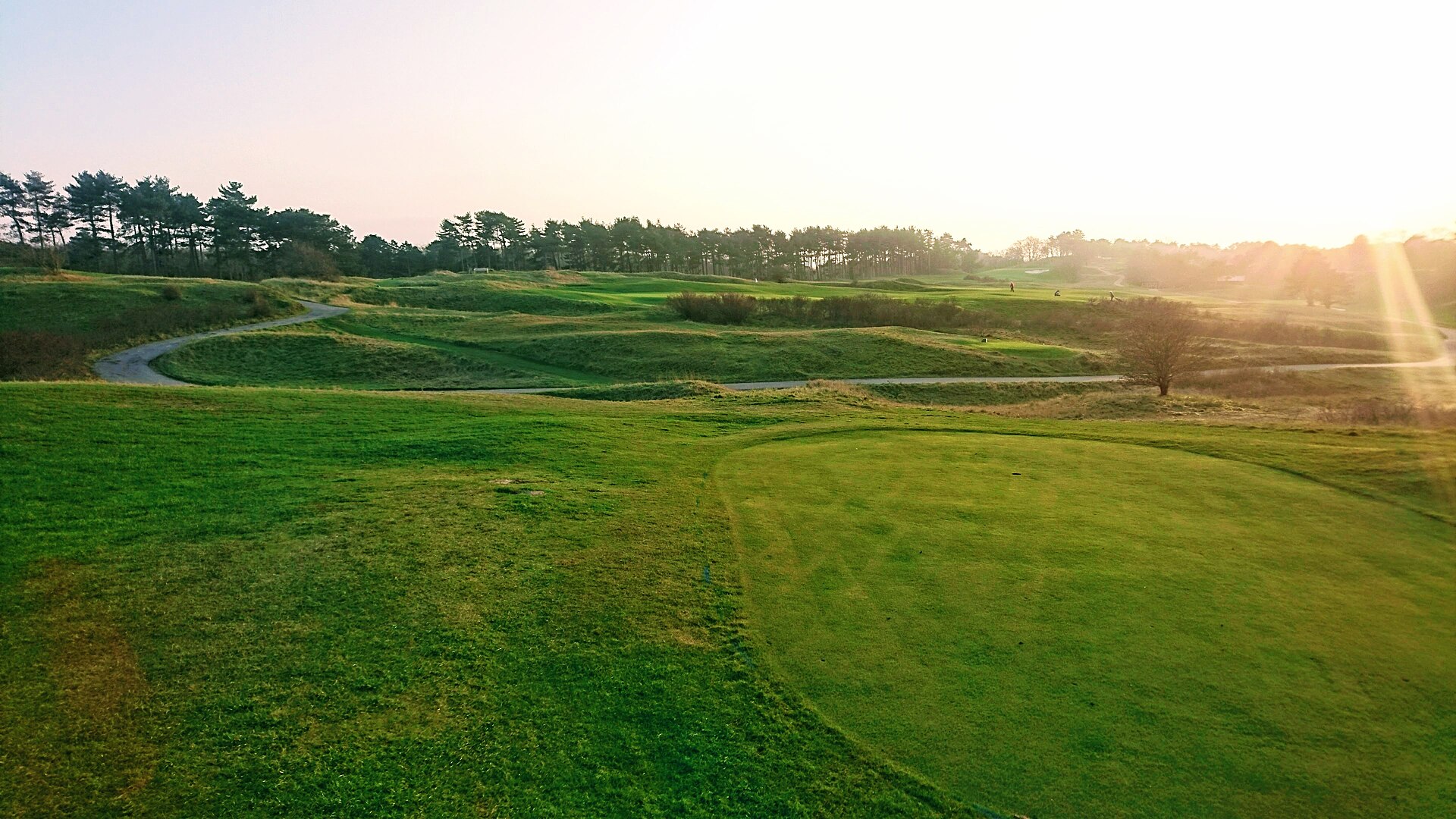
Royal Hague Golf & Country Club, Wassenaar. Photo: Knpje — CC BY-SA 4.0. The best course in the Netherlands and one of continental Europe's genuine links-adjacent experiences — laid out through enormous coastal dunes between The Hague and the North Sea.
Harry Colt and Charles Alison routed it in 1938 after the club was displaced from its original site, and the dunescape they were given is extraordinary: tall, sharply ridged sandhills that give blind shots, elevated tees and greens tucked into natural amphitheatres. The turf is sandy and fast, and the wind off the North Sea is a constant. It feels far closer to a British links than anything else on mainland Europe, which is exactly why it ranks where it does.
Access: VISITOR TIMES
World ranking: No. 81 in GOLF Magazine's 2025-26 world top 100
Green fee: €€€
Best months: April–October
How to book: telephone the caddiemaster, who takes reservations from 4pm for the following day. Visitors are welcome Monday to Thursday and on Friday before 11am, in groups of three at most; a handicap of 24.0 or better is required, and visitors may play four rounds a year. The 2026 fee is €230 for golfers outside the Dutch federation, or €60 when a member introduces and plays with you — an introduction lowers the fee but is not required, which is why it qualifies here.
Stay: The Hague or Wassenaar. Amsterdam is under an hour by train.
No. 43 — Royal Melbourne — East
Black Rock, Victoria, Australia
Alex Russell's 1932 companion to MacKenzie's West course, and a world top-100 course in its own right — which tells you how good the Sandbelt ground is.
It is shorter and gentler than the West, with the same sandy turf and bold bunkering but a more intimate character. Six of its holes are used in the Composite course that hosts tournaments, which is the clearest possible endorsement. For most visitors, playing East is also considerably easier to arrange than West.
Access: VISITOR TIMES
World ranking: No. 82 in GOLF Magazine's 2025-26 world top 100
Green fee: €€€
Best months: October–April
How to book: same club and process as the West — apply well in advance, generally midweek, with a letter of introduction. Sandbelt package operators handle this routinely.
Stay: Melbourne city centre.
No. 44 — Casa de Campo — Teeth of the Dog
La Romana, Dominican Republic
The course that created Caribbean golf tourism. Pete Dye carved it out of coral rock by hand in 1971, using local labour and minimal machinery — the name comes from the jagged coral that borders many holes.
Seven holes sit directly on the Caribbean, and Dye's routing alternates between them and inland holes so the ocean keeps reappearing. It remains the best course in the Caribbean by most assessments, and the resort around it has grown into one of the region's largest. Wind off the sea is the main defence.
Access: RESORT
World ranking: No. 83 in GOLF Magazine's 2025-26 world top 100
Green fee: €€€
Best months: December–April
How to book: restricted to resort guests; book with accommodation.
Stay: Casa de Campo resort, which has two further Dye courses — Dye Fore and The Links.
No. 45 — Bandon Dunes
Bandon, Oregon, USA
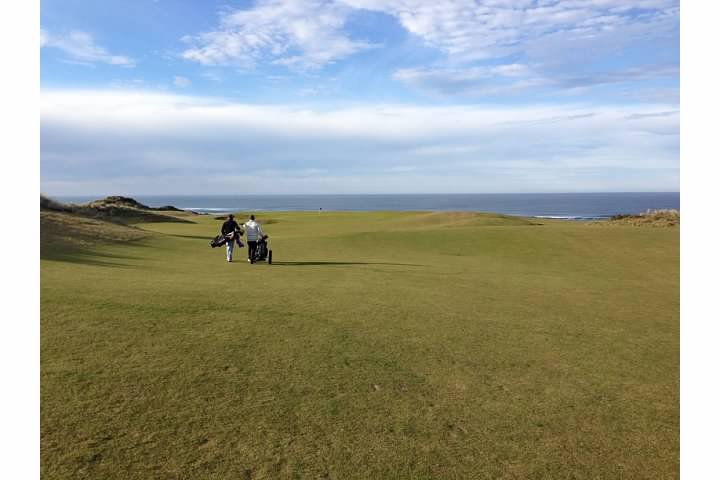
Approaching the 4th green at Bandon Dunes. Photo: mwlloyd1216 — CC BY-SA 4.0. The original — David McLay Kidd's 1999 course, built when the idea of a remote Oregon links resort seemed commercially insane, and the course that started everything.
It runs along clifftops above the Pacific with wide fairways, gorse-lined corridors and greens open at the front to accept running shots. The design philosophy that has governed the whole resort since — firm turf, walking only, caddies, no carts, no housing — was set here. Purists sometimes rank it fourth or fifth on the property; it remains a world top-100 course.
Access: RESORT
World ranking: No. 85 in GOLF Magazine's 2025-26 world top 100
Green fee: €€€
Best months: May–October
How to book: part of a resort stay; packages combining multiple courses are standard.
Stay: on the resort. Allow at least three days to play the main courses properly.
No. 46 — Utrecht de Pan (Utrechtse Golfclub 'De Pan')
Bosch En Duin, Netherlands
The Netherlands' other world-ranked course, and a complete contrast to Royal Hague — this is inland heathland golf through pine, birch and heather on sandy soil, closer in character to Sunningdale than to the coast.
Harry Colt designed it in 1929 on the site of a former estate, and it is regarded as one of his most intact surviving continental works. The routing is quiet and unshowy, with the defence coming from angled greens, well-placed bunkering and the need to drive the ball into the correct half of narrow heather-lined fairways. Conditioning is consistently excellent, and the green fee is among the best value in this entire guide.
Access: VISITOR TIMES
World ranking: No. 89 in GOLF Magazine's 2025-26 world top 100
Green fee: €€€
Best months: April–October
How to book: contact the caddiemaster in advance. Green-fee players are welcome every day except Friday, and a handicap of 24 or better is required. The 2026 fee for members of foreign clubs is €235 on weekdays and €250 at weekends, halved when winter greens are in use; non-members may play at most five times a year. Proper golf attire is enforced.
Stay: Utrecht, 15 minutes away, or Amsterdam at around 40 minutes.
No. 47 — Machrihanish
Campbeltown, Argyll, Scotland
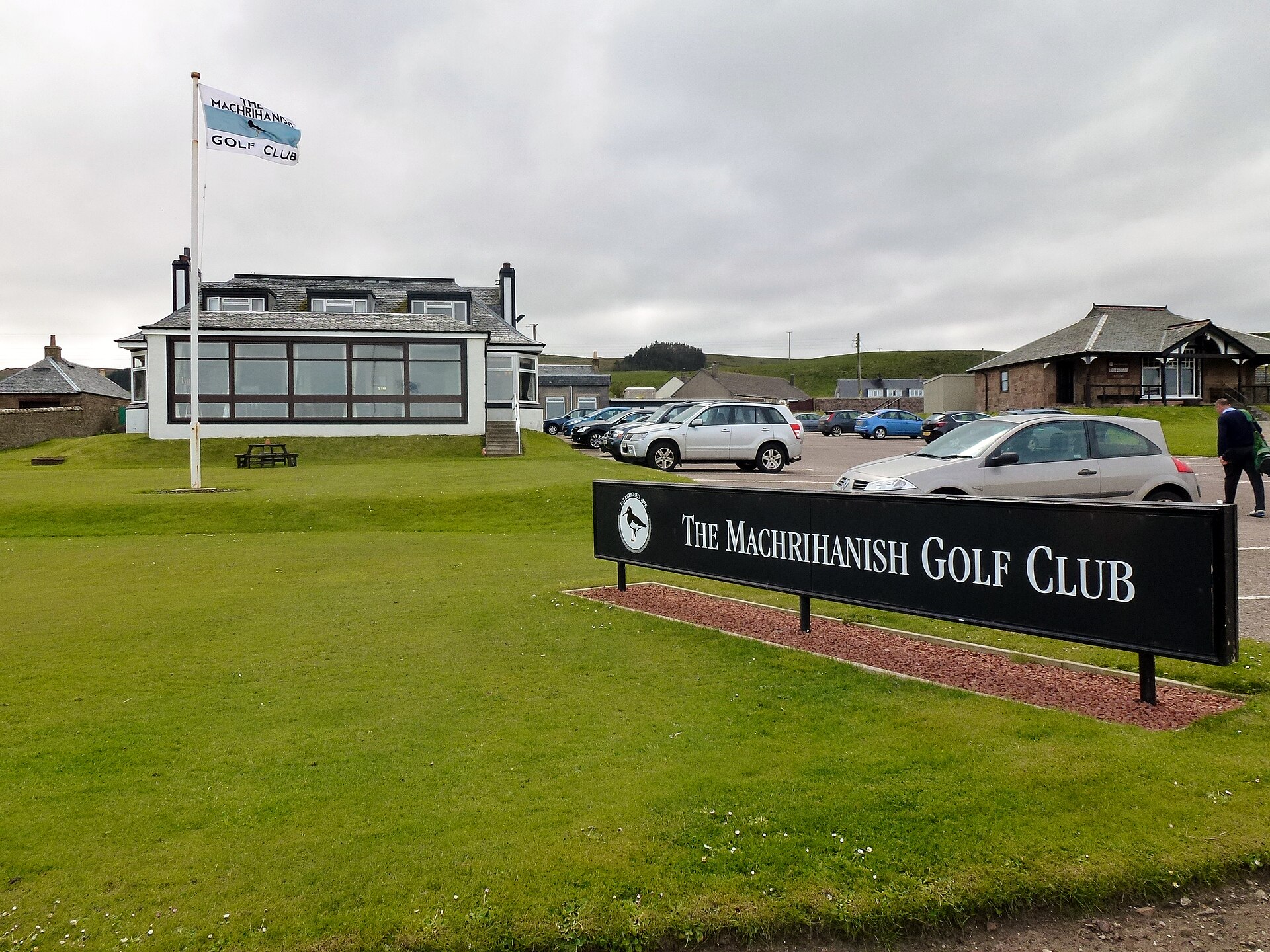
The Machrihanish Golf Club on a windy morning. Photo: Rude Health — CC BY-SA 2.0. Old Tom Morris laid this out in 1879 and said the land was "specially designed by the Almighty for playing golf." It opens with what is widely called the greatest first hole in golf: a drive played directly across the beach and the Atlantic, with the amount of ocean you cut off determining your angle in.
The rest is classic old links — dunes, blind shots, firm fast turf, and almost nobody on it, because the Mull of Kintyre is genuinely remote. That remoteness is why it remains excellent value and uncrowded, and why the people who make the drive tend to become evangelists.
Access: PUBLIC
World ranking: No. 92 in GOLF Magazine's 2025-26 world top 100
Green fee: €€
Best months: May–September
How to book: publicly bookable, rarely busy. Machrihanish Dunes, a modern links, is next door.
Stay: Campbeltown. The drive from Glasgow is around three hours along the Kintyre peninsula; a small airport at Campbeltown is the faster option.
No. 48 — Victoria
Cheltenham, Victoria, Australia
The third great Sandbelt course in this guide, sharing a boundary with Kingston Heath and routed by William Meader and Oscar Damman with later MacKenzie-era refinement.
It is tighter and more intricate than its neighbours, with excellent green complexes and the same superb sand-based turf. Peter Thomson, five-time Open champion, was a member here for decades and shaped later changes. Because it is slightly less famous internationally than Royal Melbourne or Kingston Heath, visitor access is usually easier.
Access: VISITOR TIMES
World ranking: No. 93 in GOLF Magazine's 2025-26 world top 100
Green fee: €€
Best months: October–April
How to book: visitor times for members of other private clubs, generally midweek and assigned six days prior.
Stay: Melbourne. With Royal Melbourne, Kingston Heath and Victoria within minutes of each other, three world-top-100 rounds in three days is entirely feasible.
No. 49 — Kingsbarns
Kingsbarns, Fife, Scotland
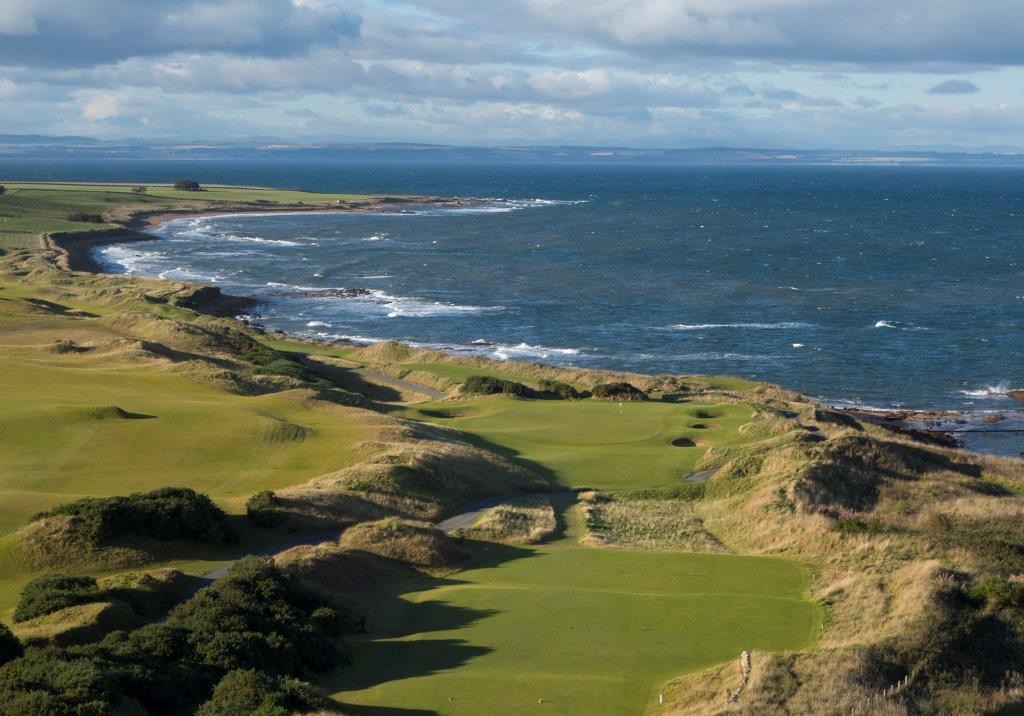
The 2nd hole and coastline at Kingsbarns. Photo: Iain Lowe — CC BY-SA 4.0. The best modern links in Scotland, opened in 1999 on farmland south of St Andrews, and built so convincingly that first-time visitors routinely assume it is a century old.
Kyle Phillips shaped the entire site, creating dunes, burns and elevation where the land had been largely flat, and routed it so that every single hole has a sea view. The 12th, a par 5 curving along the shoreline, and the 15th, a par 3 played across an inlet, are the signatures. It hosts the Dunhill Links Championship alongside St Andrews and Carnoustie.
Access: PUBLIC
World ranking: No. 94 in GOLF Magazine's 2025-26 world top 100
Green fee: €€€€
Best months: May–September
How to book: publicly bookable online — among the most straightforward elite Scottish tee times, though priced accordingly.
Stay: St Andrews, fifteen minutes away.
No. 50 — Royal Liverpool
Hoylake, Merseyside, England
One of the oldest links in England, founded in 1869, and an Open venue that returned to the rota in 2006 after a long absence and has hosted regularly since.
Hoylake is flat, windswept and subtle — its defences are internal out-of-bounds (the practice ground plays as OB on several holes), repositioned bunkering and greens that run away from approaches. It is a thinking course rather than a spectacular one. The renovated 17th, a par 3 on a raised platform green above the estuary built for the 2023 Open, added genuine drama to the closing stretch.
Access: VISITOR TIMES
World ranking: No. 95 in GOLF Magazine's 2025-26 world top 100
Green fee: €€€€
Best months: May–September
How to book: visitor tee times available Mon, Tue, and Fri with advance booking.
Stay: Hoylake or Liverpool, 30 minutes away. Royal Birkdale and the Southport coast are under an hour.
No. 51 — Cabot Cape Breton — Cabot Links
Inverness, Nova Scotia, Canada
Canada's first genuine links, opened in 2012 on a reclaimed coal-mining site beside the town of Inverness — the course that made Cabot possible and Cape Breton a golf destination.
Rod Whitman's design is quieter and more understated than Cabot Cliffs next door, with six holes along the water and a routing that returns repeatedly to the shoreline. Firm turf, sea breeze and an unpretentious clubhouse culture make it the more relaxed of the two rounds. It walks directly from the village, which few courses of this standing do.
Access: RESORT
World ranking: No. 96 in GOLF Magazine's 2025-26 world top 100
Green fee: €€€
Best months: June–September
How to book: stay and play is standard; non-resort guests can book within a 14-day window.
Stay: Cabot's lodges, or the village of Inverness itself.
No. 52 — Cabot Highlands — Castle Stuart
Inverness, Scotland
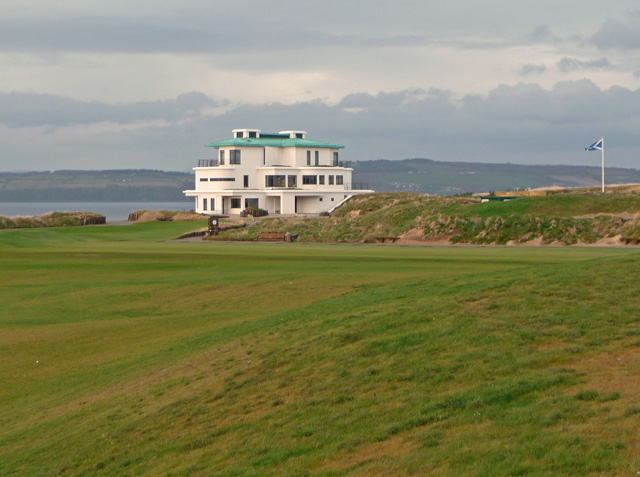
The art deco clubhouse at Castle Stuart. Photo: John Allan — CC BY-SA 2.0. Opened in 2009 on the Moray Firth and acquired by Cabot in 2022, this is modern links design at its most generous — wide fairways, minimal rough, and a deliberate philosophy that the course should be enjoyable for average golfers while still testing good ones.
Gil Hanse and Mark Parsinen routed it on two levels, with a raised plateau giving elevated views across the firth to the Black Isle and Chanonry lighthouse. Art-deco clubhouse aside, everything about it looks and plays like a traditional links. It has hosted the Scottish Open four times.
Access: PUBLIC
World ranking: No. 97 in GOLF Magazine's 2025-26 world top 100
Green fee: €€€€
Best months: May–September
How to book: publicly bookable online or by email.
Stay: Inverness, ten minutes away. Royal Dornoch is an hour north, Nairn twenty minutes east.
No. 53 — Te Arai — North
Te Arai, Northland, New Zealand
The younger of Te Arai's two courses, opened in October 2023, and the one Tom Doak built after Coore & Crenshaw had taken the southern half of the property.
Doak was given the more broken, more dramatic ground — higher dunes, tighter corridors, and several holes with the Pacific directly in view. It is the bolder of the two courses, with more severe green contouring and a greater willingness to use blind and semi-blind shots. Played alongside the South course, the pair make one of the strongest 36-hole destinations built anywhere this century, and both sit in the world top 100.
Access: RESORT
World ranking: No. 98 in GOLF Magazine's 2025-26 world top 100
Green fee: €€€€
Best months: October–April
How to book: contact Te Arai Links reservations directly; the resort publishes an open-days calendar for each course, so confirm which course is open to visitors on your date. The 2026 international green fee is NZ$700–975 depending on the month; Australian and New Zealand residents pay NZ$300–500.
Stay: Te Arai's own lodges and cottages. Auckland is around 90 minutes south.
No. 54 — Cape Wickham
Wickham, King Island, Tasmania, Australia
The most remote course in this guide and arguably the most beautiful. Cape Wickham sits on the northern tip of King Island in the Bass Strait, with the tallest lighthouse in the Southern Hemisphere above it and ocean on three sides.
Mike DeVries and Darius Oliver's 2015 design puts water in view on every hole and directly in play on many. The 18th plays along a crescent beach with the sand itself in the line of play at low tide — a genuinely unique finishing hole. Wind is constant and often severe; scoring is largely a function of how much of it you can handle.
Access: PUBLIC
World ranking: No. 100 in GOLF Magazine's 2025-26 world top 100
Green fee: €€
Best months: October–April
How to book: publicly bookable, and remarkably good value given the standing. Ocean Dunes, King Island's other ranked course, is twenty minutes away.
Stay: King Island accommodation is limited — book with the tee time. Small aircraft from Melbourne or Launceston; there is no ferry for passengers.
Applying the same test in reverse: these are the world top-50 courses left out because a visitor cannot book them without a member's introduction: Pine Valley (No.1), Cypress Point (2), Shinnecock Hills (5), National Golf Links (6), Augusta National (8), Oakmont (9), Sand Hills (10), Merion East (13), Fishers Island (16), Chicago Golf Club (17), Tara Iti (19), Los Angeles CC North (21), Friar's Head (23), Riviera (26), Prairie Dunes (27), Hirono (28), Crystal Downs (31), Seminole (32), Winged Foot West (33), Oakland Hills South (36), The Country Club (37), Morfontaine (38), San Francisco GC (40), Southern Hills (43), California GC (45), Shoreacres (47) and Maidstone (49).
Beyond the top 50, the same test also excludes Somerset Hills (No.51), Garden City (52), Camargo (59), Oak Hill East (60), Ballyneal (63), Shanqin Bay (64), Inverness (67), Baltusrol Lower (70), Childress Hall (73), Peachtree (75), Sleepy Hollow (77), Old Town (80), CapRock Ranch (84), Myopia Hunt (86), Nine Bridges (87), Rock Creek Cattle Company (88), Rye (90), Winged Foot East (91) and Ohoopee Match Club (99).
They are extraordinary, and they are not travel. If you find yourself invited to one, go.
Source: GOLF Magazine's Top 100 Courses in the World, 2025-26 edition, published 19 November 2025, voted by an international panel of 126 raters. World rankings shown are theirs; the selection of playable courses, access classifications, green fee bands and all trip guidance are AVARA's own. The selection applies a single test — whether an international visitor can book without a member introduction — which yields 54 courses, the same number GOLF Magazine counts as open to outside play (its count includes Rye rather than Utrecht de Pan). Visitor terms, green-fee bands and booking routes checked against each club's or resort's own website on 28 September 2026; they change season to season, so always confirm directly with the club before booking travel.
See the full AVARA Best Of collection · Browse all AVARA city guides