The 10 Best Italian Coastal Towns to Hide & Spend the Summer
This is a different kind of list to the Amalfi Coast, Cinque Terre, Capri circuit — not because those places aren't beautiful, but because they're now day-trip-industrial-complex beautiful, built around turnover rather than lingering. This guide is for the opposite instinct: places along the Italian coast where you could plausibly rent a room or a small apartment for four to eight weeks, disappear into a genuinely local rhythm, and not spend the whole time fighting cruise-ship crowds for a table.
The criteria, stated plainly: each town has to have enough going on to sustain weeks rather than a day (real food culture, real beaches or swimming spots, some cultural depth beyond the view), has to be reachable without a private boat or helicopter, and has to still function as a normal town in August rather than becoming a pure tourist stage set. None of these are secret, exactly — Italians already know all of them — but none of them are on the standard first-time-visitor itinerary either. We've spread the list across seven regions, both coasts, so there's a genuine option regardless of which part of Italy you're already drawn to.
No. 1 — Camogli
Camogli, Liguria
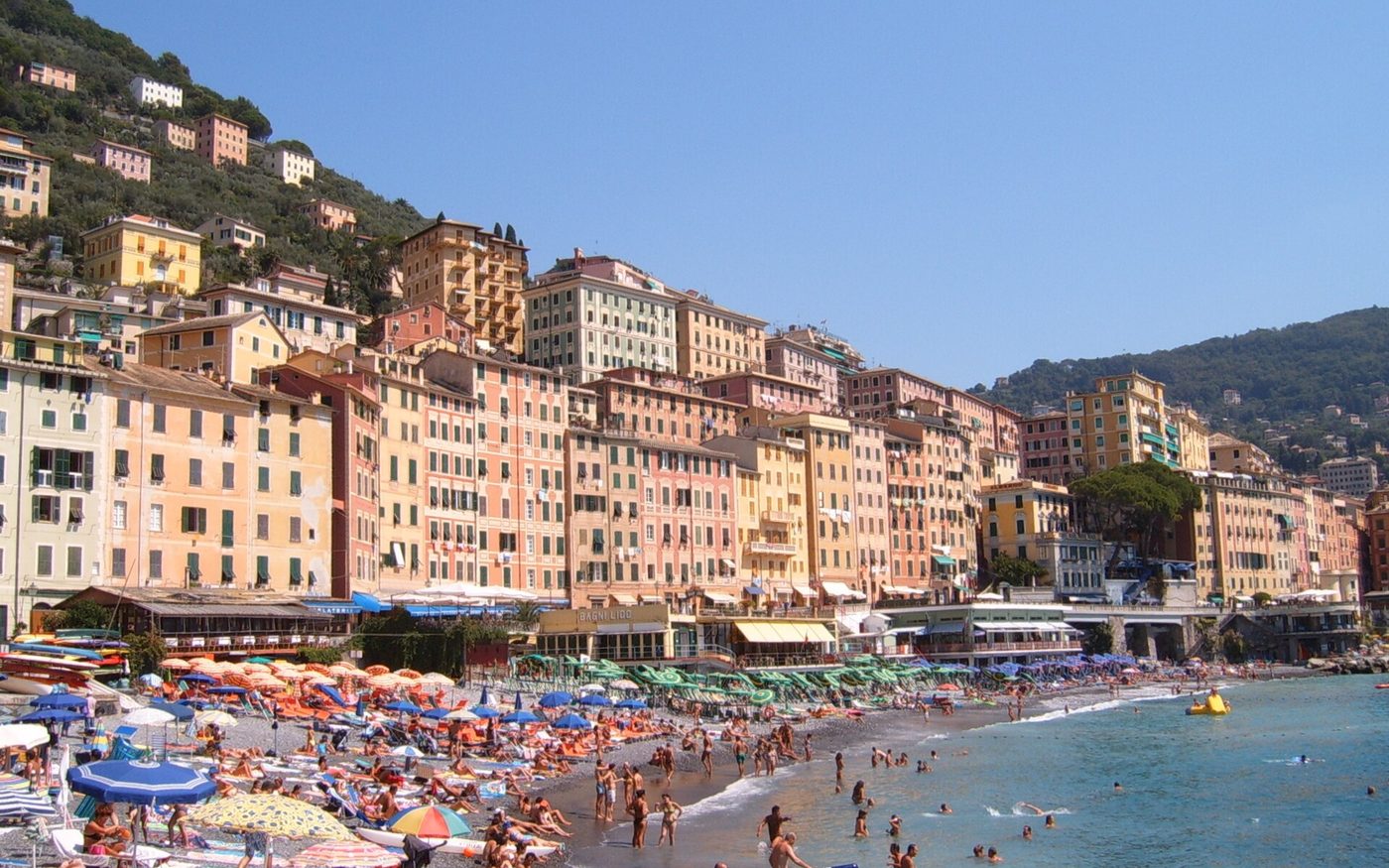
The painted seafront at Camogli, Liguria. Photo: Markus Bernet — CC BY-SA 2.5. THE VIBE: A real fishing town on the Ligurian coast that happens to look exactly like what people picture when they say "Italian Riviera" — tall, pastel, trompe-l'œil-painted buildings stacked directly above a working harbour, fifteen minutes by train from the much pricier, much busier Portofino. Camogli still has an actual fishing fleet and a fish market, which keeps it tethered to something real underneath the postcard.
Getting there: Train to Camogli-San Fruttuoso station from Genoa (about 30 minutes) or Milan (roughly 2 hours with a change). No airport of its own — fly into Genoa (GOA) or Milan.
Where to base yourself: The old town directly behind the harbour, walkable to everything, with a genuine mix of long-term rentals and small hotels rather than only short-stay tourist lets.
What fills the days: The beach directly in town is pebbly and functional rather than spectacular — the real draw is the boat or hiking trail to San Fruttuoso, a tiny cove with a Benedictine abbey accessible only by sea or a serious two-hour hike, which becomes a repeatable weekly outing rather than a one-off. Portofino itself is a worthwhile half-day trip by boat rather than somewhere to base.
Where to eat: Trattoria Vento Ariel for genuinely good, unfussy Ligurian seafood; the town's focaccia bakeries along the main street are worth cycling through rather than picking just one.
Best time to go: June or September for the water and weather without peak-August crowding; late July into mid-August gets genuinely busy with Italian domestic tourists.
No. 2 — Portovenere
Portovenere, Liguria
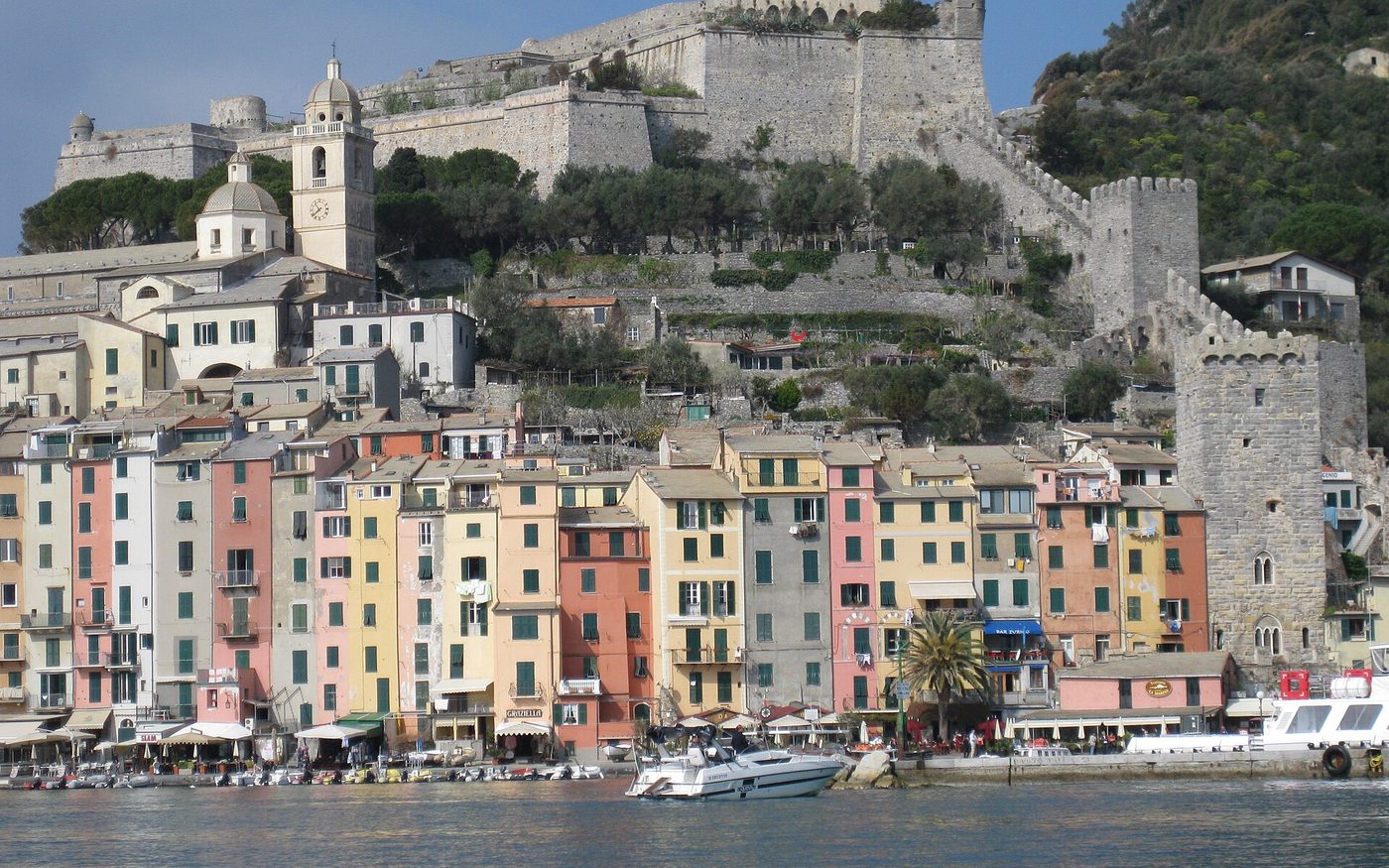
The palazzata of Portovenere above the harbour. Photo: Brianza2008 — CC BY-SA 3.0. THE VIBE: The quieter, less-mobbed cousin to the Cinque Terre villages just north — a UNESCO World Heritage town in its own right, with the same coloured-house-on-cliff aesthetic and a fraction of the day-tripper volume, because it isn't part of the famous five-village hiking trail everyone's heard of.
Getting there: Ferry from La Spezia (about 30 minutes, and also the way to reach the Cinque Terre villages if you want a day there without staying there) or a short drive/bus from La Spezia train station, which connects to Milan, Florence and Pisa.
Where to base yourself: The old town itself, right on the harbour beneath the Church of San Pietro — small, walkable, with the sea genuinely at the doorstep of most rentals.
What fills the days: Swim off the rocks near Grotta Arpaia, reputedly where Byron swam across to Lerici; take the ferry out to Palmaria Island just offshore for quieter coves and a proper coastal walking trail; use the town as a genuinely calmer base for day trips into the Cinque Terre villages rather than sleeping in them.
Where to eat: Locanda Lorena on Palmaria Island, reachable only by the restaurant's own boat service, for the special-occasion lunch; simpler harbourside spots in town for everyday meals.
Best time to go: Late May through June, or September, both for crowds and for calmer water for the Palmaria crossing.
No. 3 — Sperlonga
Sperlonga, Lazio
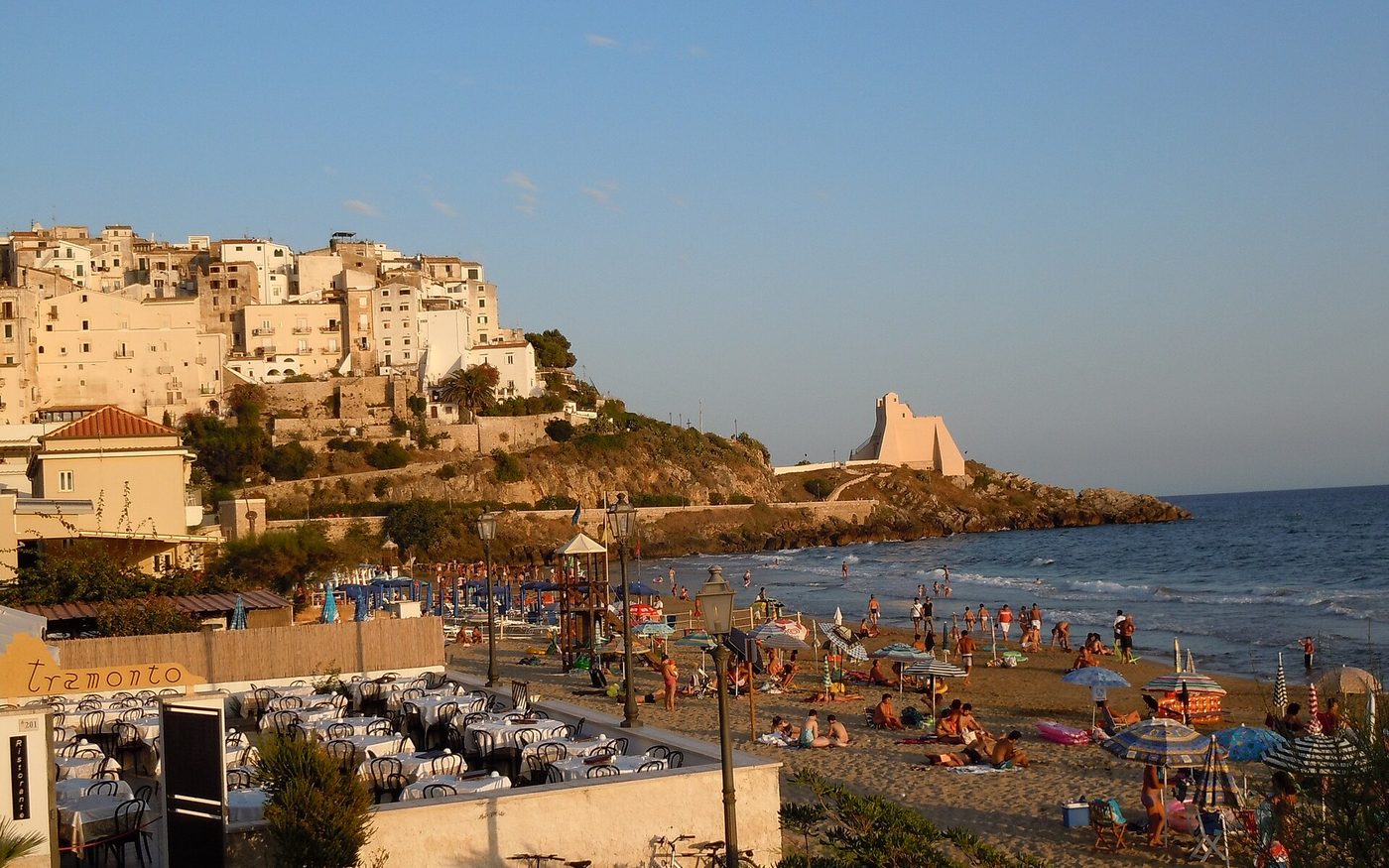
The white old town of Sperlonga above its beach. Photo: Ursula_Iris — CC BY 3.0. THE VIBE: A whitewashed hill town midway between Rome and Naples that somehow stays under the radar of both cities' day-trippers — narrow lanes, blindingly white cubist architecture, and one of the better sand beaches on the entire Tyrrhenian coast directly below the old town.
Getting there: Train to Fondi-Sperlonga station from Rome (about 1.5 hours), then a short bus or taxi to the town itself, which sits slightly inland from the station on its own promontory.
Where to base yourself: The historic centro storico for atmosphere (car-free, genuinely quiet at night), or one of the beachfront apartment blocks just below if you want direct sand access for a longer stay.
What fills the days: The main beach beneath the old town is long, sandy and genuinely good by Tyrrhenian standards; the ruins of Villa di Tiberio and its adjoining sea-cave grotto, once the Roman emperor's personal dining grotto, sit right on the same beach and are worth the small museum entry fee; day trips to the Pontine Islands (Ponza, Palmarola) run from nearby Terracina in summer.
Where to eat: Gli Archi in the old town for a proper sit-down dinner; beach-club kiosks for lunch without breaking the day's rhythm.
Best time to go: June and the first half of September; it fills with Roman weekenders from mid-July through August.
No. 4 — Procida
Procida, Campania
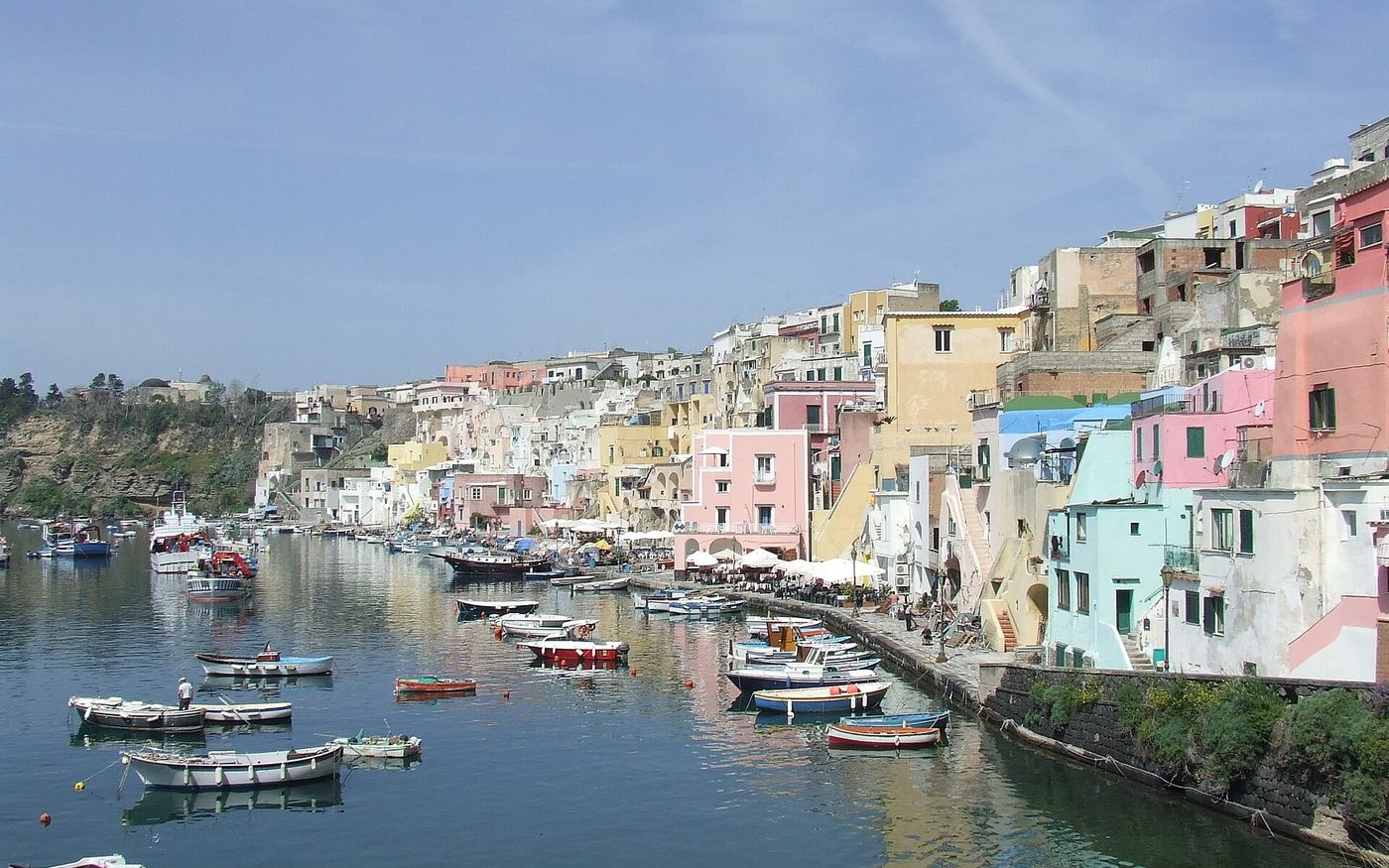
Marina Corricella, Procida. Photo: Retaggio — CC BY-SA 3.0. THE VIBE: The genuinely quiet island in the Bay of Naples, a short hop from Ischia and Capri but with almost none of either island's crowding or price inflation — pastel fishing-village houses stacked around the Marina Corricella harbour, named Italy's Capital of Culture in 2022, and still small enough to properly know after a few weeks.
Getting there: Ferry or hydrofoil from Naples (Molo Beverello or Calata Porta di Massa), roughly 40 minutes to an hour depending on the boat.
Where to base yourself: Marina Corricella, the harbourside fishing quarter — genuinely one of the most photogenic, least-touristed corners of the entire Bay of Naples, and increasingly has longer-stay rentals available given the island's small permanent population.
What fills the days: Swim at Spiaggia della Chiaiolella or the smaller coves around Pozzo Vecchio beach (used as a filming location for Il Postino); wander the fortress quarter of Terra Murata above the harbour; take the short boat to neighbouring islet Vivara, a protected nature reserve.
Where to eat: Da Sarah in Marina Corricella for fish straight off the boats moored beside the tables.
Best time to go: June or September; the island genuinely fills up in August with Neapolitan second-home owners, though it still never reaches Capri- or Positano-level crowding.
No. 5 — Santa Maria di Castellabate
Santa Maria di Castellabate, Cilento Coast, Campania
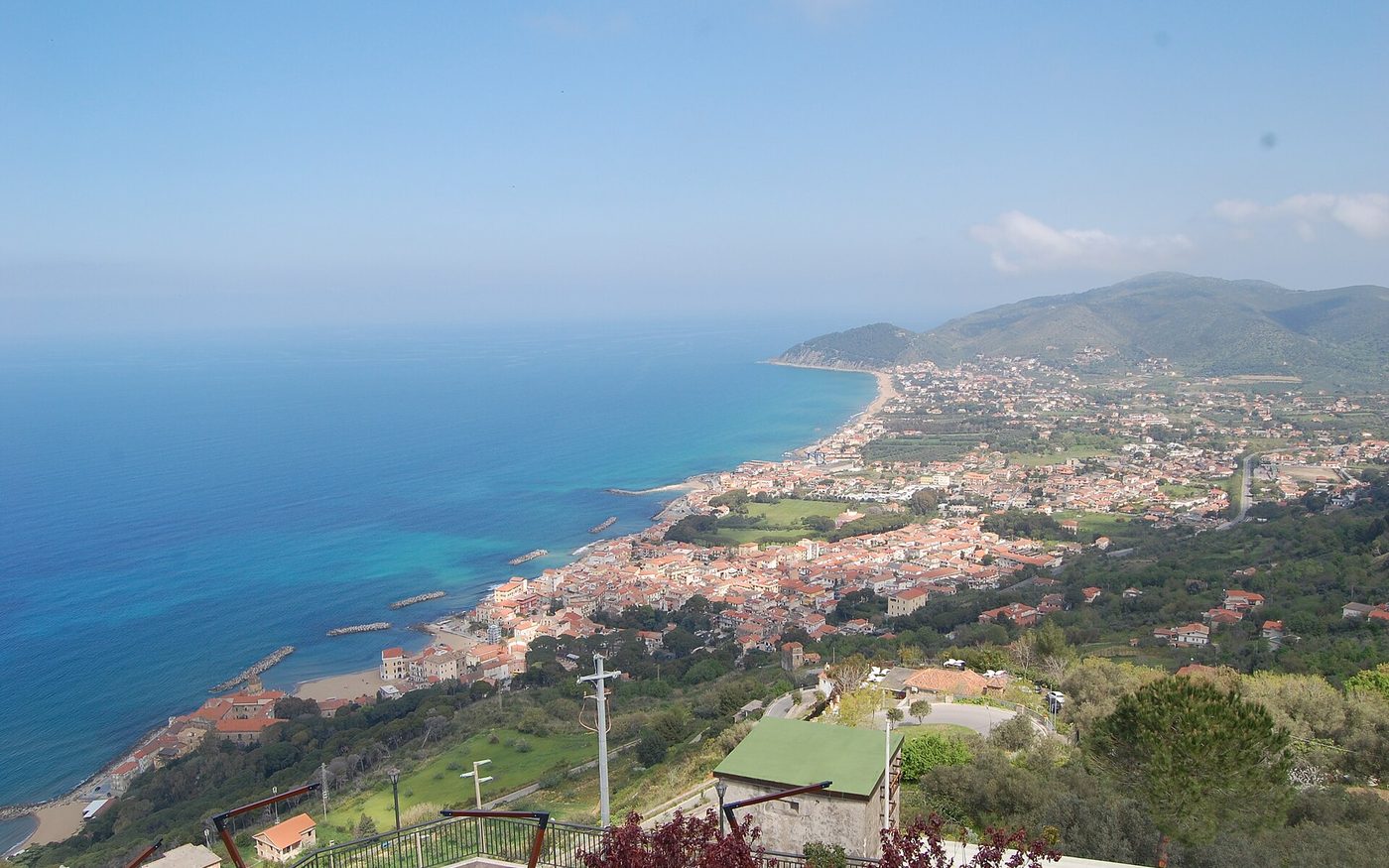
The Cilento coast at Castellabate. Photo: Francesco Boggia — CC BY 3.0. THE VIBE: The setting for the Italian hit film Benvenuti al Sud, and still one of the least internationally known stretches of genuinely beautiful Italian coastline — part of the Cilento, Vallo di Diano and Alburni National Park, a UNESCO World Heritage site, with a completely different, slower pace than the Amalfi Coast just up the same peninsula.
Getting there: Train to Agropoli or Salerno, then bus or taxi (Agropoli is closer, about 20 minutes); driving from Naples takes around 1.5–2 hours.
Where to base yourself: The town itself, directly on the water, with a genuinely long stretch of Blue Flag-rated beach on either side rather than the cove-and-cliff geography that makes longer stays harder further north on the Amalfi Coast.
What fills the days: The beaches here are simply better for actual swimming and lounging than Amalfi's famously cramped, often-paid cliff coves; day trips to the Greek temples at Paestum, some of the best-preserved anywhere outside Greece itself, are under an hour away; the walled medieval village of Castellabate itself sits on the hill directly above.
Where to eat: Da Andrea for classic Cilento seafood; the weekly local market for produce if self-catering during a longer stay.
Best time to go: June through early July, or September; a genuine Italian family-holiday destination in August, so expect domestic crowds rather than international ones even at peak.
No. 6 — Maratea
Maratea, Basilicata
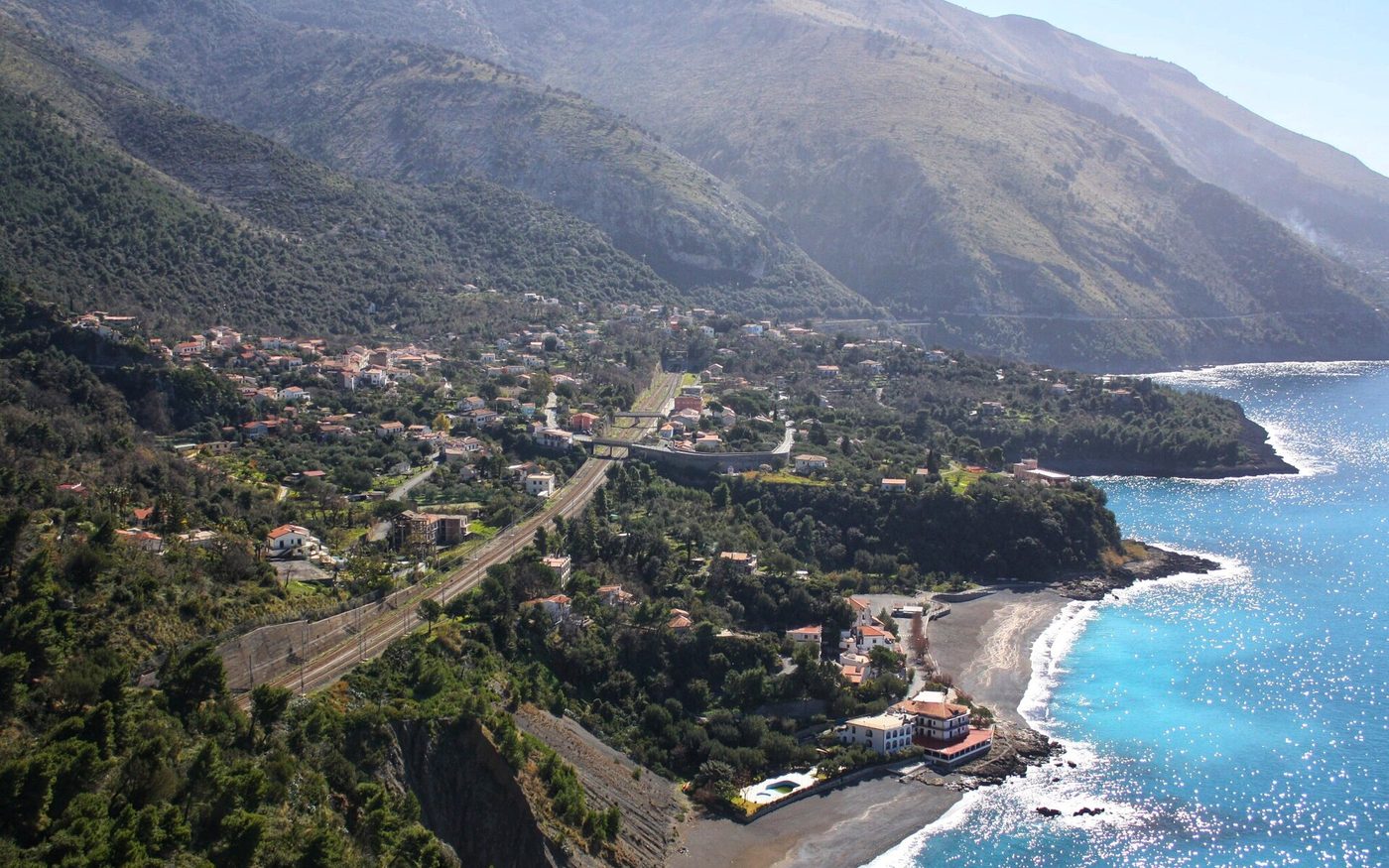
The Maratea coast at Acquafredda, Basilicata. Photo: Luke18389 — CC BY-SA 3.0. THE VIBE: Basilicata's entire 30km of Tyrrhenian coastline gets called "the Maratea coast," and it remains one of the most underrated stretches in Italy — dramatic limestone cliffs dropping into genuinely clear water, a 21-metre Christ the Redeemer-style statue (Cristo Redentore) on the summit above town, and a level of international recognition still years behind where the scenery would justify.
Getting there: Train to Maratea station from Naples or Salerno (roughly 2–3 hours), or drive down the coast from Salerno for the scenery along the way.
Where to base yourself: Maratea Borgo, the historic hill town, for atmosphere and restaurants, or one of the small hamlets directly on the coast (Fiumicello, Acquafredda) if beach access matters more than nightlife.
What fills the days: Swim at Cala Jannita or Spiaggia Nera, a genuinely unusual black-sand beach; hike or drive up to the Cristo Redentore statue for a panoramic view over the entire gulf; boat trips along the coast to reach otherwise inaccessible coves are cheap and easy to arrange locally.
Where to eat: Za Mariuccia at Porto di Maratea harbour, a genuine institution for seafood right on the water.
Best time to go: June and September for quiet water access; late July and August bring domestic tourism but rarely feel overwhelmed given the coastline's length relative to visitor numbers.
No. 7 — Tropea
Tropea, Calabria
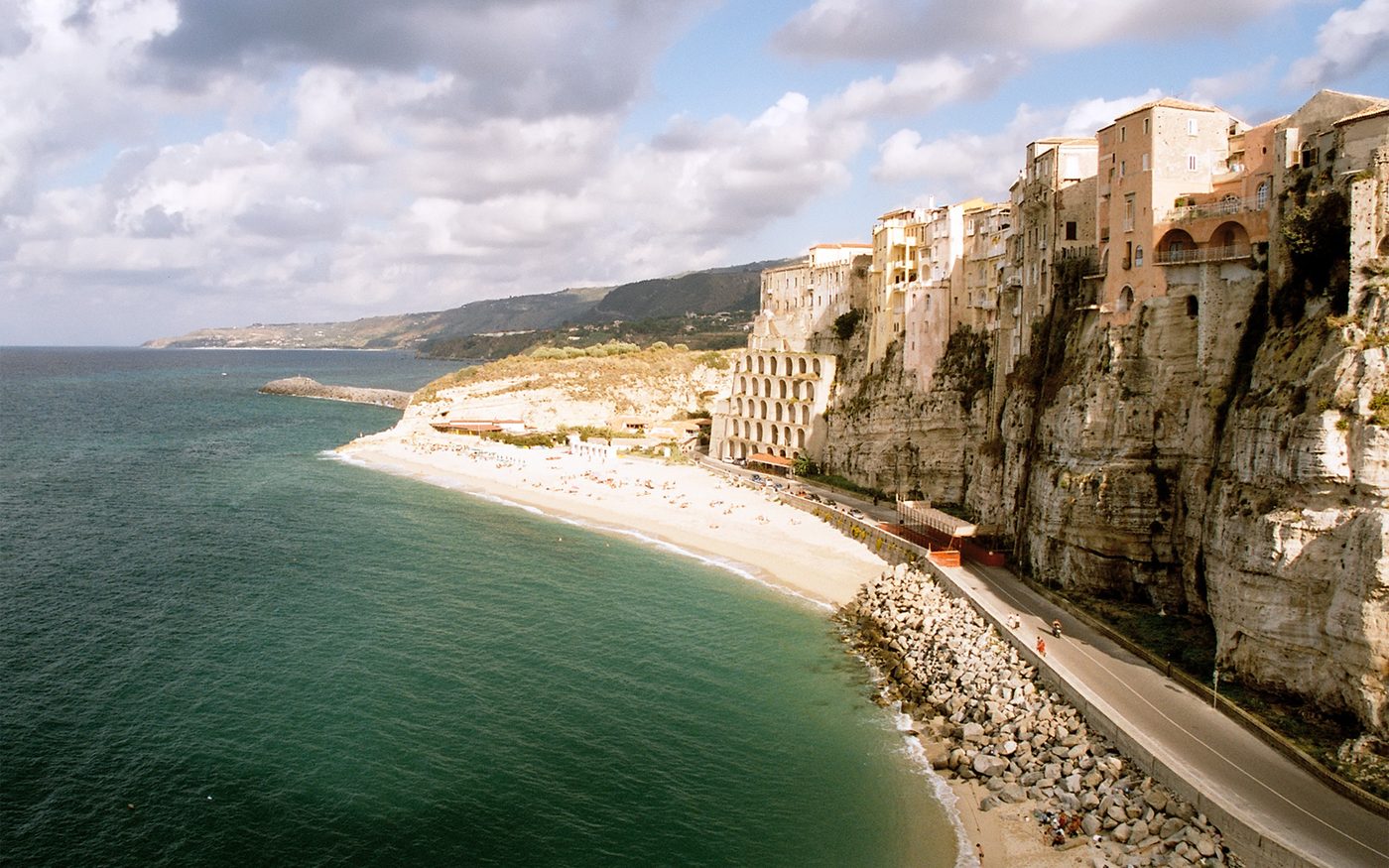
The cliffs and old town of Tropea, Calabria. Photo: Wikimedia Commons contributor — CC BY-SA 2.5. THE VIBE: Perched dramatically on a cliff above what's routinely rated among Italy's best beaches, Tropea has become considerably more known in the last decade without quite tipping into Amalfi-level saturation — partly because Calabria as a whole still gets overlooked by international visitors relative to its actual quality.
Getting there: Train to Tropea station from Naples or via Lamezia Terme (which has its own airport, Lamezia Terme Airport, roughly 1 hour by car or train from Tropea).
Where to base yourself: The historic centre atop the cliff for restaurants, views and nightlife, walkable via stairs down to the beach itself.
What fills the days: The main beach directly beneath the town, with the Santa Maria dell'Isola sanctuary perched on its own rock formation just offshore, is genuinely one of Italy's most photographed and most swimmable beaches at once; day trips along the rest of the Costa degli Dei ("Coast of the Gods") reach further excellent beaches at Capo Vaticano with real, uncrowded space.
Where to eat: Anywhere serving 'nduja and Tropea's famous sweet red onions, which the town is genuinely renowned for across Italy; Osteria Il Barone is a reliable choice in the old town.
Best time to go: June or September; Tropea has become a genuine August hotspot for Italian domestic tourism in recent years, so peak summer requires booking well ahead.
No. 8 — Polignano a Mare
Polignano a Mare, Puglia
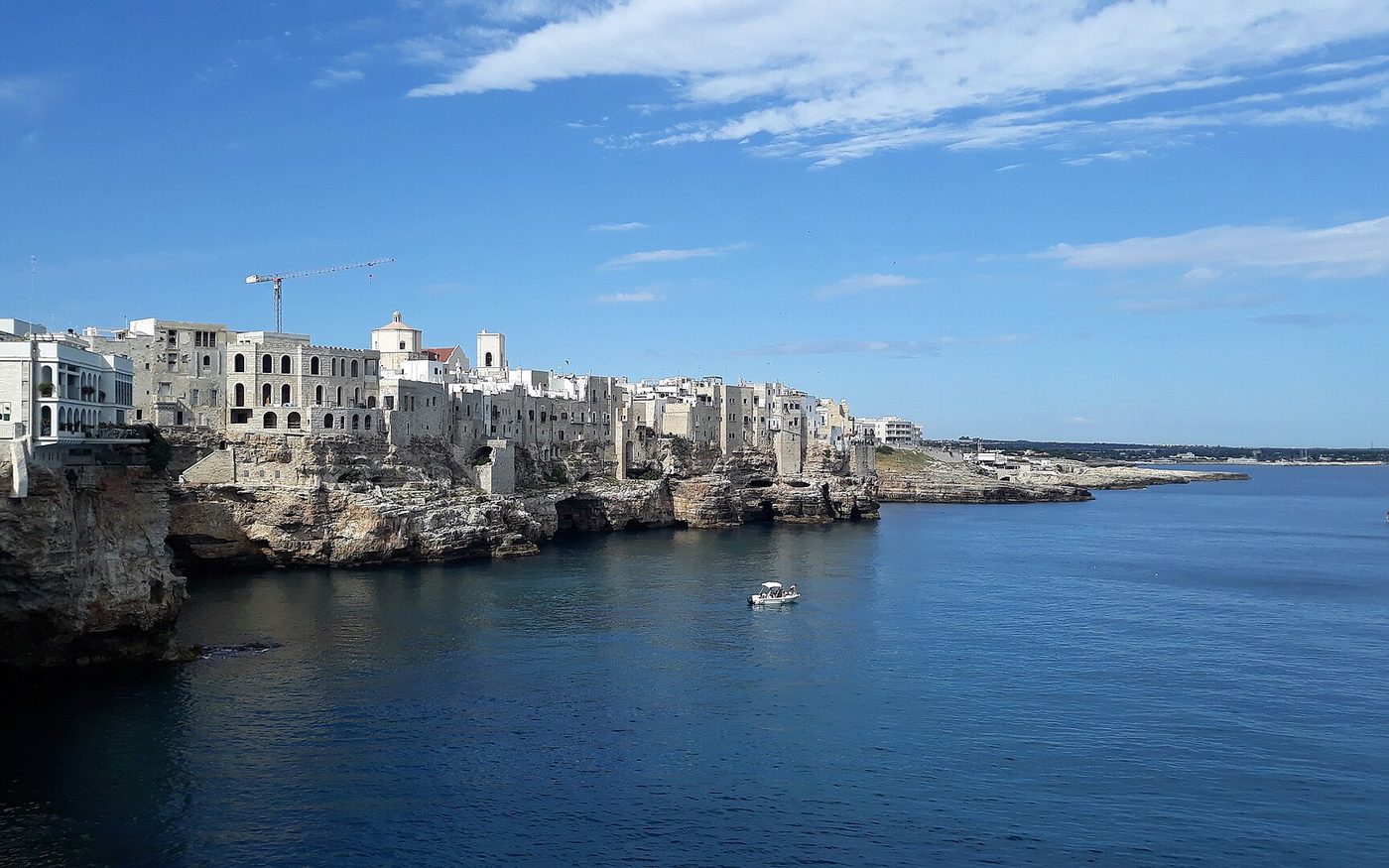
Polignano a Mare on its limestone cliffs. Photo: acediscovery — CC BY 4.0. THE VIBE: Built directly into limestone cliffs above the Adriatic, with the town's most famous beach — Cala Porto/Lama Monachile — sitting in a narrow cove beneath the old bridge, flanked by whitewashed buildings on both sides. It's become considerably more photographed in recent years (Red Bull's cliff-diving championship is held here annually), but the town itself remains small enough to genuinely settle into.
Getting there: Train to Polignano a Mare station from Bari (about 30 minutes), which has its own international airport (Bari Karol Wojtyła, BRI).
Where to base yourself: The historic centre directly above the cliffs, with sea views built into most rental apartments given the town's compact geography.
What fills the days: Swim at Lama Monachile itself (arrive early in peak season) or explore the many sea caves accessible by kayak or small boat tour directly from town; day trips to nearby Monopoli and the trulli of Alberobello are both under 30 minutes away.
Where to eat: Grotta Palazzese for the singular experience of dining inside an actual sea cave (book well ahead, it's genuinely one of the most photographed restaurant settings in Italy); simpler, cheaper seafood spots throughout town for everyday meals.
Best time to go: June or September; the Red Bull Cliff Diving event (typically late June/early July) brings a short, specific crowd spike worth checking dates around.
No. 9 — Otranto
Otranto, Puglia
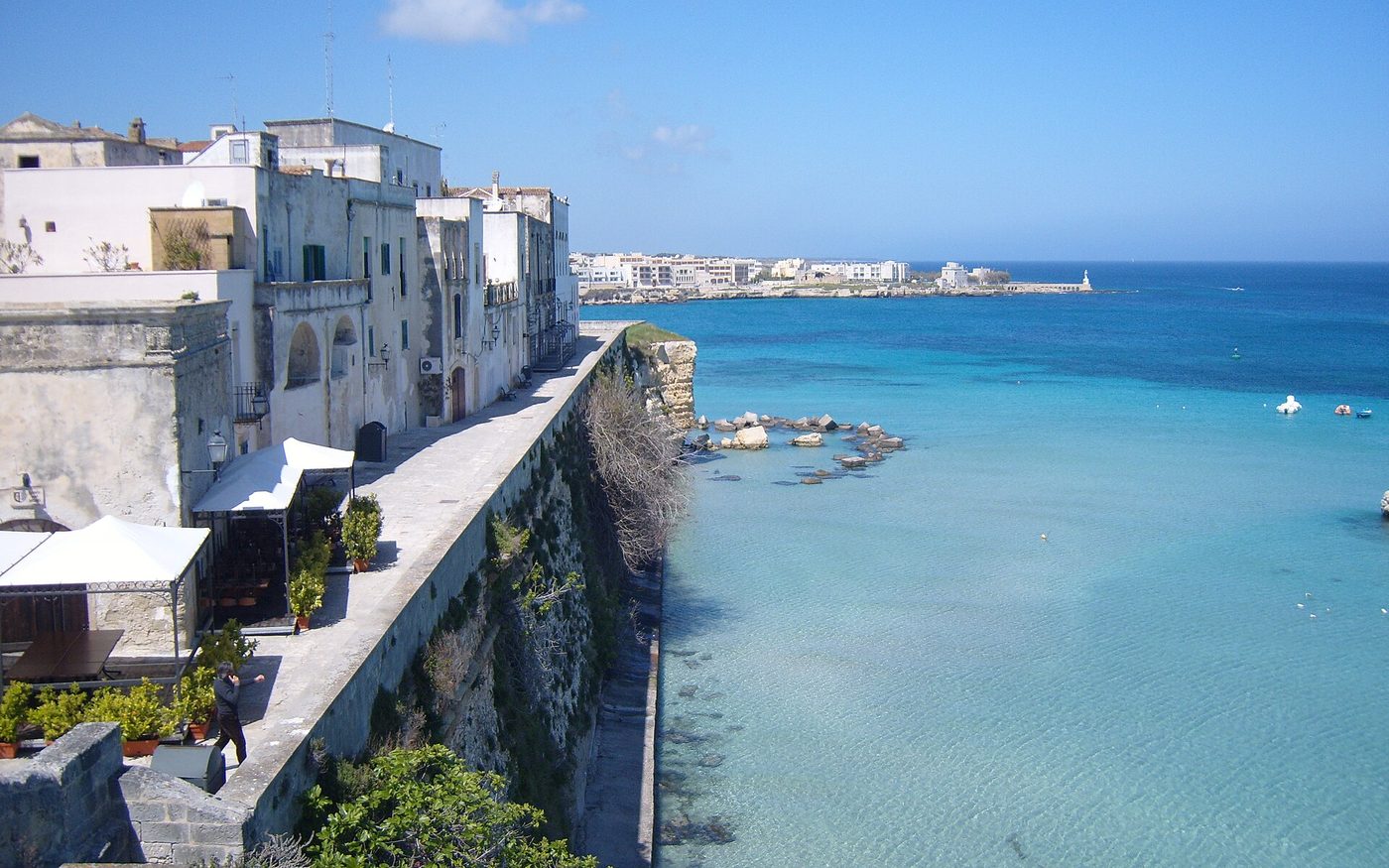
Otranto seen from the Pelasgi bastion. Photo: Freddyballo — CC BY-SA 3.0. THE VIBE: Italy's easternmost town, where the Adriatic runs so clear it's routinely compared to the Caribbean — a fully intact medieval walled centre, a genuinely important cathedral, and a noticeably slower, more local pace than Puglia's more famous hill towns further north and west.
Getting there: Train to Lecce (about 2.5 hours from Bari, or connect via Bari airport), then a local train or bus onward to Otranto (about 40 minutes).
Where to base yourself: Inside or just outside the historic walled centre, walkable to the harbour and beaches alike.
What fills the days: Swim at the beaches immediately south of town — Baia dei Turchi and Porto Badisco both offer the clear-water, pine-backed coastline the area is known for; visit the Otranto Cathedral for its enormous 12th-century mosaic floor, one of the most significant in Italy; the coastal drive south toward Santa Cesarea Terme passes some of the Salento peninsula's best cliff-and-grotto scenery.
Where to eat: Seafood along the harbour is reliably good and reasonably priced by Puglia's increasingly tourist-inflated standards; Corte Antica for a proper sit-down dinner in the old town.
Best time to go: June or September; the Salento peninsula gets genuinely hot and busy with Italian holidaymakers through August.
No. 10 — Cefalù
Cefalù, Sicily
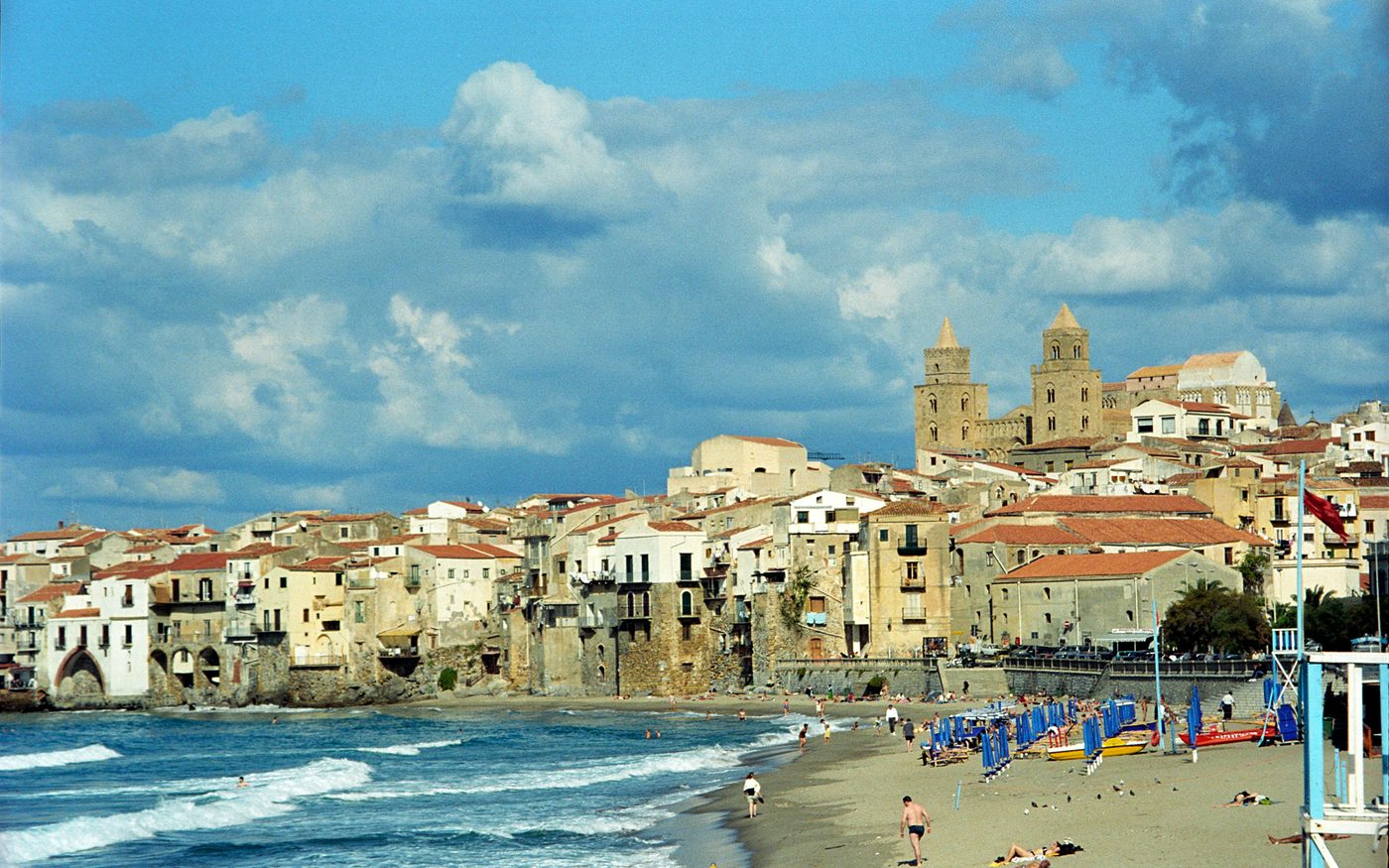
The old town and Norman cathedral above the beach at Cefalù. Photo: Jerzy Strzelecki — CC BY-SA 3.0. THE VIBE: A working Sicilian fishing town with a Norman cathedral, a proper sandy beach directly in town (rare on Sicily's more rugged coastlines), and considerably calmer energy than Taormina on the island's other coast — the closest thing on this list to a genuine "do everything without a car" summer base.
Getting there: Train to Cefalù station from Palermo (about 1 hour), which has its own international airport (Palermo Falcone-Borsellino, PMO).
Where to base yourself: The historic centre, a few minutes' walk from the main beach and the cathedral alike — genuinely walkable in a way many Sicilian coastal towns aren't.
What fills the days: Swim at the main town beach or walk a little further to quieter stretches either side; climb La Rocca, the rock outcrop looming over the town, for the best panoramic view of the coastline and rooftops together; visit the Cefalù Cathedral for its 12th-century Byzantine mosaics, among the finest surviving anywhere in Sicily; day trips to the Aeolian Islands or inland to the Madonie mountains are both genuinely feasible from here.
Where to eat: La Botte Piccola for classic Sicilian seafood in the old town.
Best time to go: June or September; July and August bring real heat and real crowds, but the town's genuine local population and permanent businesses (rather than pure seasonal tourist infrastructure) mean it never feels entirely taken over.
Volume 5 of the AVARA Best Of series, following the same disclosed-curation approach as the Europe weekend getaways volume — no competitive authority exists for "best hidden coastal towns," so this reflects AVARA's own criteria (livability across weeks, real local infrastructure, reachability without a private boat) rather than a sourced ranking.
Curation: AVARA editorial. Not derived from a third-party voted ranking — AVARA's own shortlist, built against the criteria stated above.
See the full AVARA Best Of collection · Browse all AVARA city guides